READ AI Models Act
Summary
What This Bill Does
The bill requires the NIST Director, subject to appropriations and in consultation with other federal agencies as appropriate, to start a pilot program for AI model documentation. NIST must produce a structured template that can document model name, developer identity, developer incorporation location, release date, training-data knowledge cutoff, supported languages, terms of service, and other information NIST chooses. The template must be modular so users can adopt sections for sector-specific needs, intended audiences, and desired characteristics. NIST must issue technical guidelines with metrics or benchmarks for model types and incorporate voluntary consensus standards and best practices where appropriate. NIST must collaborate with private-sector entities, higher education institutions, nonprofit organizations, international standards organizations, and federal agencies; publish a Federal Register draft; allow at least 60 days for public comment; report to Congress within 12 months; and publish the template and guidelines on the NIST website.
Who Benefits and How
AI model developers and users gain a common documentation framework for model facts such as training cutoff, supported languages, developer identity, and terms of service. Public agencies, private firms, universities, nonprofits, and standards organizations benefit from a public-comment process and a modular template that can be adapted to sector-specific needs. Congress receives a report assessing whether the pilot should become permanent.
Who Bears the Burden and How
NIST must design the template, write technical guidelines, coordinate stakeholder outreach, publish a Federal Register draft, process at least 60 days of public comments, report to Congress, and publish final resources. AI developers and users that choose to adopt the template must assemble and maintain documentation. The pilot depends on available appropriations.
Key Provisions
- Requires NIST to initiate an AI model documentation pilot subject to available appropriations.
- Directs NIST to produce a modular structured template covering model, developer, release, knowledge-cutoff, language, and terms-of-service information.
- Requires technical guidelines with metrics, benchmarks, voluntary consensus standards, and industry best practices.
- Requires collaboration with private sector entities, universities, nonprofits, standards organizations, and federal agencies.
- Requires a Federal Register draft, at least 60 days of public comment, a 12-month congressional report, and publication of final resources on the NIST website.
Evidence Chain:
This summary is generated from the full bill text using AI analysis. Expand "Detailed Analysis" below for identified beneficiaries/burden bearers with clause-level evidence links.
At a Glance
What This Bill Does
Directs NIST to pilot a structured template and technical guidelines for documenting AI models and associated data, including public comment, stakeholder collaboration, a congressional report, and publication of final resources.
Key Policy Areas
Technology, Government Operations, Research & Science
Primary Purpose
Directs NIST to pilot a structured template and technical guidelines for documenting AI models and associated data, including public comment, stakeholder collaboration, a congressional report, and publication of final resources.
Policy Domains
Substantive provisions
Identified Gains
- AI model developers
- AI model users
- NIST
- Universities
- Nonprofit organizations
- International standards organizations
Identified Costs
- NIST
- AI model developers
- AI model users
Sponsors

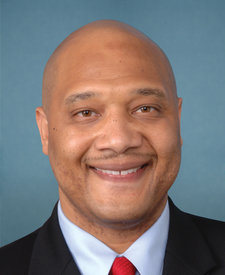



Legislative Progress
In CommitteeMs. McBride (for herself and Mr. Obernolte) introduced the following …
Referred to the House Committee on Science, Space, and Technology.
Introduced in House
Stakeholder Effects
cui bono?How this legislation distributes effects. Mention counts reflect frequency, not effect magnitude.
Universities contributing AI documentation comments
Bill Structure & Actor Mappings
Who is "The Secretary" in each section?
We use a combination of our own taxonomy and classification in addition to large language models to assess meaning and potential beneficiaries. High confidence means strong textual evidence. Always verify with the original bill text.
Learn more about our methodology