VA Zero Suicide Demonstration Project Act of 2025
Summary
What This Bill Does
The bill requires the Secretary of Veterans Affairs to establish the Zero Suicide Initiative pilot within 180 days. VA must spend the first year on program development, planning, and site selection, then implement the Zero Suicide Institute curriculum at five VA medical centers, including one site serving rural or remote veterans. Each selected site must identify five to ten staff leaders who complete an organizational self-study, attend the two-day Zero Suicide Academy, create data plans, announce adoption of a suicide-care approach, survey staff comfort and competence, and develop training for screening, assessment, electronic health records, risk formulation, treatment, and care transitions. VA must consult HHS, NIH, NIMH, SAMHSA, VA suicide-prevention offices, institutions of higher education, educators, experts, veterans service organizations, professional associations, and the Zero Suicide Institute. Annual reports must compare screening, lethal-means counseling, referrals, safety planning, emergency department use, psychiatric hospitalizations, suicide attempts, and suicide deaths, followed by a final report on effectiveness, expansion, extension, or permanence.
Who Benefits and How
Veterans receiving care at participating VA medical centers benefit from more structured suicide-risk screening, lethal-means counseling, safety planning, high-risk outreach, and care-transition protocols. Rural or remote veterans benefit because one site must primarily serve that population. VA suicide-prevention leaders and outside experts gain data on whether the Zero Suicide model improves outcomes inside VA medical centers.
Who Bears the Burden and How
VA must select candidate sites within 180 days, final sites within 270 days, train staff leaders, implement new workflows, collect outcome data, submit annual reports, and prepare a final evaluation. Participating medical centers must allocate staff time to the academy, surveys, policy changes, EHR processes, data collection, and reporting. Congress must review recurring program reports.
Key Provisions
- Establishes a VA Zero Suicide Initiative pilot within 180 days.
- Requires five VA medical centers, including one rural or remote-serving site, to implement the Zero Suicide Institute curriculum.
- Requires five to ten staff leaders at each site to complete training, self-study, data planning, staff surveys, and suicide-care process changes.
- Requires annual reports comparing screening, counseling, referral, safety-planning, emergency, hospitalization, attempt, and death outcomes.
- Authorizes a five-year pilot with a possible two-year extension and requires a final report on effectiveness and expansion.
Evidence Chain:
This summary is generated from the full bill text using AI analysis. Expand "Detailed Analysis" below for identified beneficiaries/burden bearers with clause-level evidence links.
At a Glance
What This Bill Does
Requires VA to run a five-site Zero Suicide Initiative demonstration using the Zero Suicide Institute curriculum, staff-leader training, suicide-care workflow changes, annual outcome reports, and a final decision on expansion or permanence.
Key Policy Areas
Veterans, Healthcare, Mental Health
Primary Purpose
Requires VA to run a five-site Zero Suicide Initiative demonstration using the Zero Suicide Institute curriculum, staff-leader training, suicide-care workflow changes, annual outcome reports, and a final decision on expansion or permanence.
Policy Domains
Substantive provisions
Identified Gains
- Veterans receiving VA mental-health care
- Rural veterans
- VA suicide-prevention offices
- Zero Suicide Institute
Identified Costs
- Department of Veterans Affairs
- Participating VA medical centers
- VA staff leaders
- Congressional Veterans Affairs Committees
Sponsors
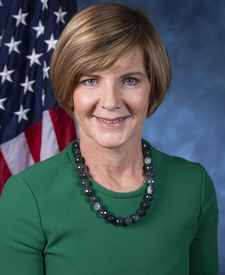



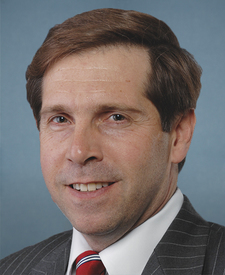
Legislative Progress
In CommitteeReferred to the Subcommittee on Health.
Ms. Lee of Nevada (for herself, Mr. Tony Gonzales of …
Referred to the House Committee on Veterans' Affairs.
Introduced in House
Stakeholder Effects
cui bono?How this legislation distributes effects. Mention counts reflect frequency, not effect magnitude.
Rural veterans served by the pilot, Veterans at participating VA medical centers
Bill Structure & Actor Mappings
Who is "The Secretary" in each section?
We use a combination of our own taxonomy and classification in addition to large language models to assess meaning and potential beneficiaries. High confidence means strong textual evidence. Always verify with the original bill text.
Learn more about our methodology