ROBINHOOD Act
Summary
What This Bill Does
The ROBINHOOD Act adds a new Internal Revenue Code subchapter on certain secured loans and lines of credit. It imposes a tax equal to 20 percent of the amount borrowed during the taxable year on specified secured loans or lines of credit. The borrower pays the tax, and Treasury collects it annually. A specified secured loan or line of credit is a loan or revolving credit arrangement secured by one or more capital assets of an applicable borrower where available credit is based on the value of those assets. The bill excludes residential mortgage loans, home equity loans and lines of credit, margin loans, and loans or credit lines secured by farmland. An applicable borrower is an individual with adjusted gross income greater than $400,000, or $450,000 for a joint return. Treasury may issue regulations or guidance, and the amendments apply to loans and lines of credit extended after enactment.
Who Benefits and How
Federal revenue benefits from the new 20 percent excise tax on covered asset-backed borrowing. Tax policy advocates seeking to limit high-income borrowing against appreciated assets benefit because the bill targets loans secured by capital assets while excluding ordinary home, margin, and farmland credit categories. Treasury benefits from explicit rulemaking authority to define collection and implementation details.
Who Bears the Burden and How
High-income borrowers using covered loans or credit lines secured by capital assets bear the direct cost of the 20 percent tax. Private banks and lenders may need to identify covered borrowers, adjust loan documentation, and support borrower tax compliance. Treasury and IRS must issue guidance, collect the annual tax, and administer exclusions for mortgages, home equity, margin, and farmland-secured loans. Some borrowers may restructure financing to avoid covered loan treatment.
Key Provisions
- Creates a new IRC subchapter for certain secured loans and lines of credit.
- Imposes a 20 percent tax on the amount borrowed during the taxable year on covered asset-backed borrowing.
- Applies to individuals with adjusted gross income above $400,000 or $450,000 for joint returns.
- Excludes residential mortgages, home equity loans and credit lines, margin loans, and farmland-secured loans.
- Requires borrowers to pay the tax and Treasury to collect it annually.
- Authorizes Treasury regulations or guidance and applies to loans and credit lines extended after enactment.
Evidence Chain:
This summary is generated from the full bill text using AI analysis. Expand "Detailed Analysis" below for identified beneficiaries/burden bearers with clause-level evidence links.
At a Glance
What This Bill Does
Creates a 20 percent excise tax on certain loans and credit lines secured by capital assets for high-income borrowers, excluding mortgages, home equity loans, margin loans, and farmland-secured loans, with Treasury collection and rulemaking authority.
Key Policy Areas
Tax, Financial Services, Inequality
Primary Purpose
Creates a 20 percent excise tax on certain loans and credit lines secured by capital assets for high-income borrowers, excluding mortgages, home equity loans, margin loans, and farmland-secured loans, with Treasury collection and rulemaking authority.
Policy Domains
Substantive provisions
Identified Gains
- Federal revenue programs
- Tax policy advocates
- Treasury tax administrators
Identified Costs
- High-income borrowers
- Private banks
- Asset-backed lenders
- Treasury tax administrators
- IRS examiners
Sponsors




Legislative Progress
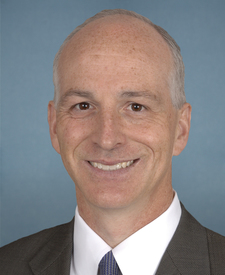
In CommitteeMr. Goldman of New York introduced the following bill; which …
Referred to the House Committee on Ways and Means.
Introduced in House
Stakeholder Effects
cui bono?How this legislation distributes effects. Mention counts reflect frequency, not effect magnitude.
Federal revenue programs, IRS examiners, Treasury tax administrators
Positive-direction: Federal revenue programs
Negative-direction: IRS examiners, Treasury tax administrators
Asset-backed lenders, High-income borrowers, Private banks
Bill Structure & Actor Mappings
Who is "The Secretary" in each section?
We use a combination of our own taxonomy and classification in addition to large language models to assess meaning and potential beneficiaries. High confidence means strong textual evidence. Always verify with the original bill text.
Learn more about our methodology