Transportation Megaprojects Accountability and Oversight Act
Summary
What This Bill Does
The Transportation Megaprojects Accountability and Oversight Act adds a new megaproject subsection to 23 U.S.C. 106. A megaproject is a project with estimated total cost of $2,500,000,000 or more, plus other projects the Secretary identifies. Before construction authorization, federal-aid recipients must submit a comprehensive risk management plan explaining how they will identify, quantify, monitor, track, and control risks that could cause cost overruns, delays, reduced construction quality, or reduced benefits, and must provide assurances on updated cost estimates and financial reserves. Within 90 days after construction authorization, each recipient must establish a peer review group of at least five individuals, including one person with project-management experience, with no direct or indirect financial interest in the project. DOT must issue peer-review selection guidelines within 180 days. Peer review groups must meet annually, review scope, schedule, budget, planning, engineering, financing, and other elements after establishment and significant changes, and report findings to DOT, Congress, and the recipient. Recipients must publish supervising engineer names, license numbers, license types, and peer-review reports. DOT must also arrange with the Transportation Research Board of the National Academies to convene a transportation megaprojects committee to study existing research, foreign experience such as the United Kingdom and France, recurring problems, oversight approaches, and recommended changes, with a report due within three years.
Who Benefits and How
Taxpayers and transportation users benefit if stronger risk plans, independent peer review, engineer disclosure, and National Academies analysis reduce cost overruns, delays, quality problems, or reduced project benefits. Congress and DOT benefit from peer-review reports and a national study of megaproject oversight practices. State and local recipients may benefit from expert review that identifies risks earlier. The public benefits from website disclosure of engineers and peer-review findings.
Who Bears the Burden and How
State and local federal-aid recipients must prepare risk-management plans, maintain reserves, submit updated cost estimates, create peer review groups, screen conflicts of interest, publish engineer and report information, and respond to reviews. DOT must issue guidelines, review risk plans, receive reports, and arrange the Transportation Research Board committee. Peer reviewers must meet annually and review major project changes. Large project sponsors may face higher administrative costs before and during construction.
Key Provisions
- Defines megaprojects as transportation projects costing at least $2,500,000,000 plus projects the Secretary identifies.
- Requires comprehensive risk-management plans before construction authorization.
- Requires updated cost estimates and financial reserves for known and unknown risks.
- Requires peer review groups of at least five conflict-free experts within 90 days after construction authorization.
- Requires annual peer-review meetings and reports to DOT, Congress, and the recipient after initial review and significant project changes.
- Requires public posting of supervising engineers and peer-review reports.
- Requires a Transportation Research Board megaproject committee and a report within three years.
Evidence Chain:
This summary is generated from the full bill text using AI analysis. Expand "Detailed Analysis" below for identified beneficiaries/burden bearers with clause-level evidence links.
At a Glance
What This Bill Does
Requires recipients of federal highway assistance for transportation megaprojects costing at least $2.5 billion to submit risk-management plans, create independent peer review groups, publish engineer and review information, and supports a National Academies megaproject oversight study.
Key Policy Areas
Transportation, Infrastructure, Government Oversight, State & Local Government
Primary Purpose
Requires recipients of federal highway assistance for transportation megaprojects costing at least $2.5 billion to submit risk-management plans, create independent peer review groups, publish engineer and review information, and supports a National Academies megaproject oversight study.
Policy Domains
Substantive provisions
Identified Gains
- Transportation users
- Federal taxpayers
- Congressional transportation committees
- DOT oversight officials
- Public infrastructure watchdogs
Identified Costs
- State transportation agencies
- Local transportation sponsors
- Megaproject recipients
- Peer review group members
- DOT oversight staff
- Transportation Research Board
Sponsors
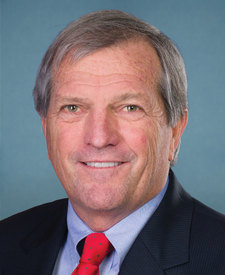
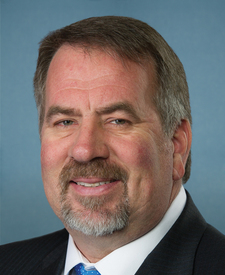
Legislative Progress
In CommitteeReferred to the Subcommittee on Highways and Transit.
Mr. DeSaulnier (for himself and Mr. LaMalfa) introduced the following …
Referred to the House Committee on Transportation and Infrastructure.
Introduced in House
Stakeholder Effects
cui bono?How this legislation distributes effects. Mention counts reflect frequency, not effect magnitude.
Megaproject recipients, Transportation users
Positive-direction: Transportation users
Negative-direction: Megaproject recipients
Local transportation sponsors, State transportation agencies
Bill Structure & Actor Mappings
Who is "The Secretary" in each section?
We use a combination of our own taxonomy and classification in addition to large language models to assess meaning and potential beneficiaries. High confidence means strong textual evidence. Always verify with the original bill text.
Learn more about our methodology