National Strategy for Combating Scams Act of 2025
Summary
What This Bill Does
The National Strategy for Combating Scams Act of 2025 responds to findings that more than 141,500,000 U.S. adults report losing money to scams or having sensitive information used fraudulently, consumers reported more than $12,000,000,000 in fraud losses in 2024, generative AI is enabling voice deepfakes and other scams, older adults are especially harmed, and at least 13 federal agencies work on scams without enough coordination. The bill requires the FBI Director, within 90 days, to assemble a working group with the FTC, CFPB, HHS, State, FDIC, Federal Reserve Board, FinCEN, DHS, NCUA, OCC, U.S. Attorney offices, Secret Service, Treasury, FCC, SEC, CFTC, SSA, and any other agency the Director considers appropriate. The working group must develop a National Strategy for Combating Scams that incorporates feedback from scam survivors, older adults, people with disabilities, prosecutors, law enforcement, telecommunications companies, financial firms, social media companies, retail and technology companies, human behavior experts, Adult Protective Services, Area Agencies on Aging, State, local, and Tribal officials, and other stakeholders. The strategy must establish a common definition of scam, evaluate risks from scams and AI-enabled methods, assess federal coordination, and guide prevention, detection, response, and public awareness. The FBI, FTC, and CFPB must adopt the recommended common scam definition within one year after the strategy is published and adopt updated definitions within one year after updates.
Who Benefits and How
Consumers and scam survivors benefit because the bill creates a single national strategy for prevention, detection, response, and interagency coordination. Older adults, people with disabilities, and other vulnerable groups benefit because the working group must incorporate their feedback. Prosecutors, law enforcement officials, Adult Protective Services, Area Agencies on Aging, and State, local, and Tribal governments benefit from a clearer federal coordination framework. Telecommunications, financial, social media, retail, and technology companies benefit from a more consistent federal definition and strategy for scam prevention expectations.
Who Bears the Burden and How
The FBI must lead a large working group and develop the strategy on a tight timeline. FTC, CFPB, HHS, State, FDIC, Federal Reserve, FinCEN, DHS, NCUA, OCC, U.S. Attorney offices, Secret Service, Treasury, FCC, SEC, CFTC, SSA, and other agencies must coordinate, contribute data, and align definitions. FBI, FTC, and CFPB must adopt and update the common definition. Private companies and stakeholder groups may face more federal requests for feedback, coordination, or scam-prevention practices. Federal taxpayers fund the strategy and coordination work.
Key Provisions
- Finds that 141,500,000 adults report scam losses or fraudulent use of sensitive information and that fraud losses exceeded $12,000,000,000 in 2024.
- Requires the FBI Director to assemble a multi-agency working group within 90 days.
- Requires the working group to include federal financial, consumer protection, law enforcement, health, communications, securities, and Social Security agencies.
- Requires feedback from scam survivors, older adults, people with disabilities, prosecutors, law enforcement, private companies, APS, aging agencies, and State, local, and Tribal officials.
- Requires a National Strategy for Combating Scams with a common scam definition and risk analysis.
- Requires FBI, FTC, and CFPB to adopt the common definition within one year of publication and after later updates.
Evidence Chain:
This summary is generated from the full bill text using AI analysis. Expand "Detailed Analysis" below for identified beneficiaries/burden bearers with clause-level evidence links.
At a Glance
What This Bill Does
Requires the FBI to assemble a multi-agency working group within 90 days to develop and periodically update a National Strategy for Combating Scams, incorporating community feedback, risk analysis, agency coordination, technology threats, and a common scam definition that FBI, FTC, and CFPB must adopt.
Key Policy Areas
Consumer Protection, Law Enforcement, Financial Services, Technology
Primary Purpose
Requires the FBI to assemble a multi-agency working group within 90 days to develop and periodically update a National Strategy for Combating Scams, incorporating community feedback, risk analysis, agency coordination, technology threats, and a common scam definition that FBI, FTC, and CFPB must adopt.
Policy Domains
Substantive provisions
Identified Gains
- Consumers
- Scam survivors
- Older adults
- People with disabilities
- Adult Protective Services agencies
- Area Agencies on Aging
- State prosecutors
- Telecommunications companies
- Financial institutions
- Technology companies
Identified Costs
- FBI strategy staff
- FTC officials
- CFPB officials
- Federal financial regulators
- Federal law enforcement agencies
- Private companies
- Federal taxpayers
Sponsors


Legislative Progress
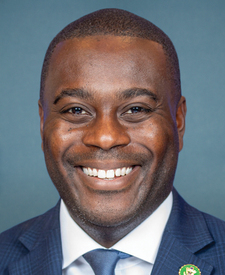
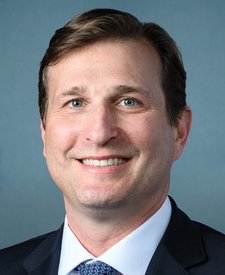
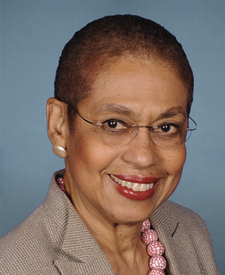
In CommitteeMr. Amo (for himself, Mr. Schmidt, Ms. Norton, and Ms. …
Referred to the Committee on the Judiciary, and in addition …
Introduced in House
Stakeholder Effects
cui bono?How this legislation distributes effects. Mention counts reflect frequency, not effect magnitude.
Older adults, Scam survivors
Older adults faces effects in multiple directions
CFPB officials, FTC officials, Federal anti-scam agencies
Adult Protective Services agencies, Area Agencies on Aging
Bill Structure & Actor Mappings
Who is "The Secretary" in each section?
We use a combination of our own taxonomy and classification in addition to large language models to assess meaning and potential beneficiaries. High confidence means strong textual evidence. Always verify with the original bill text.
Learn more about our methodology