Independence Investment Fund Act
Summary
What This Bill Does
The Independence Investment Fund Act creates a new Treasury entity to invest in critical and emerging technology companies that advance U.S. national security or economic security. The Fund is intended to signal federal technology priorities, unlock private capital, produce financial returns that let the Fund sustain itself, offer alternatives to adversarial investment, and give the Federal Government market awareness. Treasury sets strategy in consultation with Defense and Commerce; biotechnology must be a priority. The Fund makes seed-to-mid-stage equity investments in U.S.-headquartered technology companies, seeks average investments of $1,000,000 to $10,000,000, and may invest in or partner with non-U.S. firms or venture funds so long as they are not foreign entities of concern. The bill creates an advisory board to recommend the roadmap, bylaws, operating procedures, investment standards, portfolio-company disclosure, non-financial assistance, intellectual-property handling, and possible CFIUS-related investment mechanisms. After the advisory board terminates, Treasury must create a five-member supervisory board that provides oversight and acts as an investment committee, with a four-member quorum and three affirmative votes needed for investment approval. Treasury must competitively select an independent nonprofit or for-profit managing entity within 180 days to manage the Fund using strategic venture-capital practices. The bill lets Treasury appoint up to 25 personnel outside ordinary competitive-service and pay-classification rules, requires annual October 1 reports to the tax and financial-services committees, exempts actions from Paperwork Reduction Act and Administrative Procedure Act requirements, and authorizes $975,500,000 for FY2025, including $300,000,000 for biotechnology, plus $2,000,000 for FY2025 administration, $22,000,000 annually for FY2026 through FY2040, and a conditional 2035-2040 biotechnology replenishment of up to $500,000,000 if cash falls below $80,000,000.
Who Benefits and How
Critical technology developers benefit from seed-to-mid-stage equity capital, non-financial assistance, customer connections, and a federal priority signal that can attract private capital. Biotechnology manufacturers receive an explicit priority and $300,000,000 set-aside in the initial authorization. Venture capital fund managers benefit from the competition to manage the Fund. Private investors benefit if federal investments validate national-security technology markets. Treasury Department analysts, Defense Department planners, and Commerce Department planners benefit from better situational awareness of critical technology markets and adversarial investment pressure.
Who Bears the Burden and How
Treasury Department administrators must build and oversee the Fund, select the managing entity, appoint boards and personnel, set priorities with Defense and Commerce, approve investments, and report annually. Fund managers must run a strategic venture portfolio under federal oversight and disclosure rules. Portfolio company applicants may face disclosure, board-observer, intellectual-property, and national-security conditions. Foreign entity applicants are excluded from investments and partnerships when they are entities of concern. Federal taxpayers fund the $975,500,000 initial authorization, operating costs through FY2040, and possible biotechnology replenishment.
Key Provisions
- Establishes the Independence Investment Fund inside Treasury for critical and emerging technology investments.
- Requires Treasury, Defense, and Commerce coordination on national-security and economic-security technology priorities, with biotechnology as a priority.
- Authorizes seed-to-mid-stage equity investments averaging $1,000,000 to $10,000,000 in U.S.-headquartered technology companies.
- Creates an advisory board to design roadmap, operating procedures, investment standards, disclosure rules, and portfolio support.
- Creates a five-member supervisory board that oversees the Fund and approves investments by quorum and vote rules.
- Requires an open competition and 180-day selection of an independent managing entity.
- Authorizes up to 25 special Treasury personnel and annual reports to Congress.
- Exempts Fund actions from Paperwork Reduction Act and Administrative Procedure Act requirements.
- Authorizes $975,500,000 for FY2025, including $300,000,000 for biotechnology, plus long-term operating funds and conditional biotechnology replenishment.
Evidence Chain:
This summary is generated from the full bill text using AI analysis. Expand "Detailed Analysis" below for identified beneficiaries/burden bearers with clause-level evidence links.
At a Glance
What This Bill Does
Creates a Treasury-based Independence Investment Fund to make strategic equity investments in U.S. critical and emerging technology companies, with biotechnology as a priority, a competitively selected managing entity, advisory and supervisory boards, annual reports, legal exemptions, and nearly $1 billion in initial authorization.
Key Policy Areas
Technology, National Security, Finance, Biotechnology
Primary Purpose
Creates a Treasury-based Independence Investment Fund to make strategic equity investments in U.S. critical and emerging technology companies, with biotechnology as a priority, a competitively selected managing entity, advisory and supervisory boards, annual reports, legal exemptions, and nearly $1 billion in initial authorization.
Policy Domains
Substantive provisions
Identified Gains
- Critical technology developers
- Biotechnology manufacturers
- Venture capital fund managers
- Private investors
- Treasury Department analysts
- Defense Department planners
- Commerce Department planners
Identified Costs
- Treasury Department administrators
- Fund managers
- Advisory board members
- Supervisory board members
- Portfolio company applicants
- Foreign entity applicants
- Federal taxpayers
Sponsors



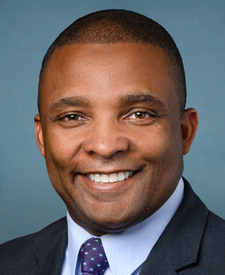

Legislative Progress
In CommitteeMr. Sessions (for himself, Ms. Houlahan, Mr. Khanna, Mrs. Bice, …
Referred to the House Committee on Financial Services.
Introduced in House
Stakeholder Effects
cui bono?How this legislation distributes effects. Mention counts reflect frequency, not effect magnitude.
Advisory board members, Congressional finance committees, Congressional financial services committees
Treasury Department administrators faces effects in multiple directions
Positive-direction: Congressional finance committees, Congressional financial services committees, Defense Department planners, Treasury Department analysts, Treasury hiring managers, Treasury personnel recruits
Negative-direction: Advisory board members, Supervisory board members, Treasury human resources staff, Treasury report writers
Fund managing entity, Investment fund managers, Private investors
Fund managing entity faces effects in multiple directions
Critical technology developers, Portfolio company applicants
Bill Structure & Actor Mappings
Who is "The Secretary" in each section?
We use a combination of our own taxonomy and classification in addition to large language models to assess meaning and potential beneficiaries. High confidence means strong textual evidence. Always verify with the original bill text.
Learn more about our methodology