Preshevo Valley Discrimination Assessment Act
Summary
What This Bill Does
The Preshevo Valley Discrimination Assessment Act requires the Secretary of State to report within 180 days to the House Foreign Affairs Committee and Senate Foreign Relations Committee on the treatment of ethnic minorities in Serbia. The report must examine whether Serbian authorities deactivate registered residences of ethnic Albanians in the Preshevo Valley through address passivation, whether that blocks identity documents and voting, whether Serbia disregards proportional integration of ethnic Albanians in public institutions, whether Kosovo diplomas and degrees are refused, whether Albanian language use is restricted in public institutions and personal documents, whether Albanian-language textbooks are delayed, whether central grants to majority-Albanian municipalities are low relative to majority-Serb municipalities, whether ethnic symbols are suppressed, whether police threaten or intimidate local ethnic Albanians without due cause or process, how much support Serbia gives Albanian media and cultural activity, whether mandatory military service is being considered for ethnic Albanians, and whether Serbia takes measures to increase poverty or make life unsustainable for ethnic Albanians in the Preshevo Valley.
Who Benefits and How
Ethnic Albanians in the Preshevo Valley benefit because the bill directs U.S. diplomatic attention to residence deactivation, identity documents, voting, language rights, education, grants, policing, and cultural rights. Albanian-language students, media, and cultural organizations benefit if the report documents barriers and informs future pressure on Serbia. Congress benefits from a structured human-rights record for oversight of Serbia policy.
Who Bears the Burden and How
The State Department must collect evidence and report within 180 days. The Government of Serbia faces increased diplomatic scrutiny over minority treatment, public grants, police practices, document access, education, language use, and cultural rights. U.S.-Serbia diplomatic engagement may become more contentious if the report confirms discrimination.
Key Provisions
- Requires a State Department report to congressional foreign-affairs committees within 180 days.
- Examines address passivation and whether it blocks identity documents and voting for ethnic Albanians.
- Requires assessment of public-institution integration, Kosovo diploma recognition, Albanian language use, and Albanian-language textbooks.
- Examines central government grants, ethnic symbols, policing, media, cultural activities, possible military service, and poverty pressures.
Evidence Chain:
This summary is generated from the full bill text using AI analysis. Expand "Detailed Analysis" below for identified beneficiaries/burden bearers with clause-level evidence links.
At a Glance
What This Bill Does
Requires the State Department to report to Congress within 180 days on discrimination and rights restrictions affecting ethnic Albanians and other minorities in Serbia, especially in the Preshevo Valley.
Key Policy Areas
Foreign Relations, Civil Rights, Government Oversight
Primary Purpose
Requires the State Department to report to Congress within 180 days on discrimination and rights restrictions affecting ethnic Albanians and other minorities in Serbia, especially in the Preshevo Valley.
Policy Domains
Substantive provisions
Identified Gains
- Ethnic Albanians in the Preshevo Valley
- Albanian-language students
- Albanian media organizations
- Congressional foreign affairs committees
- Human rights advocates
Identified Costs
- State Department human rights staff
- Government of Serbia
- Serbian local authorities
- U.S. diplomats
Sponsors
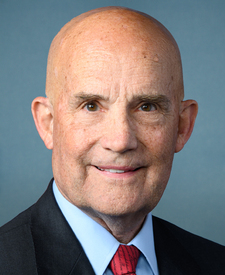

Legislative Progress
ReportedOrdered to be Reported by the Yeas and Nays: 44 …
Committee Consideration and Mark-up Session Held
Mr. Self introduced the following bill; which was referred to …
Referred to the House Committee on Foreign Affairs.
Introduced in House
Stakeholder Effects
cui bono?How this legislation distributes effects. Mention counts reflect frequency, not effect magnitude.
Albanian media organizations, Ethnic Albanians in Preshevo Valley, Government of Serbia
Positive-direction: Albanian media organizations, Ethnic Albanians in Preshevo Valley
Negative-direction: Government of Serbia
Congressional foreign affairs committees, State Department human rights staff
Positive-direction: Congressional foreign affairs committees
Negative-direction: State Department human rights staff
Bill Structure & Actor Mappings
Who is "The Secretary" in each section?
We use a combination of our own taxonomy and classification in addition to large language models to assess meaning and potential beneficiaries. High confidence means strong textual evidence. Always verify with the original bill text.
Learn more about our methodology