Homeless Children and Youth Act of 2025
Summary
What This Bill Does
The Homeless Children and Youth Act of 2025 makes the McKinney-Vento Homeless Assistance Act definition and data rules more inclusive. It expands homeless status for children or youth already verified as homeless under another federal program without further HUD action, lengthens certain temporary-sharing or accommodation periods from 14 days to 30 days, and updates the domestic-violence standard to include people experiencing or having experienced domestic violence, dating violence, sexual assault, stalking, human trafficking, or other dangerous or life-threatening conditions that made current housing unsafe or caused homelessness. It directs HUD, when issuing rules, guidance, funding notices, or conditions, to make all people defined as homeless under the amended provisions eligible for any McKinney-Vento program or component and to give proposed programs and housing or service models equal priority, points, or weight. It also revises cross-program definitions, adds references to children under 5, youth and young adults ages 14 through 24, and trafficking victims, requires annual HMIS submissions, makes HMIS data publicly available on HUD website, and requires annual reports to Congress on activities, data from other federal statutes, duplication in point-in-time counts, and methods to avoid double counting.
Who Benefits and How
Homeless children, youth, young adults, and families benefit because verification under another federal program can make them eligible for HUD homelessness programs without a second HUD-specific determination. Survivors of domestic violence, dating violence, sexual assault, stalking, trafficking, and other dangerous housing conditions benefit because the definition better captures unsafe housing situations. Service providers benefit if HUD scoring and guidance can no longer downgrade models serving newly included groups. Researchers, advocates, and Congress benefit from public HMIS data and annual reports on counts, assistance patterns, women experiencing homelessness, and duplication across programs.
Who Bears the Burden and How
HUD must revise rules, guidance, funding notices, eligibility conditions, HMIS publication practices, and annual congressional reports. Continuum of Care collaborative applicants and service providers must adjust eligibility screening, HMIS submissions, and program applications. HUD and local administrators must manage duplication concerns in point-in-time counts. Some existing program applicants may face more competition as more children, youth, families, and survivors qualify for equal priority.
Key Provisions
- Amends McKinney-Vento to recognize children or youth verified as homeless under other federal programs without further HUD action.
- Expands unsafe-housing language to include domestic violence, dating violence, sexual assault, stalking, human trafficking, and other life-threatening conditions.
- Requires HUD guidance and funding conditions to give all amended-definition homeless populations and service models equal eligibility and priority.
- Adds references to children under 5, youth and young adults ages 14 through 24, and trafficking victims in program definitions.
- Requires annual HMIS data submission and public HUD posting of counts, assistance patterns, collaborative-applicant counts, and data on homeless women.
- Requires annual reports to Congress on activities, other federal program data, possible duplication, and point-in-time count practices.
Evidence Chain:
This summary is generated from the full bill text using AI analysis. Expand "Detailed Analysis" below for identified beneficiaries/burden bearers with clause-level evidence links.
At a Glance
What This Bill Does
Expands McKinney-Vento homelessness definitions and reporting so HUD programs recognize children, youth, families, domestic-violence and trafficking survivors, and people verified as homeless under other federal programs without extra HUD verification, while requiring public HMIS data and annual congressional reports.
Key Policy Areas
Housing, Children, Social Services, Government Oversight
Primary Purpose
Expands McKinney-Vento homelessness definitions and reporting so HUD programs recognize children, youth, families, domestic-violence and trafficking survivors, and people verified as homeless under other federal programs without extra HUD verification, while requiring public HMIS data and annual congressional reports.
Policy Domains
Substantive provisions
Identified Gains
- Homeless children
- Homeless youth
- Homeless families
- Domestic violence survivors
- Trafficking survivors
- Homeless service providers
- Housing researchers
- Congressional housing overseers
Identified Costs
- HUD homelessness program staff
- Continuum of Care applicants
- HMIS administrators
- Local homelessness service providers
- Existing grant applicants
Sponsors




Legislative Progress
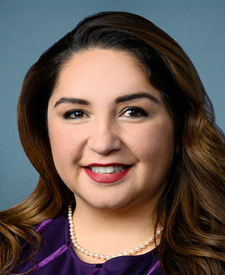
In CommitteeMr. Lawler (for himself, Ms. Bynum, and Mrs. Ramirez) introduced …
Referred to the Committee on Financial Services, and in addition …
Introduced in House
Stakeholder Effects
cui bono?How this legislation distributes effects. Mention counts reflect frequency, not effect magnitude.
Domestic violence survivors, Federal homelessness programs, Homeless children
Positive-direction: Domestic violence survivors, Homeless children, Homeless families, Homeless service providers, Homeless women, Homeless youth, Trafficking survivors
Negative-direction: Federal homelessness programs, Point-in-time count administrators
Congressional housing overseers, HUD data administrators, HUD homelessness program staff
Positive-direction: Congressional housing overseers
Negative-direction: HUD data administrators, HUD homelessness program staff, HUD report writers
Collaborative applicants, Continuum of Care applicants, Existing grant applicants
Bill Structure & Actor Mappings
Who is "The Secretary" in each section?
We use a combination of our own taxonomy and classification in addition to large language models to assess meaning and potential beneficiaries. High confidence means strong textual evidence. Always verify with the original bill text.
Learn more about our methodology