Grant’s Law
Summary
What This Bill Does
Grant’s Law amends INA section 236(c), the mandatory detention provision. It adds a new category covering a person whom DHS determines is unlawfully present and who is arrested for an offense described in existing mandatory-detention subparagraphs A through D where conviction would make the person inadmissible or deportable. For those arrested but not yet convicted people, DHS may release the person to the appropriate criminal authority for later proceedings, must resume custody during any period when the person is not held by that authority, and must continue detention until removal proceedings are completed if the person is not convicted of the arrest offense. The bill therefore moves the detention trigger earlier, from conviction-based immigration consequences toward arrest-based custody for covered unlawfully present people.
Who Benefits and How
DHS immigration enforcement programs benefit because the bill creates a broader mandatory custody category and gives DHS authority to resume custody after criminal proceedings. Public safety and crime-victim advocates benefit if arrest-based detention prevents release of covered unlawfully present defendants during removal proceedings. State and local criminal authorities benefit from clear permission to receive temporary custody for criminal proceedings while DHS retains immigration custody responsibility.
Who Bears the Burden and How
Unlawfully present people arrested for covered offenses bear the direct burden because detention can continue through removal proceedings even if they are not convicted of the arrest offense. DHS detention operations must identify covered arrestees, coordinate custody transfers, and provide detention capacity. Immigration courts may see more detained dockets. Federal taxpayers bear added detention and custody-coordination costs.
Key Provisions
- Amends INA section 236(c) to add a mandatory detention category for unlawfully present aliens arrested for covered offenses.
- Requires DHS to determine unlawful presence and link the arrest offense to inadmissibility or deportability grounds.
- Authorizes DHS to release a covered detainee to the appropriate criminal authority for later proceedings.
- Requires DHS to resume custody when the person is not held by the criminal authority.
- Requires continued DHS detention through removal proceedings if the person is not convicted of the arrest offense.
Evidence Chain:
This summary is generated from the full bill text using AI analysis. Expand "Detailed Analysis" below for identified beneficiaries/burden bearers with clause-level evidence links.
At a Glance
What This Bill Does
Expands mandatory immigration detention to unlawfully present aliens arrested for covered offenses whose conviction would make them inadmissible or deportable, while letting DHS temporarily transfer custody to criminal authorities and requiring DHS detention through removal proceedings even if the arrest does not end in conviction.
Key Policy Areas
Immigration, Law Enforcement, Judiciary
Primary Purpose
Expands mandatory immigration detention to unlawfully present aliens arrested for covered offenses whose conviction would make them inadmissible or deportable, while letting DHS temporarily transfer custody to criminal authorities and requiring DHS detention through removal proceedings even if the arrest does not end in conviction.
Policy Domains
Substantive provisions
Identified Gains
- DHS immigration enforcement programs
- Public safety advocates
- Crime-victim advocates
- State criminal authorities
- Local criminal authorities
Identified Costs
- Unlawfully present arrestees
- DHS detention operations
- Immigration courts
- Federal taxpayers
Sponsors


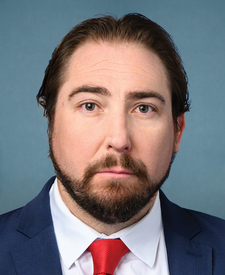
Legislative Progress
In CommitteeMr. Biggs of Arizona (for himself and Mrs. Luna) introduced …
Referred to the House Committee on the Judiciary.
Introduced in House
Stakeholder Effects
cui bono?How this legislation distributes effects. Mention counts reflect frequency, not effect magnitude.
Crime-victim advocates, Public safety advocates, Unlawfully present arrestees
Positive-direction: Crime-victim advocates, Public safety advocates
Negative-direction: Unlawfully present arrestees
DHS detention operations, DHS immigration enforcement programs
Positive-direction: DHS immigration enforcement programs
Negative-direction: DHS detention operations
Bill Structure & Actor Mappings
Who is "The Secretary" in each section?
We use a combination of our own taxonomy and classification in addition to large language models to assess meaning and potential beneficiaries. High confidence means strong textual evidence. Always verify with the original bill text.
Learn more about our methodology