Dignity for Detained Immigrants Act
Summary
What This Bill Does
The Dignity for Detained Immigrants Act overhauls immigration detention rules. DHS must issue detention standards within one year that provide at least the protections in the American Bar Association civil immigration detention standards and review them at least every two years. The DHS Inspector General must conduct unannounced annual in-person inspections of every facility, publish reports within 60 days, impose fines of at least 10 percent of contract value for first serious failures at non-DHS facilities, require remediation at DHS-owned facilities, and trigger transfer, contract termination, or suspension after repeated serious noncompliance. DHS must publish facility statistics, update the online detainee locator within 12 hours of custody, release, transfer, detention, or removal events, and maintain detailed data on each detained person. The bill gives injured detainees a private civil action for injunctions, compensatory damages, attorney fees, and costs. It requires 180-day congressional notice before new or expanded detention construction, ends public and private for-profit detention contracts within three years, shifts nonresidential detention-related programs to nonprofit or DHS operation, requires climate-controlled visitor areas, and requires transport to other Federal, State, or family-court proceedings. It rewrites INA section 236 to require custody determinations within 48 hours, hearings within 72 hours on request, bond amounts tied to ability to pay, a presumption of release rebuttable only by clear and convincing individualized evidence, least restrictive conditions with monthly review, special protection for vulnerable persons and primary caregivers, expanded community-based supervision, transfer restrictions, and privacy limits. It bans solitary confinement, requires legal orientation at every detention facility before the initial immigration-court hearing when practicable, and gives Members of Congress and designated staff access for oversight.
Who Benefits and How
Detained immigrants benefit from enforceable facility standards, public inspection reports, civil remedies, a ban on solitary confinement, legal orientation, custody hearings, ability-to-pay bond rules, least restrictive conditions, and community-based supervision options. Vulnerable persons, primary caregivers, unaccompanied children, asylum seekers with credible fear, people with disabilities, pregnant people, older adults, LGBTQI people, trafficking survivors, and limited-English-proficiency detainees benefit from special custody protections. Nonprofit legal-orientation providers and community supervision organizations benefit because the bill requires access and shifts some nonresidential monitoring work away from for-profit vendors. Congress and the public benefit from inspection reports, facility statistics, online locator updates, and direct oversight access.
Who Bears the Burden and How
DHS, ICE, the DHS Inspector General, immigration judges, and facility operators must comply with new standards, inspections, data publication, custody hearings, transport rules, privacy safeguards, and legal-orientation access. For-profit detention companies lose contract authority within three years and face fines or termination for serious noncompliance. DHS-owned facilities face warnings, remediation, transfer requirements, and possible suspension after repeated failures. Federal taxpayers may bear costs for government-owned operations, inspections, data systems, transportation, community supervision, and legal-orientation access.
Key Provisions
- Requires DHS detention standards at least as protective as ABA civil immigration detention standards and biennial updates.
- Requires annual unannounced DHS Inspector General inspections, public reports, fines, remediation, transfers, and contract termination for serious noncompliance.
- Creates a civil action for detained individuals injured by violations of detention standards.
- Requires 180-day congressional notice before detention construction or expansion and phases out for-profit detention contracts within three years.
- Rewrites INA section 236 to add 48-hour custody determinations, 72-hour hearings, ability-to-pay bond, presumption of release, clear-and-convincing evidence standards, and least restrictive conditions.
- Protects vulnerable persons and primary caregivers from detention unless community-based supervision is unreasonable or impracticable.
- Bans solitary confinement and requires legal orientation access at detention facilities.
- Requires DHS to allow Members of Congress and designated staff to inspect detention facilities for oversight.
Evidence Chain:
This summary is generated from the full bill text using AI analysis. Expand "Detailed Analysis" below for identified beneficiaries/burden bearers with clause-level evidence links.
At a Glance
What This Bill Does
Sets statutory immigration detention standards, oversight inspections, private-prison phaseout rules, custody-hearing protections, solitary-confinement limits, legal-orientation access, and congressional inspection rights for DHS detention facilities.
Key Policy Areas
Immigration, Civil Rights, Law Enforcement, Government Oversight
Primary Purpose
Sets statutory immigration detention standards, oversight inspections, private-prison phaseout rules, custody-hearing protections, solitary-confinement limits, legal-orientation access, and congressional inspection rights for DHS detention facilities.
Policy Domains
Substantive provisions
Identified Gains
- Detained immigrants
- Vulnerable detained persons
- Primary caregivers
- Unaccompanied children
- Immigration legal service providers
- Nonprofit supervision programs
- Congressional oversight committees
Identified Costs
- DHS detention officials
- ICE custody officers
- DHS Inspector General
- Immigration judges
- For-profit detention companies
- DHS-owned detention facilities
- Federal taxpayers
Sponsors



Legislative Progress
In CommitteeReferred to the Subcommittee on Oversight, Investigations, and Accountability.
Referred to the Subcommittee on Border Security and Enforcement.
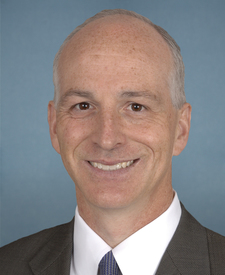
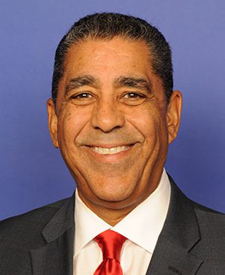
Ms. Jayapal (for herself, Mr. Smith of Washington, Ms. Adams, …
Referred to the Committee on the Judiciary, and in addition …
Introduced in House
Stakeholder Effects
cui bono?How this legislation distributes effects. Mention counts reflect frequency, not effect magnitude.
Congressional homeland security committees, Congressional judiciary committees, Congressional oversight committees
Immigration judges faces effects in multiple directions
Positive-direction: Congressional homeland security committees, Congressional judiciary committees, Congressional oversight committees, Congressional oversight staff, Family courts, Members of Congress, State courts
Negative-direction: DHS Inspector General, DHS detention facilities, DHS detention operations, DHS detention standards staff, DHS-owned detention facilities, Department of Homeland Security, Federal district courts, HHS refugee resettlement staff
Asylum seekers with credible fear, Children in immigration custody, Detained immigrants
Detention facility operators, For-profit detention companies, For-profit monitoring vendors
Positive-direction: Immigration legal aid providers
Negative-direction: Detention facility operators, For-profit detention companies, For-profit monitoring vendors
Community supervision programs, Nonprofit legal orientation providers, Nonprofit monitoring providers
DHS detention officers, DHS transport officers, ICE custody officers
Bill Structure & Actor Mappings
Who is "The Secretary" in each section?
We use a combination of our own taxonomy and classification in addition to large language models to assess meaning and potential beneficiaries. High confidence means strong textual evidence. Always verify with the original bill text.
Learn more about our methodology