Midwives for MOMS Act of 2025
Summary
What This Bill Does
The Midwives for MOMS Act of 2025 builds two parallel grant tracks to expand the midwifery workforce. Under Title VII, HHS may make grants to institutions of higher education for accredited midwifery schools or programs, excluding midwifery programs inside schools of nursing. Funds can provide direct student support, establish or expand accredited midwifery programs, and increase qualified preceptors. Priority goes to institutions that prioritize students planning to practice in health professional shortage areas and that recruit and retain rural or economically disadvantaged students through enhanced recruitment, mentorship, academic remediation, internships, and fellowships. The bill authorizes $15 million per year for fiscal years 2026 through 2030 for this track, split 50 percent for direct student support, 25 percent for school or program expansion, and 25 percent for preceptors. Under Title VIII, it creates the same structure for schools of nursing with nurse-midwifery programs and certified nurse-midwife preceptors, authorizing $20 million per year for fiscal years 2026 through 2030 with the same 50/25/25 allocation.
Who Benefits and How
Midwifery students and nurse-midwifery students benefit from direct support. Accredited midwifery schools, higher education institutions, and schools of nursing benefit from grant funding to establish or expand programs. Qualified midwife and certified nurse-midwife preceptors benefit from support that can expand supervised clinical training capacity. Rural and economically disadvantaged students benefit because priority criteria reward recruitment, retention, mentorship, remediation, internships, and fellowships. Communities in health professional shortage areas benefit if graduates practice where maternity-care access is limited.
Who Bears the Burden and How
HHS and HRSA workforce staff must run two grant tracks, enforce the Title VII exclusion for programs inside schools of nursing, apply priority criteria, and track the 50/25/25 funding allocations. Institutions receiving grants must document accreditation, student support, program expansion, preceptor support, and priority activities. Federal taxpayers fund $35 million annually from FY2026 through FY2030 across both tracks.
Key Provisions
- Creates Title VII grants for accredited midwifery schools or programs at institutions of higher education outside schools of nursing.
- Creates Title VIII grants for schools of nursing with nurse-midwifery programs.
- Allows funds for direct student support, program establishment or expansion, and preceptor capacity.
- Prioritizes students planning to practice in health professional shortage areas.
- Prioritizes recruitment and retention of rural or economically disadvantaged students through mentorship, remediation, internships, and fellowships.
- Authorizes $15 million annually for midwifery programs and $20 million annually for nurse-midwifery programs from FY2026 through FY2030.
Evidence Chain:
This summary is generated from the full bill text using AI analysis. Expand "Detailed Analysis" below for identified beneficiaries/burden bearers with clause-level evidence links.
At a Glance
What This Bill Does
Authorizes five-year HHS grant programs for accredited midwifery and nurse-midwifery education, with funding split among student support, program expansion, and preceptor capacity and priorities for health professional shortage areas and rural or economically disadvantaged students.
Key Policy Areas
Health Care, Education, Maternal Health
Primary Purpose
Authorizes five-year HHS grant programs for accredited midwifery and nurse-midwifery education, with funding split among student support, program expansion, and preceptor capacity and priorities for health professional shortage areas and rural or economically disadvantaged students.
Policy Domains
Substantive provisions
Identified Gains
- Midwifery students
- Nurse-midwifery students
- Accredited midwifery programs
- Schools of nursing
- Qualified preceptors
- Health professional shortage area communities
Identified Costs
- HHS health workforce staff
- HRSA grant administrators
- Grant recipient institutions
- Federal taxpayers
Sponsors
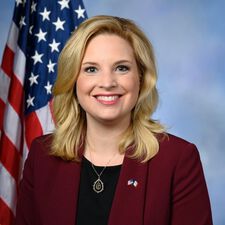


Legislative Progress
In CommitteeMrs. Hinson (for herself and Mr. Gray) introduced the following …
Referred to the House Committee on Energy and Commerce.
Introduced in House
Stakeholder Effects
cui bono?How this legislation distributes effects. Mention counts reflect frequency, not effect magnitude.
Accredited midwifery programs, Economically disadvantaged students, Midwifery students
Schools of nursing faces effects in multiple directions
Certified nurse-midwife preceptors, Health professional shortage areas, Qualified midwife preceptors
Bill Structure & Actor Mappings
Who is "The Secretary" in each section?
We use a combination of our own taxonomy and classification in addition to large language models to assess meaning and potential beneficiaries. High confidence means strong textual evidence. Always verify with the original bill text.
Learn more about our methodology