Conservation Reserve Program Modernization Act
Summary
What This Bill Does
The Conservation Reserve Program Modernization Act rewrites key eligibility and payment rules for CRP. It defines conservation buffers such as grassed waterways, contour grass strips, prairie strips, filter strips, field borders, living snow fences, riparian buffers, shelterbelts, wetlands and buffers, saturated buffers, bioreactors, and wellhead protection areas. It broadens eligible land to include certain cropland, marginal pastureland, grasslands, and partner-proposed land that addresses water quality, conservation, or wildlife habitat goals. Eligible partners include States, local governments, Indian Tribes, and nonprofit organizations. Payment provisions require USDA to pay 50 percent of costs for permanent vegetation, erosion control, riparian fencing, water development tied to excluding livestock from protected riparian areas, fencing and water development for grasslands grazing transitions, mid-contract management, and other water quality practices. Reenrolled land gets capped rental payments: 85 percent of county average soil rental rate for the first reenrollment and 10 percentage points less for each later reenrollment, while soil class payment caps are adjusted by land capability class and continuous enrollment status.
Who Benefits and How
Farmers and landowners benefit from clearer CRP eligibility for conservation buffers, grasslands, riparian areas, wetlands, wellheads, and partner-proposed habitat or water quality practices. State and local governments, Indian Tribes, and conservation nonprofits benefit because the bill lets eligible partners propose land for CRP enrollment. Water quality, wildlife habitat, and erosion-control projects benefit from 50 percent federal cost sharing for specified practices. Grazing operators can benefit from cost sharing for fencing and water development needed to transition enrolled grasslands to grazing.
Who Bears the Burden and How
USDA Farm Service Agency and NRCS staff must apply new definitions, evaluate partner proposals, administer cost sharing, and calculate new rental caps. Landowners who repeatedly reenroll land may receive lower rental payments over time. Federal taxpayers pay the cost-share portion and CRP rental payments. Some farmers may face more complex eligibility screens when land class, conservation purpose, and reenrollment status determine payment levels.
Key Provisions
- Adds detailed definitions for conservation buffers, eligible partners, eligible land, and land capability class.
- Expands eligible CRP land to cropland, marginal pastureland, grasslands, riparian and wetland areas, and partner-proposed water quality or wildlife habitat land.
- Includes States, local governments, Indian Tribes, and nonprofits as eligible partners.
- Requires 50 percent cost sharing for permanent vegetation, erosion control, riparian fencing, water development, grazing transition practices, mid-contract management, and water quality practices.
- Caps first reenrollment annual rental payments at 85 percent of county average soil rental rate and reduces later reenrollments by 10 percentage points each time.
- Adjusts county average soil rental rate caps by land capability class and continuous enrollment status.
Evidence Chain:
This summary is generated from the full bill text using AI analysis. Expand "Detailed Analysis" below for identified beneficiaries/burden bearers with clause-level evidence links.
At a Glance
What This Bill Does
Modernizes the Conservation Reserve Program by adding detailed conservation-buffer and eligible-land definitions, expanding partner-proposed water quality and habitat enrollments, setting 50 percent cost-share rules for conservation practices, and lowering rental-payment percentages for reenrolled land.
Key Policy Areas
Agriculture, Environment, Water
Primary Purpose
Modernizes the Conservation Reserve Program by adding detailed conservation-buffer and eligible-land definitions, expanding partner-proposed water quality and habitat enrollments, setting 50 percent cost-share rules for conservation practices, and lowering rental-payment percentages for reenrolled land.
Policy Domains
Substantive provisions
Identified Gains
- Farmers enrolling conservation buffers
- Grassland owners
- State conservation agencies
- Indian Tribes
- Conservation nonprofits
- Water quality projects
- Wildlife habitat projects
Identified Costs
- USDA Farm Service Agency
- NRCS conservation staff
- Repeated CRP reenrollment landowners
- Federal taxpayers
Sponsors
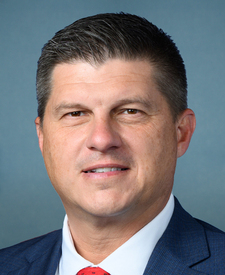
Legislative Progress
In CommitteeReferred to the Subcommittee on Conservation, Research, and Biotechnology.
Mr. Finstad introduced the following bill; which was referred to …
Referred to the House Committee on Agriculture.
Introduced in House
Stakeholder Effects
cui bono?How this legislation distributes effects. Mention counts reflect frequency, not effect magnitude.
CRP applicants, CRP landowners, Cropland owners
Positive-direction: CRP applicants, CRP landowners, Cropland owners, Farmers enrolling conservation buffers, Grassland owners, Grasslands grazing operators
Negative-direction: Repeated CRP reenrollment landowners
USDA conservation program staff, USDA eligibility reviewers, USDA payment administrators
Riparian buffer projects, Riparian habitat projects, Water quality projects
Conservation nonprofits, Eligible conservation partners
Bill Structure & Actor Mappings
Who is "The Secretary" in each section?
We use a combination of our own taxonomy and classification in addition to large language models to assess meaning and potential beneficiaries. High confidence means strong textual evidence. Always verify with the original bill text.
Learn more about our methodology