Shadow Wolves Improvement Act
Summary
What This Bill Does
The Shadow Wolves Improvement Act builds on the Shadow Wolves Enhancement Act by making ICE and HSI plan the program more concretely with Tribal partners. The ICE Director, in coordination with partnering Tribal governments including the Tohono Oodham Nation, must specify the Shadow Wolves Program mission and goals, determine the number of special agents needed nationwide, and identify required knowledge, skills, and abilities. Within 180 days, the Director must update the prior Shadow Wolves strategy with measurable objectives for retention, recruitment, expansion goals, timelines, and milestones. Current GS-1801 Tactical Officers employed as Shadow Wolves must receive individualized written information on whether reclassifying as special agents would affect pay, overtime, retirement compensation, training requirements, fitness, medical, or polygraph examinations, and overtime during training. The Director must plan timely recruitment for vacancies caused by expected retirements and develop criteria for selecting additional tribal lands for Shadow Wolves units, including funding needs and proximity to Federal law enforcement training facilities. ICE must report to congressional committees within one year on implementation, including coordination with the Tohono Oodham Nation and other Tribal governments and program goals that include tracking, interdiction, and investigation. The bill authorizes no additional funds.
Who Benefits and How
Current Shadow Wolves officers benefit from individualized reclassification information and a clearer recruitment and retention plan. The Tohono Oodham Nation and other partnering Tribal governments benefit from required coordination on mission, goals, expansion criteria, and implementation. Border-security operations benefit if staffing, recruitment, and special-agent conversion become more structured.
Who Bears the Burden and How
ICE, Homeland Security Investigations, and DHS human resources staff must complete staffing assessments, strategy updates, officer notices, recruitment plans, tribal-lands criteria, and congressional reporting without new appropriations. Current officers may face training, medical, fitness, polygraph, pay, overtime, or retirement tradeoffs if they pursue special-agent reclassification. Program expansion is constrained by the no-additional-funds clause.
Key Provisions
- Requires ICE to specify Shadow Wolves mission and goals with partnering Tribal governments including the Tohono Oodham Nation.
- Requires staffing needs, required knowledge, skills, and abilities for special agents.
- Requires a 180-day update to recruitment, retention, expansion, timeline, and milestone strategy.
- Requires individualized written reclassification information for current GS-1801 Shadow Wolves Tactical Officers.
- Requires retirement-driven recruitment planning and criteria for additional tribal lands.
- Requires a one-year congressional implementation report and authorizes no additional funds.
Evidence Chain:
This summary is generated from the full bill text using AI analysis. Expand "Detailed Analysis" below for identified beneficiaries/burden bearers with clause-level evidence links.
At a Glance
What This Bill Does
Enhances the ICE Shadow Wolves Program by requiring mission and staffing decisions with partnering Tribal governments, updated recruitment and retention strategy milestones, reclassification information for current GS-1801 tactical officers, retirement-driven recruitment planning, criteria for additional tribal lands, an implementation report to Congress, and no new appropriations.
Key Policy Areas
Homeland Security, Tribal Nations, Law Enforcement, Border Security
Primary Purpose
Enhances the ICE Shadow Wolves Program by requiring mission and staffing decisions with partnering Tribal governments, updated recruitment and retention strategy milestones, reclassification information for current GS-1801 tactical officers, retirement-driven recruitment planning, criteria for additional tribal lands, an implementation report to Congress, and no new appropriations.
Policy Domains
Substantive provisions
Identified Gains
- Shadow Wolves officers
- Tohono Oodham Nation
- Partnering Tribal governments
- Border security operations
- Homeland Security Investigations recruiters
Identified Costs
- ICE Director
- DHS human resources staff
- HSI program managers
- Current Shadow Wolves Tactical Officers
- Existing DHS appropriations
Sponsors

Legislative Progress
In CommitteeReferred to the Subcommittee on Border Security and Enforcement.
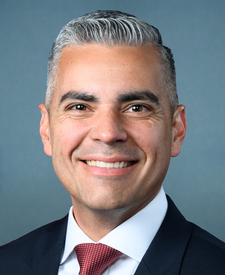
Mr. Ciscomani (for himself and Mr. Suozzi) introduced the following …
Referred to the House Committee on Homeland Security.
Introduced in House
Stakeholder Effects
cui bono?How this legislation distributes effects. Mention counts reflect frequency, not effect magnitude.
Congressional homeland security committees, Congressional judiciary committees, DHS human resources staff
Positive-direction: Congressional homeland security committees, Congressional judiciary committees
Negative-direction: DHS human resources staff, Existing DHS appropriations, ICE Director, ICE program managers
Homeland Security Investigations program managers, Homeland Security Investigations recruiters, Shadow Wolves officers
Positive-direction: Shadow Wolves officers
Negative-direction: Homeland Security Investigations program managers, Homeland Security Investigations recruiters
Partnering Tribal governments, Tohono Oodham Nation
Bill Structure & Actor Mappings
Who is "The Secretary" in each section?
We use a combination of our own taxonomy and classification in addition to large language models to assess meaning and potential beneficiaries. High confidence means strong textual evidence. Always verify with the original bill text.
Learn more about our methodology