21st Century STEM for Girls and Underrepresented Minorities Act
Summary
What This Bill Does
The 21st Century STEM for Girls and Underrepresented Minorities Act adds a new Elementary and Secondary Education Act grant program. Within 90 days of enactment, the Education Secretary must begin competitive grants to qualified local educational agencies for STEM education activities serving girls and underrepresented minorities in kindergarten through grade 12. Applications must describe the educational program, research or models used, school collaboration, a comprehensive K-12 STEM plan, recruitment and selection of participating students, instructional and motivational activities, and expected partnerships. Priority goes to LEAs that partner with institutions or organizations experienced in increasing participation of girls or underrepresented minorities in STEM fields or studying methods to increase participation. Allowable activities include career preparation, parent education, parent engagement, tutoring, mentoring, role-model partnerships, events, academic programs, after-school programs, summer programs, instructional materials, software, equipment, field trips, course-selection advice, up to 50 percent of STEM internship costs, and professional development to reduce gender and racial bias and encourage advanced STEM courses and careers. Each grant lasts four years at $250,000 per year, must supplement rather than supplant other funds, and requires annual written evaluations after each school year. The bill authorizes $10 million annually for fiscal years 2026 through 2029.
Who Benefits and How
Girls, underrepresented minority students, K-12 school districts, STEM teachers, parents, higher education partners, STEM nonprofits, and internship hosts benefit from dedicated funding for mentoring, tutoring, equipment, field trips, summer programs, internships, and bias-aware teacher development. LEAs with strong partnerships benefit from priority in the grant competition.
Who Bears the Burden and How
The Education Department must create and run the competition within 90 days, review applications, administer grants, and evaluate annual reports. Local educational agencies must design comprehensive programs, recruit students, coordinate elementary and secondary schools, form partnerships, avoid supplanting existing funds, and submit annual evaluations. Federal taxpayers fund $10 million per year for four fiscal years.
Key Provisions
- Establishes competitive STEM grants for qualified local educational agencies within 90 days.
- Requires applications to describe program design, research models, K-12 collaboration, recruitment, activities, and partnerships.
- Prioritizes LEAs partnering with organizations experienced in increasing STEM participation by girls or underrepresented minorities.
- Funds tutoring, mentoring, parent engagement, role models, events, after-school programs, summer programs, equipment, field trips, course advice, internships, and teacher professional development.
- Provides four-year grants of $250,000 per year that must supplement rather than supplant other funds.
- Authorizes $10 million for each of fiscal years 2026 through 2029.
Evidence Chain:
This summary is generated from the full bill text using AI analysis. Expand "Detailed Analysis" below for identified beneficiaries/burden bearers with clause-level evidence links.
At a Glance
What This Bill Does
Creates a competitive Education Department grant program giving qualified local educational agencies $250,000 per year for four years to run K-12 STEM activities for girls and underrepresented minorities, with $10 million authorized for each of fiscal years 2026 through 2029.
Key Policy Areas
Education, STEM, Civil Rights
Primary Purpose
Creates a competitive Education Department grant program giving qualified local educational agencies $250,000 per year for four years to run K-12 STEM activities for girls and underrepresented minorities, with $10 million authorized for each of fiscal years 2026 through 2029.
Policy Domains
Substantive provisions
Identified Gains
- Girls in K-12 schools
- Underrepresented minority students
- Qualified local educational agencies
- STEM teachers
- STEM nonprofits
- Higher education STEM partners
- STEM internship hosts
Identified Costs
- Education Department grant staff
- Local educational agency administrators
- School district evaluation staff
- Federal taxpayers
Sponsors
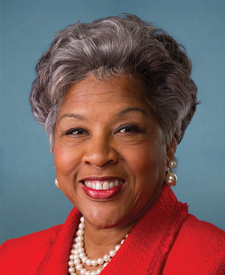




Legislative Progress
In CommitteeMrs. Beatty (for herself, Mrs. McIver, Mr. Lynch, Mr. Johnson …
Referred to the House Committee on Education and Workforce.
Introduced in House
Stakeholder Effects
cui bono?How this legislation distributes effects. Mention counts reflect frequency, not effect magnitude.
Girls in K-12 STEM programs, Qualified local educational agencies, STEM teachers
Positive-direction: Girls in K-12 STEM programs, Qualified local educational agencies, STEM teachers, Teacher professional development providers, Underrepresented minority students
Negative-direction: School district evaluation staff
Bill Structure & Actor Mappings
Who is "The Secretary" in each section?
We use a combination of our own taxonomy and classification in addition to large language models to assess meaning and potential beneficiaries. High confidence means strong textual evidence. Always verify with the original bill text.
Learn more about our methodology