Air Permitting Improvements to Protect National Security Act of 2025
Summary
What This Bill Does
The Air Permitting Improvements to Protect National Security Act amends Clean Air Act section 173, which governs permits for major stationary sources in nonattainment areas. Upon application by an owner or operator of a new or modified advanced manufacturing facility or critical mineral facility, the President may waive all or part of an emissions-offset requirement if the President determines that the waiver is in the national security interest of the United States. The President may not delegate that determination.
The bill also creates alternative offset rules for these facilities. A state permitting authority must allow a new or modified major stationary source that is an advanced manufacturing facility or critical mineral facility to offset emissions through alternative or innovative means if the source demonstrates it used all reasonable means to obtain offsets, all available offsets are being used, and sufficient offsets are not available. The state may impose an alternative measure to offset emissions above permitted levels or, instead, impose an emissions fee no greater than 1.5 times the average cost of stationary-source control measures adopted in that area during the previous three years. The state must use the fees to maximize emissions reductions in the area. Advanced manufacturing facilities are semiconductor or semiconductor-equipment manufacturing facilities; critical mineral facilities extract, process, refine, or mill critical minerals designated by the Secretary of the Interior.
Who Benefits and How
Semiconductor manufacturers benefit because unavailable emissions offsets would no longer automatically block new or modified facilities if national security or alternative-offset conditions are met. Semiconductor equipment manufacturers benefit from the same waiver and alternative-offset routes. Critical mineral extraction companies benefit when mines or processing facilities cannot obtain enough traditional offsets. Critical mineral refining facilities benefit from the ability to use state-approved alternative measures or capped fees. State economic-development officials benefit if permitting flexibility helps attract national-security manufacturing projects. Defense supply-chain planners benefit if domestic semiconductor and critical-mineral capacity becomes easier to permit.
Who Bears the Burden and How
State environmental permitting authorities must assess offset availability, approve alternative measures, calculate capped emissions fees, and spend fees to maximize local emissions reductions. EPA air-permitting staff may need to oversee state implementation and nonattainment permitting consistency. The President must personally make any national-security waiver determination. Communities near new advanced manufacturing facilities may face higher local emissions if offsets are waived or replaced with alternative measures. Environmental advocacy organizations must monitor facility-specific demonstrations and fee-funded mitigation rather than relying on traditional offset requirements.
Key Provisions
- Authorizes a nondelegable presidential national-security waiver of Clean Air Act emissions-offset requirements.
- Covers semiconductor manufacturing facilities and semiconductor-equipment manufacturing facilities.
- Covers critical mineral extraction, processing, refining, and milling facilities.
- Requires state permitting authorities to allow alternative or innovative offset means when sufficient offsets are unavailable.
- Provides for alternative measures or emissions fees capped at 1.5 times recent stationary-source control costs.
- Requires states to use emissions fees to maximize emissions reductions in the affected area.
Evidence Chain:
This summary is generated from the full bill text using AI analysis. Expand "Detailed Analysis" below for identified beneficiaries/burden bearers with clause-level evidence links.
At a Glance
What This Bill Does
Allows the President to waive Clean Air Act emissions-offset requirements for new or modified semiconductor manufacturing, semiconductor-equipment manufacturing, and critical mineral facilities when the waiver is in the national security interest, and requires state permitting authorities to allow alternative or innovative offset measures or capped emissions fees when eligible facilities cannot obtain sufficient offsets.
Key Policy Areas
Air Permitting, Manufacturing, Critical Minerals, National Security
Primary Purpose
Allows the President to waive Clean Air Act emissions-offset requirements for new or modified semiconductor manufacturing, semiconductor-equipment manufacturing, and critical mineral facilities when the waiver is in the national security interest, and requires state permitting authorities to allow alternative or innovative offset measures or capped emissions fees when eligible facilities cannot obtain sufficient offsets.
Policy Domains
House resolution provisions
Identified Gains
- Semiconductor manufacturers
- Semiconductor equipment manufacturers
- Critical mineral extraction companies
- Critical mineral refining facilities
- State economic-development officials
- Defense supply-chain planners
Identified Costs
- State environmental permitting authorities
- EPA air-permitting staff
- President
- Communities near advanced manufacturing facilities
- Environmental advocacy organizations
Sponsors
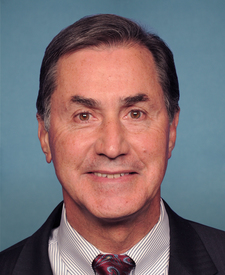
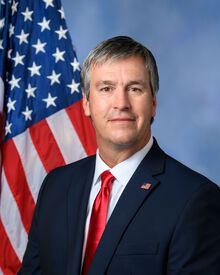


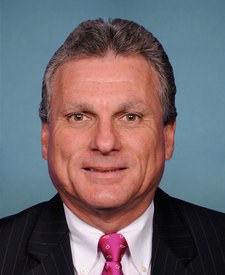
Legislative Progress
ReportedPlaced on the Union Calendar, Calendar No. 544.
Reported by the Committee on Energy and Commerce. H. Rept. …
Additional sponsors: Mr. Crenshaw, Mr. Weber of Texas, Mr. Moore …
Committed to the Committee of the Whole House on the …
Ordered to be Reported by the Yeas and Nays: 25 …
Committee Consideration and Mark-up Session Held
Mr. Palmer introduced the following bill; which was referred to …
Referred to the House Committee on Energy and Commerce.
Introduced in House
Stakeholder Effects
cui bono?How this legislation distributes effects. Mention counts reflect frequency, not effect magnitude.
Semiconductor equipment manufacturers, Semiconductor manufacturers
Critical mineral extraction companies, Critical mineral refining facilities
Bill Structure & Actor Mappings
Who is "The Secretary" in each section?
- "epa"
- → Environmental Protection Agency
- "interior"
- → Secretary of the Interior
- "president"
- → President
Key Definitions
Terms defined in this bill
A facility whose primary purpose is extracting, processing, refining, or milling a critical mineral designated by the Secretary of the Interior.
A facility whose primary purpose is manufacturing semiconductors or semiconductor manufacturing equipment.
We use a combination of our own taxonomy and classification in addition to large language models to assess meaning and potential beneficiaries. High confidence means strong textual evidence. Always verify with the original bill text.
Learn more about our methodology