911 SAVES Act
Summary
What This Bill Does
The 911 SAVES Act reclassifies public safety telecommunicators in federal occupational statistics. Congress finds that 911 call takers and dispatchers do far more than relay information: they gather the first information in child abduction and exploitation cases, negotiate with hostage takers or suicidal callers, coach active-shooter callers through first aid and harm prevention, route emergency help to police, firefighters, and EMTs under threat, and recognize sounds or facts that can prevent ambushes. The findings also describe trauma exposure, posttraumatic stress risk, long hours, around-the-clock work, and State efforts to recognize telecommunicators as first responders. The operative section requires the OMB Director, within 30 days of enactment, to categorize public safety telecommunicators as a protective service occupation under the Standard Occupational Classification system.
Who Benefits and How
Public safety telecommunicators benefit because federal job statistics would recognize their emergency-response role, which can support workforce identity, mental-health recognition, recruitment, and downstream compensation or training arguments. 911 centers, local governments, police departments, fire departments, EMS agencies, and unions benefit from a clearer federal classification for emergency communications work.
Who Bears the Burden and How
OMB statistical staff must revise the Standard Occupational Classification treatment. Employers and workforce analysts may need to update occupational coding, job classifications, reporting, or labor-market comparisons. Public employers could face pressure to align pay, benefits, or mental-health resources with the protective-service classification, though the bill itself only orders SOC classification.
Key Provisions
- Provides the short title for the 911 SAVES Act.
- Finds that public safety telecommunicators perform emergency-response work during child exploitation, hostage, suicide, active-shooter, and first-responder danger calls.
- Finds that telecommunicators face emotional and physical strain, trauma exposure, posttraumatic stress risk, and around-the-clock work.
- Requires OMB to classify public safety telecommunicators as protective service occupations within 30 days.
- Uses the Standard Occupational Classification system as the implementation mechanism.
Evidence Chain:
This summary is generated from the full bill text using AI analysis. Expand "Detailed Analysis" below for identified beneficiaries/burden bearers with clause-level evidence links.
At a Glance
What This Bill Does
Requires OMB to classify public safety telecommunicators as protective service occupations in the Standard Occupational Classification system, recognizing 911 dispatchers and emergency call takers as part of emergency response rather than ordinary office support.
Key Policy Areas
Public Safety, Labor, Emergency Services
Primary Purpose
Requires OMB to classify public safety telecommunicators as protective service occupations in the Standard Occupational Classification system, recognizing 911 dispatchers and emergency call takers as part of emergency response rather than ordinary office support.
Policy Domains
Substantive provisions
Identified Gains
- Public safety telecommunicators
- 911 dispatch centers
- Emergency communications unions
- Local public safety agencies
Identified Costs
- OMB statistical staff
- Local government human resources offices
- Public safety employers
Sponsors
Legislative Progress
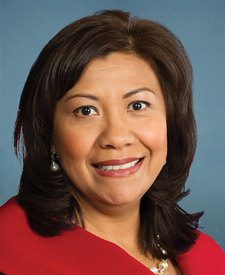
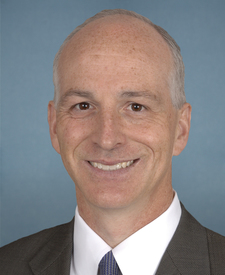
In CommitteeMrs. Torres of California (for herself and Mr. Fitzpatrick) introduced …
Referred to the House Committee on Education and Workforce.
Introduced in House
Stakeholder Effects
cui bono?How this legislation distributes effects. Mention counts reflect frequency, not effect magnitude.
911 dispatch centers, Public safety employers, Public safety telecommunicators
Local government human resources offices
Bill Structure & Actor Mappings
Who is "The Secretary" in each section?
We use a combination of our own taxonomy and classification in addition to large language models to assess meaning and potential beneficiaries. High confidence means strong textual evidence. Always verify with the original bill text.
Learn more about our methodology