Clean Up DEBRIS Act
Summary
What This Bill Does
The Clean Up DEBRIS Act amends the Stafford Act in two linked steps. First, it adds definitions for residential common interest communities, condominiums, housing cooperatives, and manufactured home parks. The definitions cover mandatory-membership communities where owners pay shared expenses, condominium projects with association-managed common elements, cooperative housing entities where members have possessory rights through shares or membership interests, and manufactured home parks with two or more lots containing manufactured homes. Second, the bill amends Stafford Act section 407 on debris removal. The President must issue rules providing that debris or wreckage removal from real estate units within these communities is in the public interest after a major disaster when a state or local government determines in writing that the debris threatens life, public health or safety, or the economic recovery of the residential common interest community. The rules must defer to state and local definitions.
Who Benefits and How
Condominium associations benefit because disaster debris in their communities can qualify for public-interest removal treatment. Homeowners associations and residential common interest communities benefit when local or state governments document health, safety, life, or recovery threats. Housing cooperatives and manufactured home parks benefit from explicit inclusion in Stafford Act debris-removal rules. Residents benefit from faster debris clearance after major disasters. State and local governments benefit because their written determinations trigger federal public-interest treatment and FEMA must defer to state and local legal definitions.
Who Bears the Burden and How
FEMA and presidential disaster-recovery administrators must write and apply new debris-removal rules for private or shared residential communities. State and local governments must make written determinations that debris threatens life, public health or safety, or economic recovery. Federal taxpayers may pay more for debris removal in settings that previously faced eligibility uncertainty. Debris-removal contractors may gain work, but FEMA oversight must ensure removal is tied to major-disaster threats rather than ordinary private maintenance.
Key Provisions
- Adds Stafford Act definitions for residential common interest communities, condominiums, housing cooperatives, and manufactured home parks.
- Requires debris-removal rules for units of real estate in those communities after major disasters.
- Provides public-interest treatment when a state or local government makes a written threat determination.
- Requires rulemaking to defer to state and local law definitions.
- Expands potential FEMA-supported debris removal beyond traditional public streets and facilities into shared residential community settings.
Evidence Chain:
This summary is generated from the full bill text using AI analysis. Expand "Detailed Analysis" below for identified beneficiaries/burden bearers with clause-level evidence links.
At a Glance
What This Bill Does
Expands Stafford Act debris-removal treatment so FEMA rules can treat disaster debris in residential common interest communities, condominiums, housing cooperatives, and manufactured home parks as in the public interest when state or local governments find threats to life, public health, safety, or economic recovery.
Key Policy Areas
Disaster Recovery, Housing, FEMA
Primary Purpose
Expands Stafford Act debris-removal treatment so FEMA rules can treat disaster debris in residential common interest communities, condominiums, housing cooperatives, and manufactured home parks as in the public interest when state or local governments find threats to life, public health, safety, or economic recovery.
Policy Domains
Substantive provisions
Identified Gains
- Condominium associations
- Homeowners associations
- Residential common interest communities
- Housing cooperatives
- Manufactured home park residents
- State disaster recovery agencies
Identified Costs
- Federal Emergency Management Agency staff
- State emergency managers
- Local governments
- Federal taxpayers
- Presidential disaster recovery administrators
Sponsors
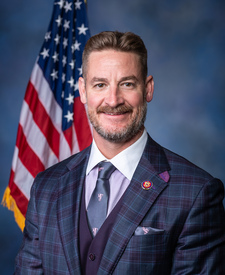

Legislative Progress
In CommitteeReferred to the Subcommittee on Economic Development, Public Buildings, and …
Mr. Steube (for himself and Mr. Carter of Louisiana) introduced …
Referred to the House Committee on Transportation and Infrastructure.
Introduced in House
Stakeholder Effects
cui bono?How this legislation distributes effects. Mention counts reflect frequency, not effect magnitude.
Condominium associations, Homeowners associations, Housing cooperatives
Local governments in disaster areas, State disaster recovery agencies
Manufactured home park residents, Taxpayers
Positive-direction: Manufactured home park residents
Negative-direction: Taxpayers
Bill Structure & Actor Mappings
Who is "The Secretary" in each section?
We use a combination of our own taxonomy and classification in addition to large language models to assess meaning and potential beneficiaries. High confidence means strong textual evidence. Always verify with the original bill text.
Learn more about our methodology