Partnerships for Agricultural Climate Action Act
Summary
What This Bill Does
The Partnerships for Agricultural Climate Action Act amends the Food Security Act conservation partnership framework. It expands the pollution-reduction language to pollution and emissions reductions and adds Tribal participation. The bill defines climate adaptation as management changes that reduce vulnerability to severe weather and climate-related disturbances, and climate mitigation as management changes that reduce greenhouse gas emissions or sequester carbon in soil and plant biomass. Covered entities include State agriculture departments, Tribal government authorities, producer associations, farmer cooperatives, universities, conservation districts, and organizations with a history of working with producers on local conservation priorities. USDA must solicit grant applications within 180 days and keep soliciting until funds are exhausted. Grants can develop, modify, or implement eligible proposals consistent with USDA climate adaptation actions, NRCS greenhouse-gas and carbon-sequestration practices, current science, and traditional ecological knowledge. USDA must select applications within two years, prioritize geographically diverse projects, historically underserved producers, beginning farmers, socially disadvantaged farmers, veteran farmers, family farms, whole-farm ecological transitions, soil health, erosion control, nutrient management, water quality, pollinator forage, habitat restoration, and Tribal traditional ecological knowledge. Planning grants can run one to two years and reach 7.5 million dollars per fiscal year; implementation grants can run one to five years and reach 15 million dollars per fiscal year. Non-Tribal recipients face 75 percent and 50 percent federal-share caps for planning and implementation, while Tribal governments can receive 100 percent and 85 percent federal shares. The bill sets aside 150 million dollars annually from FY2026 through FY2034, reserves 33 percent for Tribal government grants, requires performance reviews and audits, and caps administrative expenses.
Who Benefits and How
Beginning farmers, socially disadvantaged farmers, veteran farmers, and small family farms benefit because USDA must prioritize proposals with dedicated resources for them. Tribal governments benefit from eligibility, a 33 percent reservation of grant funds, higher federal cost shares, and priority for projects using traditional ecological knowledge. State agriculture departments, conservation districts, farmer cooperatives, producer associations, universities, and producer-serving nonprofits benefit from grants for planning, technical assistance, financial assistance, demonstrations, extension, outreach, training, monitoring, and producer networking. Agricultural producers benefit from support for soil carbon, emissions reduction, extreme-weather resilience, soil health, nutrient management, water quality, pollinator forage, and habitat restoration.
Who Bears the Burden and How
USDA and NRCS must design the grant process, solicit applications within 180 days, select projects within two years, monitor performance measures, enforce supplement-not-supplant rules, review audits, and administer annual funding through FY2034. Non-Tribal grantees must supply nonfederal cost share and are capped at 75 percent federal support for planning and 50 percent for implementation. Tribal governments that join another entity application do not receive the same higher cost-share treatment for that application. Covered entities must submit progress reviews and expenditure audits, can be disqualified for noncompliance, and face administrative-expense caps. Federal taxpayers fund the 150 million dollar annual program amount.
Key Provisions
- Amends conservation partnership law to include Tribal entities and pollution and emissions reductions.
- Defines climate adaptation, climate mitigation, covered entities, eligible proposals, indigenous agricultural knowledge, traditional ecological knowledge, and Tribal governments.
- Requires USDA to solicit grant applications within 180 days and select applications within two years.
- Authorizes planning grants up to 7.5 million dollars per fiscal year and implementation grants up to 15 million dollars per fiscal year.
- Provides higher federal cost shares for Tribal government authorities and reserves 33 percent of grant funds for Tribal government grants.
- Requires performance measures, reviews, audits, supplement-not-supplant assurances, nonfederal cost shares, and administrative-expense caps.
Evidence Chain:
This summary is generated from the full bill text using AI analysis. Expand "Detailed Analysis" below for identified beneficiaries/burden bearers with clause-level evidence links.
At a Glance
What This Bill Does
Creates a USDA climate mitigation and adaptation grant program for State agriculture departments, Tribal governments, producer groups, cooperatives, universities, conservation districts, and producer-serving organizations, with priority for underserved producers, Tribal traditional ecological knowledge, whole-farm resilience, soil health, water quality, and other conservation outcomes.
Key Policy Areas
Agriculture, Climate, Tribal Affairs
Primary Purpose
Creates a USDA climate mitigation and adaptation grant program for State agriculture departments, Tribal governments, producer groups, cooperatives, universities, conservation districts, and producer-serving organizations, with priority for underserved producers, Tribal traditional ecological knowledge, whole-farm resilience, soil health, water quality, and other conservation outcomes.
Policy Domains
Substantive provisions
Identified Gains
- Beginning farmers
- Socially disadvantaged farmers
- Veteran farmers
- Small family farms
- Tribal governments
- State agriculture departments
- Conservation districts
- Farmer cooperatives
Identified Costs
- USDA grant administrators
- Natural Resources Conservation Service staff
- Non-Tribal grantees
- Covered entity applicants
- Federal taxpayers
Sponsors
Legislative Progress
In CommitteeReferred to the Subcommittee on Conservation, Research, and Biotechnology.
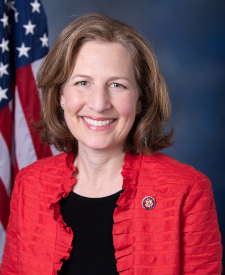
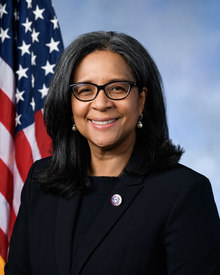
Ms. Schrier (for herself and Ms. Strickland) introduced the following …
Referred to the House Committee on Agriculture.
Introduced in House
Stakeholder Effects
cui bono?How this legislation distributes effects. Mention counts reflect frequency, not effect magnitude.
Beginning farmers, Native agricultural producers, Small family farms
Conservation districts, State agriculture departments
Tribal governments, USDA Natural Resources Conservation Service
Positive-direction: Tribal governments
Negative-direction: USDA Natural Resources Conservation Service
Bill Structure & Actor Mappings
Who is "The Secretary" in each section?
We use a combination of our own taxonomy and classification in addition to large language models to assess meaning and potential beneficiaries. High confidence means strong textual evidence. Always verify with the original bill text.
Learn more about our methodology