Rural Housing Regulatory Relief Act
Summary
What This Bill Does
The Rural Housing Regulatory Relief Act targets USDA Rural Housing Service programs under Housing Act sections 501, 502, 504, 515, 533, and 538. When assistance under those programs supports construction or modification of residential housing on an infill site, the assistance may not be treated as a major Federal action requiring an environmental impact statement under NEPA section 102(2)(C). The bill defines an infill site as land served by existing infrastructure such as water, sewer, and roads, but excludes sites served only by a road, greenfields, and sites in FEMA National Risk Index census tracts with very high or relatively high wildfire, coastal-flooding, or riverine-flooding risk. USDA must report to Congress five years after enactment on whether the exemption reduced application review time and administrative cost, how it affected rural affordable housing, and whether Congress should revise related NEPA categorical exclusions or exemptions.
Who Benefits and How
Rural housing developers gain a faster path to USDA-backed infill projects because the bill removes NEPA major-action treatment for qualifying sites. USDA Rural Development loan applicants benefit from lower review friction under sections 501, 502, 504, 515, 533, and 538. Rural homebuyers and renters benefit if the exemption speeds construction or rehabilitation of affordable housing on land already served by infrastructure. The USDA Rural Housing Service benefits administratively if reviews become faster and cheaper.
Who Bears the Burden and How
Environmental review consultants and some permitting stakeholders lose work or leverage on qualifying infill projects because the NEPA major-action trigger is removed. USDA must implement the infill-site screen, track review-time and cost effects, and produce the five-year congressional report. Developers remain burdened by non-NEPA laws and by the exclusions for road-only sites, greenfields, and high-risk wildfire or flood census tracts.
Key Provisions
- Provides a NEPA exemption for USDA rural housing assistance on qualifying infill sites.
- Limits eligible infill sites to parcels with existing infrastructure and excludes greenfields, road-only parcels, and high-risk FEMA National Risk Index areas.
- Requires USDA to report within five years on review-time savings, administrative costs, rural affordable-housing effects, and future NEPA exclusion recommendations.
- Preserves legal requirements outside NEPA for USDA-assisted housing projects.
Evidence Chain:
This summary is generated from the full bill text using AI analysis. Expand "Detailed Analysis" below for identified beneficiaries/burden bearers with clause-level evidence links.
At a Glance
What This Bill Does
Exempts USDA rural housing assistance for residential construction or modification on qualifying infill sites from NEPA major-federal-action review, while requiring USDA to report within five years on review speed, administrative cost, rural affordable-housing effects, and possible future categorical exclusions.
Key Policy Areas
Housing, Agriculture, Environmental Review
Primary Purpose
Exempts USDA rural housing assistance for residential construction or modification on qualifying infill sites from NEPA major-federal-action review, while requiring USDA to report within five years on review speed, administrative cost, rural affordable-housing effects, and possible future categorical exclusions.
Policy Domains
Substantive provisions
Identified Gains
- USDA Rural Development loan applicants
- Rural housing developers
- Rural homebuyers
- Rural renters
- USDA Rural Housing Service
Identified Costs
- Environmental review consultants
- USDA Rural Housing Service staff
- Developers on greenfield sites
- Developers in high-risk flood or wildfire tracts
Sponsors



Legislative Progress
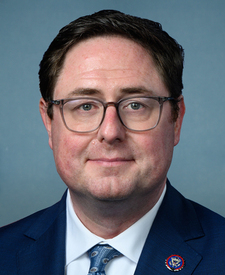
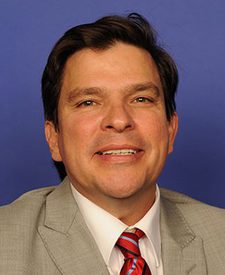
In CommitteeMr. Vindman (for himself, Mr. Flood, Mr. Vicente Gonzalez of …
Referred to the Committee on Financial Services, and in addition …
Introduced in House
Stakeholder Effects
cui bono?How this legislation distributes effects. Mention counts reflect frequency, not effect magnitude.
Owners of infill sites in rural areas, USDA Rural Development loan applicants
Environmental review and consulting firms
Bill Structure & Actor Mappings
Who is "The Secretary" in each section?
We use a combination of our own taxonomy and classification in addition to large language models to assess meaning and potential beneficiaries. High confidence means strong textual evidence. Always verify with the original bill text.
Learn more about our methodology