To establish a Federal pilot program for cost-sharing of child care expenses among employers, employees, and government.
Sponsors
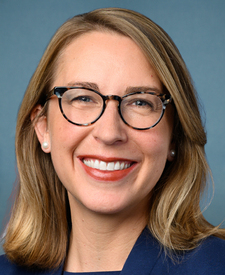

Legislative Progress
IntroducedMs. Scholten (for herself and Mr. James) introduced the following …
Summary
What This Bill Does
This bill creates a 3-year pilot program where the federal government gives grants to states to test a new way of paying for child care. Under the program, working parents, their employers, and the state government each pay one-third of the child care costs. The program targets working families who earn too much to qualify for existing child care assistance but still struggle with affordability—specifically those earning between 100% and 300% of their state's child care assistance income threshold.
Who Benefits and How
Working parents with young children (below kindergarten age) benefit most directly, as their child care costs are reduced to one-third of the total, with the other two-thirds covered by their employer and state government through federal matching funds. Child care providers gain new paying customers with guaranteed payments from state agencies. Employers who choose to participate can use this as a recruitment and retention tool, offering a valuable benefit to employees. State child care agencies receive federal matching funds to cover their one-third share plus administrative expenses, with up to million per state available over the 3-year program.
Who Bears the Burden and How
Federal taxpayers fund the program through a direct appropriation of million over three years ( million annually). Employers who choose to participate must pay one-third of their employees' child care costs, though participation is entirely voluntary. State agencies that run the program face administrative work including processing employer applications, verifying employee eligibility, managing payments to providers, and participating in federal evaluation, though the bill reimburses up to 10% of grant amounts for administrative costs.
Key Provisions
- Appropriates million annually for 3 years, with individual state grants capped at million
- Creates a competitive application process where the HHS Secretary awards grants based on states' demonstrated child care needs, capacity, employer commitments, and ability to ensure equitable geographic access
- Requires that child care providers meet all state and local health and safety requirements
- Mandates that the program does not affect eligibility for existing Child Care and Development Block Grant benefits
- Requires HHS to conduct a comprehensive evaluation of the program's cost-effectiveness and impact on hiring, employment retention, and child care access, with a report to Congress within one year after the program ends
- Allows states to use third-party technology platforms to administer the program
- Directs any unspent funds at the end of each fiscal year to be transferred to the preschool development grants program
Evidence Chain:
This summary is derived from the structured analysis below. See "Detailed Analysis" for per-title beneficiaries/burden bearers with clause-level evidence links.
Primary Purpose
Establishes a 3-year federal pilot program providing competitive grants to states for a tripartite cost-sharing system where employers, employees, and state governments each pay one-third of child care expenses for eligible families.
Policy Domains
Legislative Strategy
"Create a time-limited pilot program to test a three-way cost-sharing model for child care, with evaluation to inform future policy decisions"
Likely Beneficiaries
- Working parents with incomes above current state child care assistance thresholds but below 300% of those thresholds
- Employers seeking to provide child care benefits to attract and retain employees
- Child care providers who gain additional paying customers
- State child care agencies receiving federal matching funds
Likely Burden Bearers
- Federal taxpayers (up to million over 3 years)
- Employers who choose to participate (voluntary)
- Parents who pay 1/3 of costs (though this may be less than current out-of-pocket costs)
Bill Structure & Actor Mappings
Who is "The Secretary" in each section?
- "lead_agency"
- → State agency designated under Child Care and Development Block Grant Act
- "the_secretary"
- → Secretary of Health and Human Services
- "administration_for_children_and_families"
- → HHS Administration for Children and Families
- "office_of_planning_research_and_evaluation"
- → Office of Planning, Research, and Evaluation (ACF)
Key Definitions
Terms defined in this bill
A child who: (1) has not attained kindergarten age, (2) has a parent employed by a participating employer, (3) has family income between the state child care assistance threshold and 300% of that threshold, and (4) is not receiving CCDBG assistance
Costs of providing child care services to an eligible child in accordance with state and local health and safety requirements per CCDBG
As defined in section 658P(6) of the Child Care and Development Block Grant Act of 1990
State agency designated or established under section 658D(a) of the Child Care and Development Block Grant Act of 1990
Includes legal guardian, relative guardian, or foster parent of the child
A person whose application to participate in the program is approved by the lead agency
The 3-year period beginning with the effective date of this subsection
The maximum income limit for CCDBG assistance provided by the lead agency
We use a combination of our own taxonomy and classification in addition to large language models to assess meaning and potential beneficiaries. High confidence means strong textual evidence. Always verify with the original bill text.
Learn more about our methodology