Safe Social Media Act
Summary
What This Bill Does
The Safe Social Media Act directs the Federal Trade Commission, coordinated with HHS through the Assistant Secretary for Mental Health and Substance Use, to study social media platform use among individuals younger than 17. The study must examine what personal information platforms collect, how algorithms use that information, how targeted advertising uses it, how often young people use platforms daily, how use differs by age range, mental-health effects linked to social media, and potential harmful and beneficial effects from extended use. Within three years, the FTC must report findings and recommended policy changes to Congress. The Paperwork Reduction Act does not apply to the study. The bill defines social media platforms as public-facing websites or applications, including social networks and video-sharing services, that serve the public and primarily provide forums for user-generated content, while excluding broadband internet access and email.
Who Benefits and How
Congress benefits from a detailed Federal study of youth social media use, data collection, algorithms, advertising, and mental-health effects. Parents, researchers, and youth mental-health advocates benefit from public findings and policy recommendations. HHS mental-health officials benefit from a formal role in evaluating platform effects on minors.
Who Bears the Burden and How
The FTC and HHS must design and conduct a multi-year study and report to Congress. Social media platforms may face requests for information and scrutiny of data, algorithms, targeted advertising, and youth engagement. The Paperwork Reduction Act exemption reduces procedural limits on information collection.
Key Provisions
- Requires the FTC and HHS to study social media platform use by individuals younger than 17.
- Requires analysis of personal information collection, algorithmic use, targeted advertising, daily usage, age differences, mental-health effects, and extended-use harms and benefits.
- Requires a report to Congress within three years with findings and recommended policy changes.
- Exempts the study from the Paperwork Reduction Act.
- Defines social media platform while excluding broadband internet access service and email.
Evidence Chain:
This summary is generated from the full bill text using AI analysis. Expand "Detailed Analysis" below for identified beneficiaries/burden bearers with clause-level evidence links.
At a Glance
What This Bill Does
Requires an FTC-HHS study and report on social media use by people younger than 17, including data collection, algorithms, targeted advertising, daily use, age differences, mental-health effects, and policy recommendations.
Key Policy Areas
Technology, Mental Health, Children
Primary Purpose
Requires an FTC-HHS study and report on social media use by people younger than 17, including data collection, algorithms, targeted advertising, daily use, age differences, mental-health effects, and policy recommendations.
Policy Domains
Substantive provisions
Identified Gains
- Congressional oversight committees
- Parents of minors using social media
- Youth mental health researchers
- Department of Health and Human Services
Identified Costs
- Federal Trade Commission
- Social media platforms
- Assistant Secretary for Mental Health and Substance Use
Sponsors
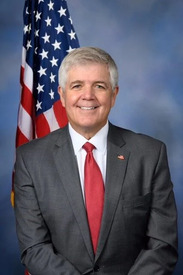

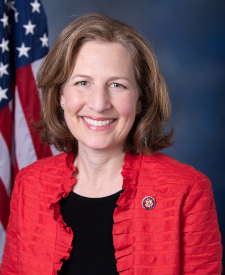
Legislative Progress
In CommitteeForwarded by Subcommittee to Full Committee by Voice Vote.
Subcommittee Consideration and Mark-up Session Held
Mr. Bentz (for himself and Ms. Schrier) introduced the following …
Referred to the Subcommittee on Commerce, Manufacturing, and Trade.
Referred to the House Committee on Energy and Commerce.
Introduced in House
Stakeholder Effects
cui bono?How this legislation distributes effects. Mention counts reflect frequency, not effect magnitude.
Congressional oversight committees, Department of Health and Human Services, Federal Trade Commission
Positive-direction: Congressional oversight committees
Negative-direction: Department of Health and Human Services, Federal Trade Commission
Bill Structure & Actor Mappings
Who is "The Secretary" in each section?
We use a combination of our own taxonomy and classification in addition to large language models to assess meaning and potential beneficiaries. High confidence means strong textual evidence. Always verify with the original bill text.
Learn more about our methodology