FORCE Act of 2025
Summary
What This Bill Does
The FORCE Act creates Medicare for first responders at age 57. A person may enroll if the person is 57 through 64, has worked for at least 10 total years in specified Standard Occupational Classification public-safety occupations, is not otherwise entitled to Medicare Part A or eligible for Parts A or B but would be eligible at age 65, and enrolls during the allowed period. Enrollees receive the same Medicare benefits and protections as a person entitled to Part A and enrolled in Part B, including Part D prescription drug plans, Medicare Advantage plans, MA-PD plans, and access to the Medicare Beneficiary Ombudsman. Enrollment may begin one month before eligibility or while eligible, coverage starts the first day of the next month, and coverage ends when the enrollee terminates it or becomes eligible for regular Medicare. Premiums equal the applicable Part B premium plus the Part A premium for individuals who would not be premium-free Part A eligible at age 65, and premium payments are deposited into a new Medicare First Responder Trust Fund.
Who Benefits and How
First responders ages 57 to 64 benefit from earlier access to Medicare benefits before standard age 65 eligibility. Public safety workers with at least 10 years in covered occupations benefit from Part D and Medicare Advantage options. First responders with expensive individual-market coverage benefit from another coverage pathway. Medicare Advantage and prescription drug plans benefit from potential enrollment by eligible first responders.
Who Bears the Burden and How
Eligible first responders must pay monthly premiums based on Part B and, when applicable, Part A premium rules. HHS and CMS must administer eligibility, enrollment, coverage periods, plan coordination, and premium collection. Treasury must maintain the Medicare First Responder Trust Fund and receive premium deposits. Medicare financing administrators must account for benefits and administrative expenses for a new enrollee group.
Key Provisions
- Creates Medicare enrollment for first responders ages 57 through 64.
- Requires at least 10 years of work in specified public-safety occupation codes.
- Provides Medicare benefits, protections, Part D, Medicare Advantage, and ombudsman access.
- Requires premiums based on Part B and applicable Part A premium rules.
- Establishes the Medicare First Responder Trust Fund for premium deposits.
Evidence Chain:
This summary is generated from the full bill text using AI analysis. Expand "Detailed Analysis" below for identified beneficiaries/burden bearers with clause-level evidence links.
At a Glance
What This Bill Does
Creates a Medicare enrollment option for first responders ages 57 through 64 with at least 10 years in specified public-safety occupations, providing Medicare benefits, Part D and Medicare Advantage access, premiums tied to Part B and Part A rules, deposits into a Medicare First Responder Trust Fund, and coverage ending when regular Medicare eligibility begins.
Key Policy Areas
Medicare, First Responders, Public Safety
Primary Purpose
Creates a Medicare enrollment option for first responders ages 57 through 64 with at least 10 years in specified public-safety occupations, providing Medicare benefits, Part D and Medicare Advantage access, premiums tied to Part B and Part A rules, deposits into a Medicare First Responder Trust Fund, and coverage ending when regular Medicare eligibility begins.
Policy Domains
Substantive provisions
Identified Gains
- First responders ages 57 to 64
- Public safety workers with 10 years of service
- Medicare Advantage plans
- Prescription drug plans
- First responders seeking pre-65 coverage
Identified Costs
- Eligible first responders paying premiums
- HHS Medicare staff
- CMS enrollment staff
- Treasury trust fund staff
- Medicare financing administrators
Sponsors




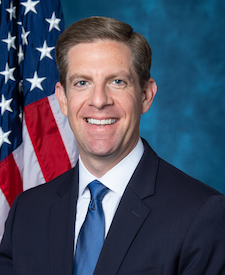
Legislative Progress
In CommitteeMr. Panetta (for himself, Mr. Levin, and Mr. Carbajal) introduced …
Referred to the Committee on Ways and Means, and in …
Introduced in House
Stakeholder Effects
cui bono?How this legislation distributes effects. Mention counts reflect frequency, not effect magnitude.
CMS enrollment staff, Medicare financing administrators, Treasury trust fund staff
Eligible first responders paying premiums, First responders ages 57 to 64
Positive-direction: First responders ages 57 to 64
Negative-direction: Eligible first responders paying premiums
Public safety workers with 10 years of service
Bill Structure & Actor Mappings
Who is "The Secretary" in each section?
We use a combination of our own taxonomy and classification in addition to large language models to assess meaning and potential beneficiaries. High confidence means strong textual evidence. Always verify with the original bill text.
Learn more about our methodology