Foreign Robocall Elimination Act
Summary
What This Bill Does
The Foreign Robocall Elimination Act targets unlawful robocalls entering the United States from outside the country. Within 270 days, the FCC, after consulting the FTC and Attorney General, must establish a task force on unlawful robocalls. The task force includes federal agency representatives selected by the FCC Chair and seven private-sector members covering voice service providers, analytics providers, technologists, technology experts, the TRACED Act consortium, a marketing business that calls consumers, a business or nonprofit that makes regular non-marketing calls, and a customer advocacy organization. The task force must report recommendations for federal agencies and Congress on combating foreign-origin robocalls, including volumes and foreign points of departure, financial loss and identity theft, foreign adoption of caller ID authentication, international call verification, STIR/SHAKEN, incentives for foreign cooperation, DOJ enforcement resources, criminal penalties based on call volume, forfeiture pursuit, private-sector technology solutions, best practices for blocking, and public reporting options. The bill also requires FCC rules for the Robocall Mitigation Database. Before a provider may file a database certification, FCC may require a bond of up to $100,000 when needed to preserve database integrity, with exemptions for bona fide established providers such as registered contributors, State-certificated providers, listed public companies, and providers otherwise showing legitimate operations, regulatory oversight, and ability to pay fines.
Who Benefits and How
Consumers benefit if the task force and bond requirement reduce unlawful foreign-origin robocalls, fraud, and identity theft. FCC and FTC enforcement staff benefit from recommendations on technical standards, foreign cooperation, traceback, STIR/SHAKEN, and best practices. Voice service providers and analytics providers benefit from a formal role in task-force recommendations and clearer robocall mitigation expectations. Customer advocacy organizations benefit from representation on the task force. Compliant established communications providers benefit from categorical exemptions from unnecessary bond requirements.
Who Bears the Burden and How
FCC must create and administer the task force, manage member appointments, produce recommendations, and write Robocall Mitigation Database bond rules. FTC, DOJ, and other federal agencies must consult, appoint representatives, and participate in task-force work. Providers lacking legitimate operations, regulatory oversight, or ability to pay enforcement penalties may have to post bonds up to $100,000 before database certification. Foreign-origin robocall operators face more coordinated enforcement and technical blocking recommendations. Private-sector task force members must contribute expertise and analysis to the report.
Key Provisions
- Requires an FCC-led task force on unlawful robocalls within 270 days.
- Requires federal agency and private-sector task-force membership, including voice providers, analytics providers, technologists, marketers, nonprofits, and consumer advocates.
- Requires a report on foreign-origin robocall volumes, countries of departure, losses, identity theft, authentication, STIR/SHAKEN, enforcement resources, penalties, and best practices.
- Requires FCC rules allowing bonds up to $100,000 before Robocall Mitigation Database certification when needed.
- Requires exemptions for legitimate established providers that do not need a bond to deter unlawful robocall activity.
Evidence Chain:
This summary is generated from the full bill text using AI analysis. Expand "Detailed Analysis" below for identified beneficiaries/burden bearers with clause-level evidence links.
At a Glance
What This Bill Does
Creates an FCC-led interagency and private-sector task force within 270 days to report on unlawful robocalls entering the United States from abroad, and requires FCC rules allowing bonds up to $100,000 before providers can certify in the Robocall Mitigation Database when needed to preserve database integrity.
Key Policy Areas
Telecommunications, Robocalls, FCC, Consumer Protection
Primary Purpose
Creates an FCC-led interagency and private-sector task force within 270 days to report on unlawful robocalls entering the United States from abroad, and requires FCC rules allowing bonds up to $100,000 before providers can certify in the Robocall Mitigation Database when needed to preserve database integrity.
Policy Domains
Substantive provisions
Identified Gains
- Consumers receiving fewer unlawful robocalls
- FCC enforcement staff
- FTC enforcement staff
- Voice service providers combating robocalls
- Analytics providers combating robocalls
- Customer advocacy organizations
- Compliant established communications providers
Identified Costs
- FCC task force staff
- Department of Justice robocall enforcement staff
- Federal agencies participating in the task force
- Providers required to post robocall mitigation bonds
- Foreign-origin robocall operators
- Private-sector task force members
Sponsors

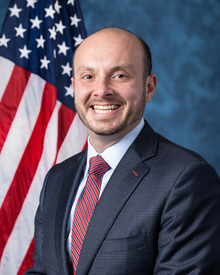
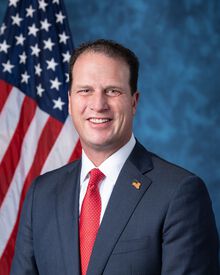
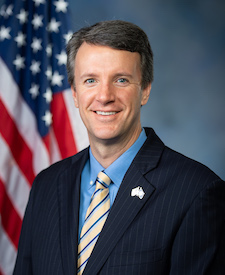

Legislative Progress
In CommitteeMr. McDowell (for himself, Ms. Morrison, Mr. Steube, and Mr. …
Referred to the House Committee on Energy and Commerce.
Introduced in House
Stakeholder Effects
cui bono?How this legislation distributes effects. Mention counts reflect frequency, not effect magnitude.
Department of Justice robocall enforcement staff, FCC Robocall Mitigation Database staff, FCC enforcement staff
Compliant established communications providers, Providers required to post robocall mitigation bonds, Voice service providers combating robocalls
Positive-direction: Compliant established communications providers, Voice service providers combating robocalls
Negative-direction: Providers required to post robocall mitigation bonds
Bill Structure & Actor Mappings
Who is "The Secretary" in each section?
We use a combination of our own taxonomy and classification in addition to large language models to assess meaning and potential beneficiaries. High confidence means strong textual evidence. Always verify with the original bill text.
Learn more about our methodology