FAIR Act
Summary
What This Bill Does
The FAIR Act adds constituent-service access rules to Immigration and Nationality Act detention authority. Within 90 days after enactment, detained individuals must be able to request ICE Form 60-001 or a successor third-party disclosure waiver and a Congressional Privacy Release Form, including in the language they speak. Within 24 hours after arrival, the detention center must provide the ICE National Detainee Handbook and the facility handbook in the detainee language, or orally interpret information through a professional interpreter when the handbook is unavailable in that language. The National Detainee Handbook must include a Congressional Constituent Services section explaining availability of constituent services, how to access privacy forms through the law library, how to send forms to a Member of Congress or third-party case helper, and the complaint process. Within seven days after a request, detention center staff must electronically notify the proper congressional office and send a copy of the privacy release from that office. Detainees must receive access to a computer, email, printing, copying, writing implements, and paper for ongoing communication with congressional offices or third-party case helpers. If forms are not provided within 30 days or the detention center violates the Act, a detainee or third party may file a complaint or sue in federal district court for appropriate relief. DHS must issue implementing rules within 180 days and notify immigration detention centers within 270 days.
Who Benefits and How
Immigration detainees benefit from access to privacy waivers, congressional release forms, language assistance, and casework communication tools. Detainees with limited English proficiency benefit from translated or interpreted handbook information and complaint assistance. Congressional offices benefit from timely electronic notice when a detainee seeks constituent services. Third-party case helpers benefit from clearer privacy-release and communication channels. Civil-rights advocates benefit from a complaint process and federal court remedy for violations.
Who Bears the Burden and How
Immigration detention centers must provide forms, handbooks, interpretation, law-library access, computer and email access, printing, copying, writing tools, and paper. Detention center staff must notify congressional offices within seven days and support ongoing casework communication. DHS must issue rules within 180 days and notify detention centers within 270 days. Agencies operating or contracting detention facilities face complaints and federal civil actions for violations. Professional interpreter services may be needed when materials are not available in the detainee language.
Key Provisions
- Requires access to ICE privacy waivers and Congressional Privacy Release Forms for detained individuals.
- Requires detainee handbooks and constituent-service information within 24 hours after arrival.
- Requires congressional office notice within seven days after a detainee request.
- Requires computer, email, printing, copying, writing tools, and paper for casework communication.
- Authorizes complaints and federal civil actions when detention centers violate the requirements.
- Requires DHS rules within 180 days and detention-center notice within 270 days.
Evidence Chain:
This summary is generated from the full bill text using AI analysis. Expand "Detailed Analysis" below for identified beneficiaries/burden bearers with clause-level evidence links.
At a Glance
What This Bill Does
Requires immigration detention centers to give detainees access to ICE privacy waivers, congressional privacy release forms, handbooks and language assistance, notify congressional offices within seven days of requests, provide computer, email, printing, copying, writing tools, and paper for casework communication, and allow complaints or civil actions for violations.
Key Policy Areas
Immigration Detention, Constituent Services, DHS
Primary Purpose
Requires immigration detention centers to give detainees access to ICE privacy waivers, congressional privacy release forms, handbooks and language assistance, notify congressional offices within seven days of requests, provide computer, email, printing, copying, writing tools, and paper for casework communication, and allow complaints or civil actions for violations.
Policy Domains
Substantive provisions
Identified Gains
- Immigration detainees seeking constituent services
- Detainees with limited English proficiency
- Congressional offices handling casework
- Third-party case helpers
- Civil-rights advocates
Identified Costs
- Immigration detention centers
- Detention center staff
- Department of Homeland Security rulemaking staff
- Agencies operating detention facilities
- Professional interpreter services
Sponsors


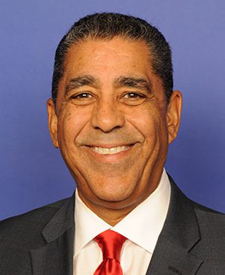


Legislative Progress
In CommitteeMr. Lieu (for himself, Ms. Jacobs, and Mr. Espaillat) introduced …
Referred to the House Committee on the Judiciary.
Introduced in House
Stakeholder Effects
cui bono?How this legislation distributes effects. Mention counts reflect frequency, not effect magnitude.
Congressional offices handling casework, Department of Homeland Security rulemaking staff, Immigration detention centers
Positive-direction: Congressional offices handling casework
Negative-direction: Department of Homeland Security rulemaking staff, Immigration detention centers
Detainees with limited English proficiency, Immigration detainees seeking constituent services
Bill Structure & Actor Mappings
Who is "The Secretary" in each section?
We use a combination of our own taxonomy and classification in addition to large language models to assess meaning and potential beneficiaries. High confidence means strong textual evidence. Always verify with the original bill text.
Learn more about our methodology