Expanding Health Care Options for First Responders Act
Summary
What This Bill Does
The Expanding Health Care Options for First Responders Act creates a new Medicare buy-in pathway for qualified first responders who are at least 50 but under 65, live in the United States, are U.S. citizens, nationals, or lawful permanent residents, are not otherwise eligible for Medicare Parts A or B, and separated from service due to retirement or disability. Covered first responders include qualified law enforcement officers, certain public safety employees, and federal firefighters. Enrollees receive the same Medicare benefits and protections as people entitled to Part A and enrolled in Parts B and D, including Medicare Advantage prescription drug plans. HHS must coordinate enrollment and coverage periods with ACA exchanges and Medicare Parts C and D and set coverage to begin on January 1 of the first year at least one year after enactment. Premiums equal estimated average annual per-capita benefits and administrative expenses for Medicare coverage, divided monthly, and are deposited into Medicare trust funds. The bill treats the coverage as minimum essential coverage and as qualified health plan coverage for most premium tax credit purposes, bars States from buying Medicaid beneficiaries ages 50 to 64 into the option, permits employers to reimburse retiree premiums tax-free, applies Medigap guaranteed issue rules by substituting age 50 for age 65, and authorizes State and nonprofit outreach and enrollment grants.
Who Benefits and How
Retired first responders ages 50 to 64 benefit from a Medicare coverage option before age 65. Disabled first responders ages 50 to 64 benefit from access to Medicare benefits, Medicare Advantage, and prescription drug coverage. Former law enforcement officers, public safety employees, and federal firefighters benefit from a coverage pathway tailored to service separation. Employers of retired first responders benefit because they may reimburse premiums without creating taxable income. States and nonprofit organizations benefit from potential outreach and enrollment grants.
Who Bears the Burden and How
Eligible first responders must pay monthly premiums equal to estimated Medicare benefit and administrative costs. HHS and CMS must build enrollment periods, premium calculations, trust fund deposits, Medigap coordination, and outreach grants. States may not use the option to buy Medicaid beneficiaries ages 50 to 64 into Medicare. Medicare trust fund administrators must receive and allocate premium deposits. Medigap issuers must apply guaranteed issue protections for eligible buy-in enrollees beginning at age 50.
Key Provisions
- Creates a Medicare buy-in for retired or disabled first responders ages 50 through 64.
- Requires premiums based on estimated Medicare benefits and administrative expenses.
- Coordinates enrollment with ACA exchanges and Medicare Parts C and D.
- Preserves employer premium reimbursement and premium tax credit treatment.
- Bars States from buying Medicaid beneficiaries into the option.
- Authorizes outreach and enrollment grants for States and nonprofit organizations.
Evidence Chain:
This summary is generated from the full bill text using AI analysis. Expand "Detailed Analysis" below for identified beneficiaries/burden bearers with clause-level evidence links.
At a Glance
What This Bill Does
Creates a Medicare buy-in option for retired or disabled first responders ages 50 through 64, charging premiums equal to estimated Medicare benefit and administrative costs, coordinating enrollment with ACA exchanges and Medicare Parts C and D, preserving premium tax credit treatment, barring Medicaid buy-ins, and authorizing outreach and enrollment grants to States and nonprofits.
Key Policy Areas
Medicare, First Responders, Health Coverage
Primary Purpose
Creates a Medicare buy-in option for retired or disabled first responders ages 50 through 64, charging premiums equal to estimated Medicare benefit and administrative costs, coordinating enrollment with ACA exchanges and Medicare Parts C and D, preserving premium tax credit treatment, barring Medicaid buy-ins, and authorizing outreach and enrollment grants to States and nonprofits.
Policy Domains
Substantive provisions
Identified Gains
- Retired first responders ages 50 to 64
- Disabled first responders ages 50 to 64
- Former law enforcement officers
- Federal firefighters
- Employers of retired first responders
- States receiving outreach grants
- Nonprofit enrollment organizations
Identified Costs
- Eligible first responder enrollees paying premiums
- HHS Medicare staff
- CMS enrollment staff
- Medicare trust fund administrators
- State Medicaid agencies
- Medigap issuers
Sponsors

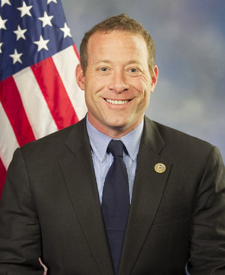
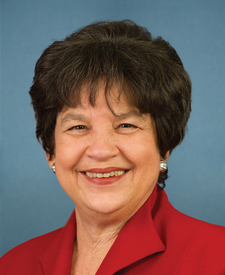

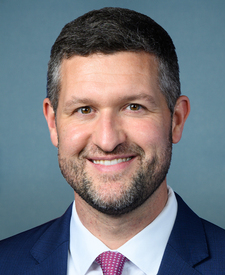
Legislative Progress
In CommitteeMr. Landsman introduced the following bill; which was referred to …
Referred to the Committee on Ways and Means, and in …
Introduced in House
Stakeholder Effects
cui bono?How this legislation distributes effects. Mention counts reflect frequency, not effect magnitude.
Disabled first responders ages 50 to 64, Eligible first responder enrollees paying premiums, Retired first responders ages 50 to 64
Positive-direction: Disabled first responders ages 50 to 64, Retired first responders ages 50 to 64
Negative-direction: Eligible first responder enrollees paying premiums
Bill Structure & Actor Mappings
Who is "The Secretary" in each section?
We use a combination of our own taxonomy and classification in addition to large language models to assess meaning and potential beneficiaries. High confidence means strong textual evidence. Always verify with the original bill text.
Learn more about our methodology