Congressional Budget Office Scheduling Reform Act
Summary
What This Bill Does
The Congressional Budget Office Scheduling Reform Act amends the Congressional Budget and Impoundment Control Act of 1974 to add a public schedule requirement for CBO. By December 31 of each calendar year, the CBO Director must publish on CBO public website the expected publication dates of major recurring reports. The schedule must at least include the baseline for the budget year and later baseline updates, the report on options to reduce the deficit, the report on the accuracy of budgetary projections for the most recently completed fiscal year, and the report on programs or activities with unauthorized appropriations under section 202(e)(3). The Director may update the schedule during the following calendar year as necessary. The bill also updates the Act table of contents to add the new section.
Who Benefits and How
Members of Congress benefit from advance visibility into expected CBO report timing. Congressional committee staff benefit from a public schedule for budget baselines, deficit options, projection accuracy, and unauthorized-appropriations reports. Budget analysts and journalists benefit from predictable publication windows for major recurring CBO products. The public benefits from greater transparency about when recurring budget information should be released.
Who Bears the Burden and How
CBO administrators must publish the annual schedule by December 31 and maintain it on the public website. CBO report managers must estimate expected publication dates for major recurring reports before the year begins. CBO staff must update the schedule during the following year when publication timing changes. Congressional users may need to track schedule updates rather than relying on informal release expectations.
Key Provisions
- Requires CBO to publish an annual public schedule of major recurring report dates by December 31.
- Requires the schedule to include the budget baseline and subsequent updates.
- Requires inclusion of deficit-reduction options, projection-accuracy, and unauthorized-appropriations reports.
- Allows CBO to update the schedule during the following calendar year as needed.
- Adds the new CBO schedule section to the Budget Act table of contents.
Evidence Chain:
This summary is generated from the full bill text using AI analysis. Expand "Detailed Analysis" below for identified beneficiaries/burden bearers with clause-level evidence links.
At a Glance
What This Bill Does
Requires the Congressional Budget Office by December 31 of each year to publish on its public website expected publication dates for major recurring reports, including the budget baseline, deficit-reduction options, projection-accuracy report, and unauthorized-appropriations report, with updates during the following year as needed.
Key Policy Areas
Congressional Budget Office, Budget Transparency, Congressional Procedure
Primary Purpose
Requires the Congressional Budget Office by December 31 of each year to publish on its public website expected publication dates for major recurring reports, including the budget baseline, deficit-reduction options, projection-accuracy report, and unauthorized-appropriations report, with updates during the following year as needed.
Policy Domains
Substantive provisions
Identified Gains
- Members of Congress
- Congressional committee staff
- Budget analysts
- Journalists covering federal budgets
- Public users of CBO reports
Identified Costs
- CBO administrators
- CBO report managers
- CBO website staff
- Congressional users tracking schedule updates
Sponsors




Legislative Progress
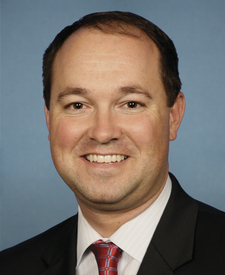
In CommitteeMr. Gill of Texas (for himself, Mr. Edwards, Mr. Grothman, …
Referred to the House Committee on the Budget.
Introduced in House
Stakeholder Effects
cui bono?How this legislation distributes effects. Mention counts reflect frequency, not effect magnitude.
CBO administrators, CBO report managers, Congressional committee staff
Positive-direction: Congressional committee staff, Members of Congress
Negative-direction: CBO administrators, CBO report managers
Bill Structure & Actor Mappings
Who is "The Secretary" in each section?
We use a combination of our own taxonomy and classification in addition to large language models to assess meaning and potential beneficiaries. High confidence means strong textual evidence. Always verify with the original bill text.
Learn more about our methodology