To direct the Secretary of Education to make grants to support early college high schools and dual or concurrent enrollment programs, and for other purposes.
Analysis under review: This bill has generated analysis that may be too generic or incomplete. Clause-level evidence remains available below.
Summary
What This Bill Does
The Jumpstart on College Act authorizes \ million per year for six years (.5 billion total) in competitive grants to expand early college high schools and dual enrollment programs that allow high school students to earn college credits and postsecondary credentials before graduation. The bill targets low-income students and those underrepresented in higher education, aiming to increase the percentage who complete credentials on time.
Who Benefits and How
Institutions of higher education receive grants of up to \ million each to partner with school districts in establishing or expanding early college and dual enrollment programs. States receive grants to build statewide strategies for expanding these programs. Low-income students and underrepresented populations benefit from free or subsidized access to college coursework, potentially saving thousands in future tuition costs. Nonprofit organizations and businesses may participate as partners in grant-funded programs.
Who Bears the Burden and How
U.S. taxpayers bear the cost of the \ million annual authorization. Grant recipients must provide escalating matching funds (20% to 50% of grant amounts over 6 years), with at least half from non-federal sources. Schools and institutions face annual reporting requirements on student enrollment, credential completion, and demographic data. The Department of Education must administer grants, conduct evaluations, and provide technical assistance.
Key Provisions
- Authorizes \M/year for 6 years split between grants to eligible entities (40%), states (55%), and national activities (5%)
- Competitive grants up to \M for college-school district partnerships to establish early college high schools and dual enrollment programs, with priority for those serving 51%+ low-income students
- Requires escalating matching funds from 20% to 50% over the 6-year grant period, with mandatory annual reporting on student outcomes disaggregated by demographics
- Protects employee rights under collective bargaining and counts early college graduates in four-year cohort graduation rates
Evidence Chain:
This summary is generated from the full bill text using AI analysis. Expand "Detailed Analysis" below for identified beneficiaries/burden bearers with clause-level evidence links.
At a Glance
What This Bill Does
Authorizes $250 million annually for six years in competitive grants to institutions of higher education and states to establish and expand early college high schools and dual/concurrent enrollment programs, with the goal of increasing postsecondary credential completion among low-income and underrepresented students.
Key Policy Areas
Education, Workforce Development
Primary Purpose
Authorizes $250 million annually for six years in competitive grants to institutions of higher education and states to establish and expand early college high schools and dual/concurrent enrollment programs, with the goal of increasing postsecondary credential completion among low-income and underrepresented students.
Policy Domains
Jumpstart on College Act
Identified Gains
- Low-income and underrepresented high school students
- Institutions of higher education (grant recipients)
- State education agencies
- Nonprofit education organizations
Identified Costs
- U.S. taxpayers (\M/year authorization)
- Grant recipients (matching fund requirements and reporting)
- Department of Education (grant administration, evaluation, technical assistance)
Sponsors
Legislative Progress
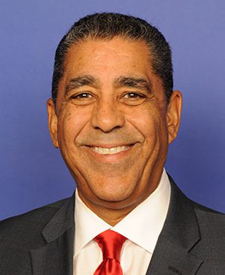
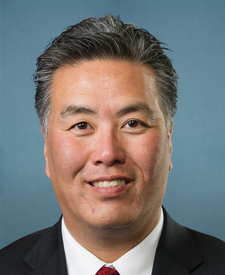
IntroducedMr. Espaillat (for himself and Mr. Takano) introduced the following …
Stakeholder Effects
cui bono?How this legislation distributes effects. Mention counts reflect frequency, not effect magnitude.
Early college high school and dual enrollment programs, Early college high schools, Grant recipient institutions and states
Positive-direction: Early college high school and dual enrollment programs, Early college high schools, Institutions of higher education, Institutions of higher education partnered with school districts, Local educational agencies and school districts, Teachers and education employees covered by collective bargaining
Negative-direction: Grant recipient institutions and states
Low-income and underrepresented high school students, Students underrepresented in higher education
Education technical assistance providers
Nonprofit education organizations
Bill Structure & Actor Mappings
Who is "The Secretary" in each section?
- "the_secretary"
- → Secretary of Education
Key Definitions
Terms defined in this bill
Secretary of Education
As defined in section 3 of the Workforce Innovation and Opportunity Act (29 U.S.C. 3102)
A student counted under section 1124(c) of ESEA (20 U.S.C. 6333(c))
An institution of higher education in partnership with one or more local educational agencies (which may be an educational service agency), potentially including nonprofits, businesses, and schools in juvenile detention centers
We use a combination of our own taxonomy and classification in addition to large language models to assess meaning and potential beneficiaries. High confidence means strong textual evidence. Always verify with the original bill text.
Learn more about our methodology