To amend title 51, United States Code, to update government oversight of commercial space activities, and for other purposes.
Analysis under review: This bill has generated analysis that may be too generic or incomplete. Clause-level evidence remains available below.
Summary
What This Bill Does
This bill creates a streamlined certification process for private companies operating spacecraft, consolidating authority under the Office of Space Commerce in the Department of Commerce. It aims to reduce regulatory burden on the growing commercial space industry while maintaining basic safety and international treaty compliance requirements.
Who Benefits and How
Commercial space companies (satellite operators, launch providers, space resource companies) benefit significantly through reduced regulatory complexity - they can obtain a single certification instead of navigating multiple agency approvals. The bill explicitly prohibits agencies from imposing duplicative requirements and limits civil penalties. Research institutions and nonprofits benefit from cooperative agreements for space situational awareness programs worth $70 million in authorized funding.
Who Bears the Burden and How
Federal agencies like the FAA and FCC lose some regulatory authority over space activities, with their oversight consolidated under Commerce. Environmental and safety advocacy groups may face reduced leverage as the bill explicitly directs minimizing regulations and limits how international obligations can restrict private activities. Taxpayers fund the new programs including the $70 million authorization.
Key Provisions
- Creates new certification system for space objects through Office of Space Commerce (Chapter 801)
- Establishes civil penalties up to $500,000 for operating without certification
- Requires Congressional certification before US signs international space agreements that could limit private activities
- Establishes Space Situational Awareness consortium and NASA research institute
- Authorizes $70 million for Office of Space Commerce operations
Evidence Chain:
This summary is generated from the full bill text using AI analysis. Expand "Detailed Analysis" below for identified beneficiaries/burden bearers with clause-level evidence links.
At a Glance
What This Bill Does
Modernizes and streamlines government oversight of commercial space activities by creating a unified certification process through the Office of Space Commerce and limiting regulatory burdens on private space entities.
Key Policy Areas
Space, Commercial Regulation, National Security, International Relations
Primary Purpose
Modernizes and streamlines government oversight of commercial space activities by creating a unified certification process through the Office of Space Commerce and limiting regulatory burdens on private space entities.
Policy Domains
Chapter 801 - Certification to Operate Space Objects
Identified Gains
- Commercial satellite operators
- Space launch companies
- Space resource companies
- Space technology startups
Identified Costs
- Federal regulatory agencies
- International treaty enforcement advocates
Chapter 802 - Administrative Provisions Related to Certification
Identified Gains
- Commercial space operators
- Space industry investors
Identified Costs
- Non-compliant space operators
- Taxpayers
International Agreements Limitations
Identified Gains
- US commercial space industry
- Congress
Identified Costs
- Executive branch agencies
- International cooperation advocates
Space Situational Awareness Provisions
Identified Gains
- Universities and research institutions
- Nonprofit space organizations
- Commercial space operators
Identified Costs
- Federal agencies losing regulatory authority
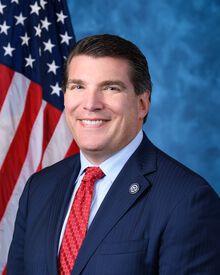
Sponsors
Legislative Progress
IntroducedMr. Babin (for himself, Mr. Lucas, Mr. Posey, Mr. Mike …
Stakeholder Effects
cui bono?How this legislation distributes effects. Mention counts reflect frequency, not effect magnitude.
Commercial launch operators, Commercial launch providers, Commercial space companies
Commercial space operators faces effects in multiple directions
Positive-direction: Commercial launch operators, Commercial launch providers, Commercial space companies, Commercial space industry, Commercial space industry professionals, Commercial space operators seeking certification, Existing licensed space operators, In-space servicing companies, International space operators, Launch vehicle operators licensed by FAA, Orbital assembly startups, Space launch service providers, Space nuclear propulsion developers
Negative-direction: Commercial space operators near federal assets, Fraudulent space operators, Non-compliant space operators
Congress, Department of Commerce, Department of Transportation
Office of Space Commerce faces effects in multiple directions
Positive-direction: Congress, FAA Office of Commercial Space Transportation, FCC, Federal government space operations, Federal regulatory agencies (FAA, FCC), International treaty enforcement agencies
Negative-direction: Department of Commerce, Department of Transportation, Executive branch (State Department), Federal courts, Federal regulatory agencies, NASA, NASA research centers
Commercial satellite operators, FCC-licensed spectrum users, Satellite operators
Positive-direction: FCC-licensed spectrum users, Satellite operators with FCC licenses
Negative-direction: Commercial satellite operators, Satellite operators
Universities, Universities with aerospace programs, Universities with space programs
Aerospace nonprofits, International treaty compliance advocates, Nonprofit space organizations
Positive-direction: Aerospace nonprofits, Nonprofit space organizations
Negative-direction: International treaty compliance advocates
Space manufacturing companies, Space vehicle manufacturers
Bill Structure & Actor Mappings
Who is "The Secretary" in each section?
- "the_secretary"
- → Secretary of Commerce, acting through the Office of Space Commerce
- "the_secretary"
- → Secretary of Commerce, acting through the Office of Space Commerce
- "the_director"
- → Director of the Office of Space Commerce
- "the_administrator"
- → Administrator of NASA
- "the_president"
- → President of the United States
- "the_administrator"
- → Administrator of NASA
- "the_secretary_commerce"
- → Secretary of Commerce
- "the_secretary_transportation"
- → Secretary of Transportation
Note: The Secretary generally refers to Secretary of Commerce throughout, but the bill also references Secretary of Transportation for launch/reentry licensing and international agreement certifications
Key Definitions
Terms defined in this bill
The identification and characterization of space objects and orbital debris; and understanding how they behave in outer space
The Secretary of Commerce, acting through the Office of Space Commerce
A payload approval under section 50904, FCC spectrum license, or license for space-based remote sensing under chapter 601
Has the meaning given the term Executive agency in section 105 of title 5
Efforts to prevent on-orbit break-ups and remove space objects that have reached end of operational life
The Outer Space Treaty, Agreement on Rescue of Astronauts, Convention on Registration of Space Objects, and Liability Convention
The Treaty on Principles Governing the Activities of States in the Exploration and Use of Outer Space, including the Moon and Other Celestial Bodies (signed January 27, 1967)
We use a combination of our own taxonomy and classification in addition to large language models to assess meaning and potential beneficiaries. High confidence means strong textual evidence. Always verify with the original bill text.
Learn more about our methodology