Bidirectional Electric Vehicle Charging Act of 2025
Summary
What This Bill Does
The Bidirectional Electric Vehicle Charging Act creates a federal strategy for EVs that can both receive power and provide power to an external load. DOE must develop a National Electric Vehicle Bidirectional Charging Roadmap with a timeline, obstacles, strategies, congressional action items, and cost estimates for slow, moderate, and fast deployment. DOE must submit the roadmap to the House Energy and Commerce Committee and publish it within 12 months. Within two years, DOE must issue technical standards for EV manufacturers and require new electric vehicles beginning in model year 2029, including light-duty vehicles and school buses, to support bidirectional charging unless DOE grants an exemption. Violations can trigger civil penalties up to $21,000 per vehicle, equipment item, or refusal, with a $105 million cap for a related series. FEMA must issue regulations requiring State and local hazard mitigation plans to incorporate bidirectional charging capabilities. The bill defines bidirectional charging and electric vehicle for this framework.
Who Benefits and How
Bidirectional charging equipment manufacturers benefit from a national roadmap and standard. Electric utilities and grid planners benefit from more vehicles capable of providing power to external loads or grid-support systems. Emergency managers benefit if hazard mitigation plans include EV battery backup and resilience capabilities. School districts using electric buses benefit from potential mobile backup-power capability. EV consumers may benefit from standardized bidirectional capability and future backup-power options.
Who Bears the Burden and How
DOE must write the roadmap, publish it, issue standards, manage exemptions, and enforce penalties. Electric vehicle manufacturers must redesign or certify model year 2029 vehicles for bidirectional capability. School bus manufacturers must meet the capability requirement unless exempted. State and local governments must update FEMA hazard mitigation plans. Manufacturers violating DOE rules face penalties up to $21,000 per violation and $105 million per related series.
Key Provisions
- Requires DOE to publish a national bidirectional charging roadmap within 12 months.
- Requires DOE technical standards within two years.
- Requires model year 2029 and later EVs and school buses to support bidirectional charging unless exempted.
- Authorizes civil penalties up to $21,000 per violation and $105 million per related series.
- Requires FEMA hazard mitigation plans to incorporate bidirectional charging capabilities.
- Defines bidirectional charging and electric vehicle.
Evidence Chain:
This summary is generated from the full bill text using AI analysis. Expand "Detailed Analysis" below for identified beneficiaries/burden bearers with clause-level evidence links.
At a Glance
What This Bill Does
Requires DOE to publish a national bidirectional EV charging roadmap within 12 months, issue technical standards within two years, require model year 2029 and later EVs and school buses to support bidirectional charging unless exempted, authorize civil penalties up to $21,000 per violation and $105 million per related series, and require FEMA hazard mitigation plans to incorporate bidirectional charging.
Key Policy Areas
Electric Vehicles, Energy, Disaster Resilience, DOE
Primary Purpose
Requires DOE to publish a national bidirectional EV charging roadmap within 12 months, issue technical standards within two years, require model year 2029 and later EVs and school buses to support bidirectional charging unless exempted, authorize civil penalties up to $21,000 per violation and $105 million per related series, and require FEMA hazard mitigation plans to incorporate bidirectional charging.
Policy Domains
Substantive provisions
Identified Gains
- Bidirectional charging equipment manufacturers
- Electric utilities
- Emergency managers
- School districts using electric buses
- EV consumers
Identified Costs
- DOE standards staff
- Electric vehicle manufacturers
- School bus manufacturers
- State emergency management agencies
- Local emergency management agencies
- Manufacturers violating DOE rules
Legislative Progress
In CommitteeReferred to the Subcommittee on Economic Development, Public Buildings, and …
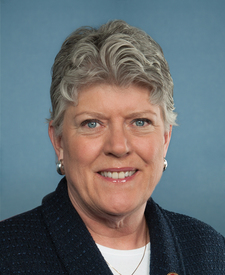
Ms. Brownley introduced the following bill; which was referred to …
Referred to the Committee on Energy and Commerce, and in …
Introduced in House
Stakeholder Effects
cui bono?How this legislation distributes effects. Mention counts reflect frequency, not effect magnitude.
Bidirectional charging equipment manufacturers, Electric vehicle manufacturers, Manufacturers violating DOE rules
Electric vehicle manufacturers faces effects in multiple directions
Positive-direction: Bidirectional charging equipment manufacturers
Negative-direction: Manufacturers violating DOE rules, School bus manufacturers
DOE roadmap staff, DOE standards staff, FEMA hazard mitigation staff
Positive-direction: House Energy and Commerce Committee
Negative-direction: DOE roadmap staff, DOE standards staff, FEMA hazard mitigation staff
Emergency managers, Local emergency management agencies, State emergency management agencies
Positive-direction: Emergency managers
Negative-direction: Local emergency management agencies, State emergency management agencies
Bill Structure & Actor Mappings
Who is "The Secretary" in each section?
We use a combination of our own taxonomy and classification in addition to large language models to assess meaning and potential beneficiaries. High confidence means strong textual evidence. Always verify with the original bill text.
Learn more about our methodology