To amend the Immigration and Nationality Act to protect the well-being of soldiers and their families, and for other purposes.
Analysis under review: This bill has generated analysis that may be too generic or incomplete. Clause-level evidence remains available below.
Summary
What This Bill Does
This bill creates a comprehensive package of immigration benefits for non-citizen military service members and their families. It expands wartime-equivalent naturalization to anyone serving in contingency operations, exempts military family members from immigrant visa numerical caps, creates a new pathway for family members to adjust to permanent resident status, and restricts the government ability to deport veterans. It amends multiple sections of the Immigration and Nationality Act.
Who Benefits and How
Non-citizen service members gain faster naturalization pathways -- anyone serving in a contingency operation can naturalize under the expedited wartime provisions of INA Section 329, regardless of whether the President has formally designated a period of hostilities. Family members of military service members (spouses, children, sons, daughters, and minor siblings) benefit from exemption from visa numerical caps, enabling faster reunification. The new status adjustment provision in Section 245(o) allows family members physically present in the US to adjust to permanent residency with certain inadmissibility grounds waived. Veterans gain strong protections against deportation, including a prohibition on expedited removal and a requirement for DHS Secretary approval before removal proceedings can begin.
Who Bears the Burden and How
The Secretary of Homeland Security takes on new responsibilities for adjudicating family status adjustment applications and must personally approve any removal proceedings against veterans. USCIS faces increased processing workloads from new naturalization and adjustment applications. Other immigrant visa applicants may face longer waits as military family members are exempted from the numerical caps that govern the visa queue, though the bill also changes the active service requirement from six months to one year.
Key Provisions
- Extends wartime naturalization (INA Sec 329) to service members in contingency operations
- Changes active service requirement from 6 months to 1 year for peacetime naturalization (INA Sec 328)
- Exempts military family members from family-sponsored visa numerical caps
- Creates new INA Sec 245(o) status adjustment pathway for military family members with certain inadmissibility waivers and posthumous benefits (2-year window)
- Prohibits initiation of removal proceedings against veterans without DHS Secretary approval
- Bars expedited removal, administrative removal, and reinstatement of removal orders against veterans
Evidence Chain:
This summary is generated from the full bill text using AI analysis. Expand "Detailed Analysis" below for identified beneficiaries/burden bearers.
At a Glance
What This Bill Does
Strengthens immigration protections for military service members and their families by facilitating naturalization for those serving in contingency operations, exempting military family members from visa caps, enabling status adjustment for immediate family, and restricting removal proceedings against veterans.
Key Policy Areas
Immigration, National Defense, Veterans Affairs
Primary Purpose
Strengthens immigration protections for military service members and their families by facilitating naturalization for those serving in contingency operations, exempting military family members from visa caps, enabling status adjustment for immediate family, and restricting removal proceedings against veterans.
Policy Domains
Immigration Protections for Military Personnel and Families
Identified Gains
Contextual inference, no direct clause citation- Non-citizen military service members
- Family members of military service members (spouses, children, parents, siblings)
- US military recruitment and retention
- Veterans facing deportation
Contextual inference, no direct clause citation
Identified Costs
Contextual inference, no direct clause citation- Secretary of Homeland Security (new adjudication responsibilities)
- USCIS (processing additional applications)
- Immigrant visa applicants in existing queues (displaced by new exempt categories)
Contextual inference, no direct clause citation
Sponsors
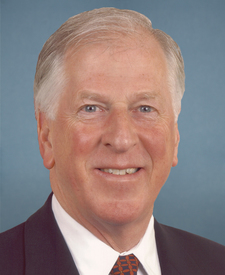
Legislative Progress
IntroducedMr. Thompson of California introduced the following bill; which was …
Stakeholder Effects
cui bono?How this legislation distributes effects. Mention counts reflect frequency, not effect magnitude.
Families of fallen service members, Families of veterans, Family members of non-citizen service members
ICE enforcement operations, Secretary of Homeland Security, Secretary of Homeland Security / USCIS
Non-citizen military service members in contingency operations, Non-citizen service members, Non-citizen service members seeking peacetime naturalization
Positive-direction: Non-citizen military service members in contingency operations, Non-citizen service members, Non-citizen veterans facing deportation
Negative-direction: Non-citizen service members seeking peacetime naturalization
Bill Structure & Actor Mappings
Who is "The Secretary" in each section?
- "the_president"
- → President (for naturalization designation under INA 329)
- "the_secretary"
- → Secretary of Homeland Security
Key Definitions
Terms defined in this bill
Any person who has served honorably in an active duty status in the Armed Forces and, if separated, was separated under honorable conditions.
We use a combination of our own taxonomy and classification in addition to large language models to assess meaning and potential beneficiaries. High confidence means strong textual evidence. Always verify with the original bill text.
Learn more about our methodology