Dark Web Interdiction Act of 2025
Summary
What This Bill Does
The Dark Web Interdiction Act of 2025 targets online marketplaces used for illegal drugs and related contraband. It adds a Controlled Substances Act offense for knowingly or intentionally delivering, distributing, or dispensing controlled substances by means of the dark web, or aiding and abetting that conduct. It directs the Sentencing Commission to add a two-level sentencing increase for covered dark-web drug offenses. It establishes the Joint Criminal Opioid and Darknet Enforcement Task Force in the FBI, led by a presidentially appointed, Senate-confirmed director and including agencies such as FBI, DEA, U.S. Postal Inspection Service, ICE, ATF, Homeland Security Investigations, CBP, DOD, FinCEN, and DOJ components. The task force must detect, disrupt, and dismantle illicit marketplaces; provide forensic and cyberforensic training; develop best practices and equipment lists; build multijurisdictional partnerships; track emerging technologies; and coordinate internationally. The Attorney General, with Treasury and DHS, must report within one year on how virtual currencies finance opioid transactions on the dark web, investigative capacity, suspicious activity, record access from operators and exchanges, training, international coordination, and recommended policy changes.
Who Benefits and How
Federal drug investigators benefit from a specific dark-web controlled-substance offense and a permanent interagency task force. Communities harmed by opioid trafficking benefit if dark-web sellers face stronger disruption, prosecution, and sentencing exposure. Cyberforensic and blockchain investigation units benefit from required training, best practices, equipment assessments, and coordination. Congress benefits from a one-year report on virtual currency, suspicious activity, record access, and enforcement capacity. Postal, customs, homeland security, and financial-crimes agencies benefit from a formal structure for joint investigations.
Who Bears the Burden and How
Dark-web drug sellers and aiders or abettors face a new federal offense and a two-level sentencing increase. FBI must host and administer the Joint Criminal Opioid and Darknet Enforcement Task Force. Participating agencies including DEA, USPIS, ICE, ATF, HSI, CBP, DOD, FinCEN, and DOJ components must staff and coordinate task-force work. Virtual currency exchanges and financial institutions may face more scrutiny, record requests, suspicious activity reporting, and anti-money-laundering attention. The Sentencing Commission must amend sentencing guidelines for covered dark-web controlled-substance offenses.
Key Provisions
- Creates a federal offense for distributing controlled substances through the dark web.
- Requires a two-level sentencing increase for covered dark-web drug offenses.
- Establishes an FBI-based Joint Criminal Opioid and Darknet Enforcement Task Force.
- Requires interagency training, cyberforensic support, best practices, equipment lists, partnerships, and international coordination.
- Requires a one-year report on virtual currency use in dark-web opioid transactions and enforcement gaps.
Evidence Chain:
This summary is generated from the full bill text using AI analysis. Expand "Detailed Analysis" below for identified beneficiaries/burden bearers with clause-level evidence links.
At a Glance
What This Bill Does
Creates a federal dark-web controlled-substance offense and sentencing enhancement, establishes an FBI-based Joint Criminal Opioid and Darknet Enforcement Task Force, and requires a Justice-Treasury-Homeland Security report on virtual currency and dark-web opioid transactions.
Key Policy Areas
Law Enforcement, Controlled Substances, Cybercrime, Virtual Currency
Primary Purpose
Creates a federal dark-web controlled-substance offense and sentencing enhancement, establishes an FBI-based Joint Criminal Opioid and Darknet Enforcement Task Force, and requires a Justice-Treasury-Homeland Security report on virtual currency and dark-web opioid transactions.
Policy Domains
Substantive provisions
Identified Gains
- Federal drug investigators
- Communities harmed by opioid trafficking
- Cyberforensic investigation units
- Blockchain investigation units
- Congressional oversight committees
- Postal and customs enforcement agencies
Identified Costs
- Dark-web drug sellers
- Aiders and abettors of dark-web drug distribution
- FBI task-force administrators
- Participating federal law enforcement agencies
- Virtual currency exchanges
- Financial institutions
- Sentencing Commission staff
Sponsors

Legislative Progress
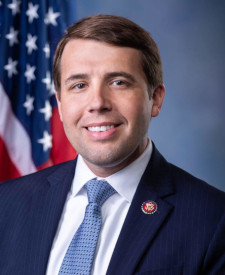
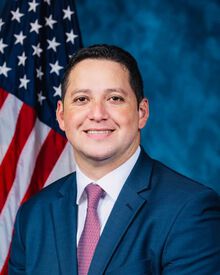
In CommitteeMr. Pappas (for himself and Mr. Tony Gonzales of Texas) …
Referred to the Committee on the Judiciary, and in addition …
Introduced in House
Stakeholder Effects
cui bono?How this legislation distributes effects. Mention counts reflect frequency, not effect magnitude.
Congressional oversight committees, FBI task-force administrators, Federal drug prosecutors
Positive-direction: Congressional oversight committees, Federal drug prosecutors
Negative-direction: FBI task-force administrators, Justice Department report staff, Sentencing Commission staff, Treasury illicit-finance staff
Aiders and abettors of dark-web drug distribution, Communities harmed by opioid trafficking, Dark-web drug sellers
Positive-direction: Communities harmed by opioid trafficking
Negative-direction: Aiders and abettors of dark-web drug distribution, Dark-web drug sellers, Dark-web marketplace operators
Blockchain investigation units, Cyberforensic investigation units
Financial institutions, Virtual currency exchanges
Federal drug investigators, Participating federal law enforcement agencies
Positive-direction: Federal drug investigators
Negative-direction: Participating federal law enforcement agencies
Bill Structure & Actor Mappings
Who is "The Secretary" in each section?
We use a combination of our own taxonomy and classification in addition to large language models to assess meaning and potential beneficiaries. High confidence means strong textual evidence. Always verify with the original bill text.
Learn more about our methodology