To amend title 10, United States Code, to establish additional factors considered in the design of pathways in the Transition Assistance Program.
Analysis under review: This bill has generated analysis that may be too generic or incomplete. Clause-level evidence remains available below.
Summary
What This Bill Does
Requires the military Transition Assistance Program to consider additional family and household factors when designing participant pathways.
Who Benefits and How
Separating servicemembers and their households could get transition planning that better reflects child care needs, spouse employment, separation from family, and operating tempo.
Who Bears the Burden and How
Defense transition planners would need to incorporate more household-level factors into pathway design and participant assessment.
Key Provisions
- Adds child care requirements, household employment status, duty-station location, and operating tempo to the factors used in transition pathway design.
Evidence Chain:
This summary is generated from the full bill text using AI analysis. Expand "Detailed Analysis" below for identified beneficiaries/burden bearers.
At a Glance
What This Bill Does
Requires the military Transition Assistance Program to consider additional family and household factors when designing participant pathways.
Key Policy Areas
Defense, Labor, Government Operations
Primary Purpose
Requires the military Transition Assistance Program to consider additional family and household factors when designing participant pathways.
Policy Domains
Main Provisions
Identified Gains
Contextual inference, no direct clause citation- Separating servicemembers and their households
Contextual inference, no direct clause citation
Identified Costs
Contextual inference, no direct clause citation- Defense transition planners updating pathway design criteria
Contextual inference, no direct clause citation
Sponsors
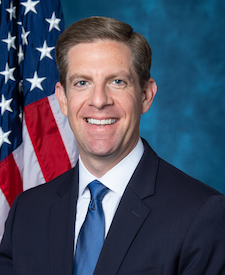
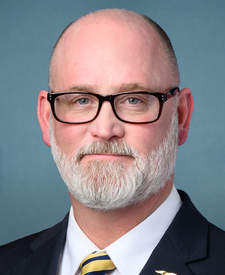
Legislative Progress
IntroducedMr. Levin (for himself and Mr. Van Orden) introduced the …
Stakeholder Effects
cui bono?How this legislation distributes effects. Mention counts reflect frequency, not effect magnitude.
Defense transition planners updating pathway design criteria
Bill Structure & Actor Mappings
Who is "The Secretary" in each section?
We use a combination of our own taxonomy and classification in addition to large language models to assess meaning and potential beneficiaries. High confidence means strong textual evidence. Always verify with the original bill text.
Learn more about our methodology