Fire Innovation Unit Act
Analysis under review: This bill has generated analysis that may be too generic or incomplete. Clause-level evidence remains available below.
Summary
What This Bill Does
This bill creates a 7-year pilot program where federal agencies partner with private companies, nonprofits, and universities to test and deploy new wildfire technologies. The program is led jointly by the Secretary of Agriculture and Secretary of the Interior, with oversight from multiple federal agencies including the Forest Service, BLM, FEMA, and others.
Who Benefits and How
Wildfire technology companies benefit from new federal procurement pathways and opportunities to demonstrate their products in real-world conditions with federal agencies. Defense and aerospace contractors with fire detection, remote sensing, and autonomous systems capabilities gain access to expanded government contracts. State and local fire departments gain access to vetted, scalable technologies through federal partnerships. Rural communities in fire-prone areas may benefit from improved wildfire prevention and response capabilities.
Who Bears the Burden and How
Federal agencies (USDA, Interior, FEMA, etc.) must dedicate staff time and resources to coordinate the pilot program, evaluate technologies, and submit annual reports to Congress. Taxpayers fund the program costs, though specific appropriation amounts are not specified. There are no significant new burdens on private industry.
Key Provisions
- Creates a deployment and demonstration pilot program for wildfire technologies within 1 year of enactment
- Covers 12 key technology priority areas including hazardous fuels reduction, wildfire modeling, remote sensing, autonomous suppression systems, and grid resilience
- Allows existing partnerships and contracts to be deemed successful technologies without re-demonstration
- Requires annual reports to Congress on technology costs, scalability, and procurement barriers
Evidence Chain:
This summary is generated from the full bill text using AI analysis. Expand "Detailed Analysis" below for identified beneficiaries/burden bearers with clause-level evidence links.
At a Glance
What This Bill Does
Establishes a 7-year public-private pilot program for deployment and demonstration of wildfire prevention, detection, communication, response, and mitigation technologies
Key Policy Areas
Environment, Public Lands, Technology, Emergency Management, Government Contracting
Primary Purpose
Establishes a 7-year public-private pilot program for deployment and demonstration of wildfire prevention, detection, communication, response, and mitigation technologies
Policy Domains
Section 2 - Public-private wildfire technology deployment and demonstration partnership
Identified Gains
- Wildfire technology companies
- Defense and aerospace contractors
- State and local fire departments
- Rural communities in fire-prone areas
- Universities with wildfire research programs
Identified Costs
- Federal agencies (coordination costs)
- Taxpayers (program funding)
Sponsors

Legislative Progress
In CommitteeReferred to the Subcommittee on Forestry and Horticulture.
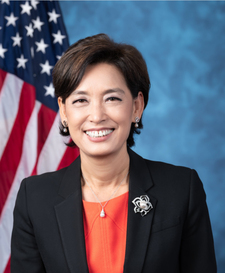
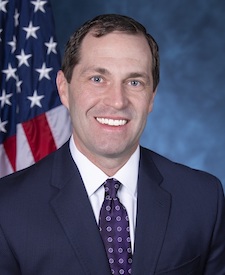
Mrs. Kim (for herself and Mr. Crow) introduced the following …
Referred to the Committee on Natural Resources, and in addition …
Introduced in House
Stakeholder Effects
cui bono?How this legislation distributes effects. Mention counts reflect frequency, not effect magnitude.
Defense and aerospace contractors with fire detection and autonomous systems
Remote sensing and satellite imaging companies
Federal land management agencies (USDA, Interior, BLM)
FEMA and emergency management agencies
Bill Structure & Actor Mappings
Who is "The Secretary" in each section?
- "covered_agency"
- → Federal land management agencies, DOD, BIA, NOAA, FEMA, NASA, US Fire Administration, GSA, state/tribal/local fire agencies
- "covered_entity"
- → Private entities, nonprofit organizations, institutions of higher education
- "the_secretaries"
- → Secretary of Agriculture and Secretary of the Interior, acting jointly
Key Definitions
Terms defined in this bill
Federal land management agencies, DOD, BIA, NOAA, FEMA, NASA, US Fire Administration, GSA, state/tribal/local fire departments and agencies, and any other Federal agency involved in wildfire response
A private entity, nonprofit organization, or institution of higher education
The deployment and demonstration pilot program established under subsection (b)
The Secretary of Agriculture and the Secretary of the Interior, acting jointly
We use a combination of our own taxonomy and classification in addition to large language models to assess meaning and potential beneficiaries. High confidence means strong textual evidence. Always verify with the original bill text.
Learn more about our methodology