COVER Now Act
Summary
What This Bill Does
The COVER Now Act adds a Medicaid demonstration project to section 1902 of the Social Security Act. In States that have not elected to cover the ACA Medicaid expansion population, qualifying political subdivisions, alone or in partnerships, may apply to HHS to provide medical assistance to expansion adults living in those subdivisions. HHS may waive statewideness and single-state-agency requirements. Participating political subdivisions must provide coverage for seven years or until the State starts covering the expansion population, whichever comes first, and a subdivision that participates for five years may apply for up to an additional five years. If the State later expands Medicaid, covered individuals must be automatically enrolled in the State plan or waiver. HHS must issue regulations within 180 days, act on applications within 180 days after receipt, and later act on extension requests. The Secretary may approve no more than 100 demonstrations. The bill bars a State from refusing to let a participating subdivision rely on State Medicaid systems and staff, including eligibility, enrollment, provider payment, claims processing, fair hearings, and federal reporting systems, and bars punitive action against participating subdivisions.
Who Benefits and How
Low-income adults in non-expansion States benefit if their county, city, or other political subdivision provides ACA expansion-population Medicaid coverage. Qualifying political subdivisions benefit because they can run or partner on a Medicaid expansion demonstration even when the State has not expanded. Hospitals, clinics, and other Medicaid providers in participating areas benefit from more insured patients and Medicaid payment for covered care. Local governments in non-expansion States benefit from a federal pathway to address uncompensated care and coverage gaps. Covered individuals benefit from automatic transition to State Medicaid coverage if the State later adopts expansion.
Who Bears the Burden and How
HHS and CMS must issue regulations, review applications and extensions, cap approvals at 100 demonstrations, and administer waivers. Participating political subdivisions must provide medical assistance, conduct public notice and hearings, and operate coverage for up to seven years or longer if extended. State Medicaid agencies must allow use of eligibility, enrollment, provider payment, claims, fair hearing, and federal reporting systems for participating subdivisions. Non-expansion State officials lose the ability to block or punish local governments solely for operating the demonstration. Federal Medicaid financing bears costs for expansion-population medical assistance in participating subdivisions.
Key Provisions
- Creates a Medicaid demonstration for qualifying political subdivisions in non-expansion States.
- Allows HHS to waive statewideness and single-state-agency requirements.
- Allows coverage for seven years, with possible five-year extensions after five years of participation.
- Requires automatic enrollment into the State plan or waiver if the State later expands Medicaid.
- Requires HHS rulemaking within 180 days and application decisions within 180 days after receipt.
- Bars States from denying use of Medicaid systems or taking punitive action against participating subdivisions.
Evidence Chain:
This summary is generated from the full bill text using AI analysis. Expand "Detailed Analysis" below for identified beneficiaries/burden bearers with clause-level evidence links.
At a Glance
What This Bill Does
Creates a Medicaid demonstration allowing qualifying political subdivisions in non-expansion States to provide ACA expansion-population medical assistance for up to seven years, with possible five-year extensions, CMS rulemaking and application timelines, waivers of statewideness and single-state-agency rules, automatic transition if the State later expands Medicaid, and limits on State retaliation or obstruction.
Key Policy Areas
Medicaid, Health Coverage, Local Government
Primary Purpose
Creates a Medicaid demonstration allowing qualifying political subdivisions in non-expansion States to provide ACA expansion-population medical assistance for up to seven years, with possible five-year extensions, CMS rulemaking and application timelines, waivers of statewideness and single-state-agency rules, automatic transition if the State later expands Medicaid, and limits on State retaliation or obstruction.
Policy Domains
Substantive provisions
Identified Gains
- Low-income adults in non-expansion States
- Qualifying political subdivisions
- Medicaid providers in participating areas
- Local governments in non-expansion States
- Covered demonstration enrollees
Identified Costs
- HHS Medicaid officials
- CMS demonstration staff
- Participating political subdivisions
- State Medicaid agencies
- Non-expansion State officials
- Federal Medicaid financing
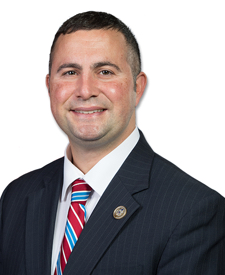
Sponsors
Legislative Progress
In CommitteeMr. Doggett (for himself, Mr. Bishop, Mr. Casar, Ms. Castor …
Referred to the House Committee on Energy and Commerce.
Introduced in House
Stakeholder Effects
cui bono?How this legislation distributes effects. Mention counts reflect frequency, not effect magnitude.
CMS demonstration staff, Federal Medicaid financing, State Medicaid agencies
Low-income adults in non-expansion States, Medicaid providers in participating areas
Non-expansion State officials, Qualifying political subdivisions
Positive-direction: Qualifying political subdivisions
Negative-direction: Non-expansion State officials
Bill Structure & Actor Mappings
Who is "The Secretary" in each section?
We use a combination of our own taxonomy and classification in addition to large language models to assess meaning and potential beneficiaries. High confidence means strong textual evidence. Always verify with the original bill text.
Learn more about our methodology