SGLF Act of 2025
Summary
What This Bill Does
The SGLF Act of 2025 amends the Great Lakes Fishery Act of 1956 by adding a new section 6A on invasive species of mussels. In carrying out U.S. obligations under the Great Lakes fisheries convention, the United States Section is authorized to develop efforts to combat invasive mussel species in coordination with federal agencies, interstate compacts, and Tribal, State, and local governments. The Secretary of the Interior, acting through the U.S. Fish and Wildlife Service and U.S. Geological Survey, and the Secretary of Commerce, acting through NOAA, must assist the United States Section. The bill authorizes $500 million for fiscal years 2026 through 2035, allows appropriated amounts to be made available to the Great Lakes Fishery Commission, and states that those funds are in addition to amounts otherwise appropriated under section 13.
Who Benefits and How
The Great Lakes Fishery Commission and its United States Section benefit from explicit authority and funding to combat invasive mussels. Great Lakes fisheries benefit if coordinated mussel control protects aquatic ecosystems and fishery resources. Tribal, State, and local Great Lakes resource managers benefit from a coordinated federal framework for invasive mussel response. U.S. Fish and Wildlife Service, U.S. Geological Survey, and NOAA programs benefit from clearer roles in supporting the Commission's invasive mussel work. Commercial and recreational Great Lakes fishing communities benefit if invasive mussel impacts are reduced.
Who Bears the Burden and How
Interior and Commerce agencies must assist the United States Section with developing invasive mussel efforts. Federal agencies, interstate compacts, and Tribal, State, and local governments must coordinate on response planning and implementation. Federal taxpayers bear the cost of the $500 million authorization for fiscal years 2026 through 2035. Great Lakes Fishery Commission administrators must manage any additional funds made available under the new section.
Key Provisions
- Authorizes the United States Section to develop efforts to combat invasive mussel species.
- Requires coordination with federal agencies, interstate compacts, and Tribal, State, and local governments.
- Requires assistance from the U.S. Fish and Wildlife Service, U.S. Geological Survey, and NOAA.
- Authorizes $500 million for fiscal years 2026 through 2035.
- Provides that the new funds may be made available to the Great Lakes Fishery Commission and are in addition to existing funding.
Evidence Chain:
This summary is generated from the full bill text using AI analysis. Expand "Detailed Analysis" below for identified beneficiaries/burden bearers with clause-level evidence links.
At a Glance
What This Bill Does
Authorizes the United States Section of the Great Lakes Fishery Commission to develop invasive mussel response efforts with federal agencies, interstate compacts, and Tribal, State, and local governments, requires Interior and Commerce agencies to assist, and authorizes $500 million for fiscal years 2026 through 2035 in addition to existing Great Lakes Fishery Commission funding.
Key Policy Areas
Great Lakes, Invasive Species, Fisheries
Primary Purpose
Authorizes the United States Section of the Great Lakes Fishery Commission to develop invasive mussel response efforts with federal agencies, interstate compacts, and Tribal, State, and local governments, requires Interior and Commerce agencies to assist, and authorizes $500 million for fiscal years 2026 through 2035 in addition to existing Great Lakes Fishery Commission funding.
Policy Domains
Substantive provisions
Identified Gains
- Great Lakes Fishery Commission
- United States Section of the Commission
- Great Lakes fisheries
- Tribal Great Lakes resource managers
- State Great Lakes resource managers
- Commercial fishing communities
- Recreational fishing communities
Identified Costs
- Interior Department agencies
- Commerce Department agencies
- Federal agencies coordinating invasive mussel response
- Interstate compacts
- Tribal governments
- State and local governments
- Federal taxpayers
Sponsors
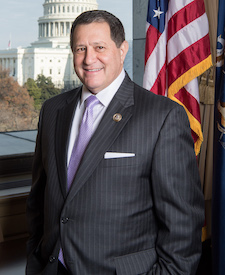
Legislative Progress
In CommitteeMrs. Dingell (for herself and Mr. Walberg) introduced the following …
Referred to the House Committee on Natural Resources.
Introduced in House
Stakeholder Effects
cui bono?How this legislation distributes effects. Mention counts reflect frequency, not effect magnitude.
NOAA, U.S. Fish and Wildlife Service, U.S. Geological Survey
Great Lakes Fishery Commission, Great Lakes fisheries
State Great Lakes resource managers
Bill Structure & Actor Mappings
Who is "The Secretary" in each section?
We use a combination of our own taxonomy and classification in addition to large language models to assess meaning and potential beneficiaries. High confidence means strong textual evidence. Always verify with the original bill text.
Learn more about our methodology