NDO Fairness Act
Summary
What This Bill Does
The NDO Fairness Act rewrites the title 18 section 2705(b) rules for nondisclosure orders tied to Stored Communications Act warrants, orders, and subpoenas. A governmental entity seeking a section 2703 warrant, order, or subpoena may ask a court to direct an electronic communications service or remote computing service provider not to notify others, but the order must meet stricter requirements. Most orders may last no more than 90 days. Orders involving child pornography, child sexual exploitation, or substantially equivalent federal, military, state, or tribal offenses may last up to one year if the government notifies the court of material changes.
The government application must say whether the named customer or subscriber is aware of the process or investigation and suspected of the crime. Courts generally may not grant or extend an order unless they issue written findings based on specific and articulable facts showing likely danger, flight, evidence destruction, witness intimidation, serious jeopardy to an investigation, or undue trial delay. The order must be narrowly tailored, no less restrictive alternative can work, and the court must review the underlying warrant, order, or subpoena. Government entities must notify the court within 14 days of material changes.
Providers can ask the court to modify or vacate an order if it fails statutory requirements or compliance is unreasonable or unlawful. Filing the challenge stays the provider's obligation to disclose customer records unless the court lifts the stay. Providers may disclose the order to people needed for compliance, attorneys, and court-approved persons, who then become bound by nondisclosure. The government must serve providers with a copy of the underlying warrant, order, or subpoena. After the order expires, the government must notify the customer or subscriber by at least two methods within five business days and provide, on timely request, the disclosed information or a certification that nothing was disclosed, with redactions only if a court finds them necessary. DOJ must publish annual district-level reports on section 2703 process, delayed-notice and nondisclosure applications, grants and denials, orders affecting news media, and resulting arrests, trials, and convictions.
Who Benefits and How
Customers and subscribers benefit because secrecy orders become time-limited, more tailored, and followed by notice and access to disclosed information. Electronic communications providers benefit from a statutory challenge process, an automatic disclosure stay during challenges, and permission to consult attorneys. Remote computing service providers benefit from clearer rules for who may be told about an order. News media organizations benefit because DOJ must report orders affecting members of the news media and First Amendment activity. Federal judges benefit from clearer statutory factors for written findings and review of underlying process.
Who Bears the Burden and How
Federal law enforcement agencies must provide more detailed applications, written factual support, copies of underlying process, material-change notices, post-expiration customer notices, and annual data. DOJ reporting staff must collect district-level metrics and publish annual reports while protecting national security. Federal courts must make written determinations, review warrants or subpoenas, handle provider challenges, and decide redaction requests. Providers must manage compliance, permitted disclosures, attorney consultation, customer notice records, and nondisclosure obligations for recipients. Prosecutors investigating non-child-exploitation cases must work within 90-day nondisclosure periods unless extensions satisfy the written-finding standard.
Key Provisions
- Limits most nondisclosure orders to 90 days and specified child-exploitation orders to one year.
- Requires applications to state whether the customer is aware of the process or investigation and suspected of the crime.
- Requires written judicial findings, narrow tailoring, no less restrictive alternative, and review of the underlying section 2703 process.
- Requires government notice to the court within 14 days of material changes.
- Provides a provider challenge process, an automatic disclosure stay during challenges, and final appealable orders.
- Allows providers to disclose to compliance personnel, attorneys, and court-approved persons subject to nondisclosure.
- Requires post-expiration notice to customers by at least two methods within five business days and access to disclosed information on request.
- Requires DOJ annual public reports by federal judicial district on delayed-notice and nondisclosure activity.
Evidence Chain:
This summary is generated from the full bill text using AI analysis. Expand "Detailed Analysis" below for identified beneficiaries/burden bearers with clause-level evidence links.
At a Glance
What This Bill Does
Rewrites Stored Communications Act nondisclosure-order rules by limiting when providers can be barred from notifying customers, adding 90-day and one-year caps, requiring specific written judicial findings, allowing provider challenges and stays, requiring post-expiration customer notice and access to disclosed information, and mandating annual DOJ public reports by federal judicial district.
Key Policy Areas
Privacy, Law Enforcement, Federal Courts, Technology
Primary Purpose
Rewrites Stored Communications Act nondisclosure-order rules by limiting when providers can be barred from notifying customers, adding 90-day and one-year caps, requiring specific written judicial findings, allowing provider challenges and stays, requiring post-expiration customer notice and access to disclosed information, and mandating annual DOJ public reports by federal judicial district.
Policy Domains
House resolution provisions
Identified Gains
- Customers and subscribers
- Electronic communications providers
- Remote computing service providers
- News media organizations
- Federal judges
Identified Costs
- Federal law enforcement agencies
- DOJ reporting staff
- Federal courts
- Electronic communications providers
- Remote computing service providers
- Federal prosecutors
Sponsors

Legislative Progress
ReportedOrdered to be Reported (Amended) by Voice Vote.
Committee Consideration and Mark-up Session Held
Committee Consideration and Mark-up Session Held
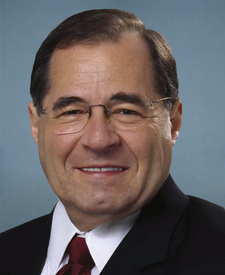
Mr. Fitzgerald (for himself and Mr. Nadler) introduced the following …
Referred to the House Committee on the Judiciary.
Introduced in House
Stakeholder Effects
cui bono?How this legislation distributes effects. Mention counts reflect frequency, not effect magnitude.
Customers of electronic communications services, Subscribers of remote computing services
Electronic communications service providers
Bill Structure & Actor Mappings
Who is "The Secretary" in each section?
- "doj"
- → Department of Justice
- "court"
- → Federal court
- "provider"
- → Electronic communications service provider
We use a combination of our own taxonomy and classification in addition to large language models to assess meaning and potential beneficiaries. High confidence means strong textual evidence. Always verify with the original bill text.
Learn more about our methodology