FARE Act
Summary
What This Bill Does
The FARE Act creates a flight-restriction parity rule for appropriations lapses. It defines a commercial flight as a regularly scheduled passenger common-carrier flight under 14 C.F.R. Part 121. It defines a private aircraft flight as a non-regularly scheduled flight using an aircraft equipped with one or more jet engines. During a lapse in appropriations, FAA may not reduce or temporarily prohibit a commercial flight in the navigable airspace of the National Airspace System because of the lapse unless it has prohibited all private aircraft flights in the same geographic area for the same period. The private-flight prohibition rule does not apply to flights exclusively for public safety, government business, military or diplomatic purposes, medical reasons, agricultural purposes, meteorological or scientific purposes, humanitarian, nutritional, or emergency relief including natural disaster response, or cargo. FAA may enforce the section through civil penalties or a Federal district court injunction against air carriers.
Who Benefits and How
Commercial airline passengers benefit because FAA cannot single out scheduled commercial flights for shutdown-lapse restrictions while private jets continue operating in the same area. Passenger airlines benefit because commercial flight reductions during funding lapses must be paired with comparable private jet restrictions. Airports and communities dependent on scheduled service benefit from a parity rule that protects commercial operations. Private flights serving public safety, government, military, diplomatic, medical, agricultural, scientific, humanitarian, disaster-relief, nutritional, or cargo purposes benefit from express exceptions.
Who Bears the Burden and How
FAA must apply the commercial/private parity rule when managing airspace restrictions during appropriations lapses. Private jet operators may lose access in an affected area if FAA restricts commercial flights there during a lapse. Passenger air carriers face civil penalties or injunction actions if they violate the section. FAA enforcement staff must use civil penalty and Federal court tools to enforce the restriction.
Key Provisions
- Defines commercial flights as regularly scheduled Part 121 passenger common-carrier flights.
- Defines private aircraft flights as non-scheduled jet aircraft flights.
- Prohibits FAA from reducing or temporarily prohibiting commercial flights during an appropriations lapse unless all private jet flights in the same area are also prohibited.
- Exempts private flights for public safety, government, military, diplomatic, medical, agricultural, scientific, humanitarian, emergency-relief, disaster-response, nutritional, and cargo purposes.
- Authorizes FAA enforcement through civil penalties or Federal district court injunctions.
Evidence Chain:
This summary is generated from the full bill text using AI analysis. Expand "Detailed Analysis" below for identified beneficiaries/burden bearers with clause-level evidence links.
At a Glance
What This Bill Does
Bars FAA from reducing or temporarily prohibiting commercial flights in the National Airspace System during an appropriations lapse unless all private jet flights in the same area are also prohibited for the same period, while exempting private flights for public safety, government, military, diplomatic, medical, agricultural, meteorological, scientific, humanitarian, emergency-relief, nutritional, natural-disaster, and cargo purposes.
Key Policy Areas
Aviation, Appropriations, FAA
Primary Purpose
Bars FAA from reducing or temporarily prohibiting commercial flights in the National Airspace System during an appropriations lapse unless all private jet flights in the same area are also prohibited for the same period, while exempting private flights for public safety, government, military, diplomatic, medical, agricultural, meteorological, scientific, humanitarian, emergency-relief, nutritional, natural-disaster, and cargo purposes.
Policy Domains
Substantive provisions
Identified Gains
- Commercial airline passengers
- Passenger airlines
- Airports with scheduled service
- Communities dependent on scheduled flights
- Public safety private flights
Identified Costs
- Federal Aviation Administration
- Private jet operators
- Passenger air carriers
- FAA enforcement staff
Sponsors
Legislative Progress
In CommitteeReferred to the Subcommittee on Aviation.
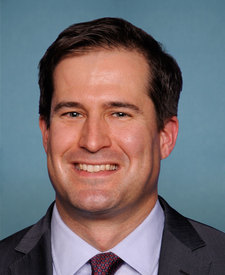
Mr. Moulton introduced the following bill; which was referred to …
Referred to the House Committee on Transportation and Infrastructure.
Introduced in House
Stakeholder Effects
cui bono?How this legislation distributes effects. Mention counts reflect frequency, not effect magnitude.
Airports with scheduled service, Commercial airline passengers, Passenger airlines
Positive-direction: Airports with scheduled service, Commercial airline passengers, Passenger airlines
Negative-direction: Private jet operators
FAA enforcement staff, Federal Aviation Administration
Bill Structure & Actor Mappings
Who is "The Secretary" in each section?
We use a combination of our own taxonomy and classification in addition to large language models to assess meaning and potential beneficiaries. High confidence means strong textual evidence. Always verify with the original bill text.
Learn more about our methodology