Justice Involved Veterans Support Act
Summary
What This Bill Does
The Justice Involved Veterans Support Act responds to findings that about 181,000 veterans are incarcerated, many justice-involved veterans have mental health or substance-use conditions, they may face elevated suicide risk, and reentry creates specialized needs. The bill requires the Attorney General, consulting VA, to carry out a pilot program providing grants and technical assistance to State prisons and local jails. The purpose is to improve documentation of whether inmates are veterans so VA can provide federally administered benefits, State veterans affairs offices can provide State benefits, and more justice-involved veterans can have cases diverted to veterans treatment courts. DOJ must prioritize prisons and jails in States with the largest veteran populations per capita, States with high rates of veterans in poverty, and jurisdictions with veterans treatment courts or diversion programs.
Who Benefits and How
Incarcerated veterans benefit because prisons and jails would be better able to identify veteran status and connect them to VA or State benefits. Veterans treatment courts benefit because improved documentation can increase diversion of eligible cases. State veterans affairs offices benefit because more accurate jail and prison data helps them reach justice-involved veterans. State prisons and local jails in priority jurisdictions benefit from grants and technical assistance.
Who Bears the Burden and How
The Attorney General must administer the pilot, select grant recipients, and provide technical assistance in consultation with VA. State prisons and local jails receiving grants must improve intake or records systems to document veteran status. VA benefits staff and State veterans offices must use the improved documentation to provide benefits and coordinate services. Federal taxpayers fund the pilot grants and technical assistance.
Key Provisions
- Requires DOJ, in consultation with VA, to run a pilot grant and technical-assistance program.
- Targets State prisons and local jails to improve documentation of whether inmates are veterans.
- Supports VA benefits, State veterans office benefits, and diversion to veterans treatment courts.
- Prioritizes States with large veteran populations, high veteran poverty, and jurisdictions with veterans treatment courts or diversion programs.
Evidence Chain:
This summary is generated from the full bill text using AI analysis. Expand "Detailed Analysis" below for identified beneficiaries/burden bearers with clause-level evidence links.
At a Glance
What This Bill Does
Directs the Attorney General, in consultation with VA, to run a pilot grant and technical-assistance program for State prisons and local jails to better document whether inmates are veterans, help VA and State veterans offices provide benefits, and increase diversion of justice-involved veterans to veterans treatment courts.
Key Policy Areas
Veterans Services, Criminal Justice, Grants
Primary Purpose
Directs the Attorney General, in consultation with VA, to run a pilot grant and technical-assistance program for State prisons and local jails to better document whether inmates are veterans, help VA and State veterans offices provide benefits, and increase diversion of justice-involved veterans to veterans treatment courts.
Policy Domains
Substantive provisions
Identified Gains
- Incarcerated veterans
- Justice-involved veterans
- Veterans treatment courts
- State veterans affairs offices
- State prisons
- Local jails
Identified Costs
- Attorney General
- Department of Justice grant staff
- State prison administrators
- Local jail administrators
- VA benefits staff
- Federal taxpayers
Sponsors
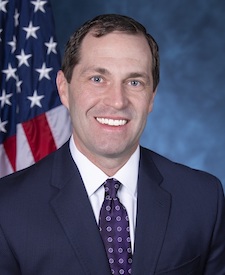


Legislative Progress
In CommitteeMr. Crow (for himself and Mr. Bacon) introduced the following …
Referred to the House Committee on the Judiciary.
Introduced in House
Stakeholder Effects
cui bono?How this legislation distributes effects. Mention counts reflect frequency, not effect magnitude.
Department of Justice grant staff, VA benefits staff
Bill Structure & Actor Mappings
Who is "The Secretary" in each section?
We use a combination of our own taxonomy and classification in addition to large language models to assess meaning and potential beneficiaries. High confidence means strong textual evidence. Always verify with the original bill text.
Learn more about our methodology