FIR Act
Summary
What This Bill Does
The FIR Act narrows when Federal land agencies must restart Endangered Species Act consultation for broad land plans. It amends the Forest and Rangeland Renewable Resources Planning Act for Forest Service land management plans and the Federal Land Policy and Management Act for BLM land use plans. In both settings, the Secretary is not required to reinitiate consultation under ESA section 7(a)(2) or the reinitiation regulation at 50 C.F.R. 402.16, or a successor regulation, for a plan already approved, amended, or revised when a new species is listed, critical habitat is designated, or new information shows plan effects on a listed species or critical habitat in a way not previously considered. The bill does not eliminate ESA consultation for specific future actions, but it reduces plan-level reconsultation triggers for large Forest Service and BLM planning documents.
Who Benefits and How
Forest Service planning offices benefit because they avoid reopening land management plan consultation solely due to new listings, critical habitat, or new information. Bureau of Land Management planning offices benefit from the same reduced plan-level ESA reconsultation obligation for FLPMA land use plans. Timber, grazing, recreation, energy, and other public-land permit applicants benefit if agency plan updates and project approvals face fewer plan-level delays. Rural counties and public-land users benefit from more predictable implementation of already approved federal land plans.
Who Bears the Burden and How
ESA-listed species and critical habitat protections may bear risk because new listings or new information would not automatically reopen plan-level consultation. Fish and Wildlife Service and National Marine Fisheries Service consultation staff lose a trigger for reviewing broad land plans after changed species information. Environmental organizations may need to challenge individual projects or other agency actions rather than relying on plan-level reconsultation. Forest Service and BLM officials still must determine which actions are covered by the exemption and which project-specific consultations remain required.
Key Provisions
- Amends Forest Service planning law to remove plan-level ESA reconsultation requirements for specified changed circumstances.
- Amends FLPMA to apply the same rule to BLM land use plans.
- Covers new species listings, critical habitat designations, and new information about plan effects.
- Preserves the distinction between broad plan reconsultation and other ESA duties for future agency actions.
Evidence Chain:
This summary is generated from the full bill text using AI analysis. Expand "Detailed Analysis" below for identified beneficiaries/burden bearers with clause-level evidence links.
At a Glance
What This Bill Does
Amends Forest Service and Bureau of Land Management planning statutes so approved, amended, or revised land management and land use plans do not require reinitiated Endangered Species Act consultation solely because a new species is listed, new critical habitat is designated, or new information reveals effects not previously considered.
Key Policy Areas
Public Lands, Endangered Species, Forestry
Primary Purpose
Amends Forest Service and Bureau of Land Management planning statutes so approved, amended, or revised land management and land use plans do not require reinitiated Endangered Species Act consultation solely because a new species is listed, new critical habitat is designated, or new information reveals effects not previously considered.
Policy Domains
Substantive provisions
Identified Gains
- Forest Service planning offices
- Bureau of Land Management planning offices
- Public land permit applicants
- Rural counties
- Public land users
Identified Costs
- ESA-listed species
- Critical habitat protections
- Fish and Wildlife Service consultation staff
- National Marine Fisheries Service consultation staff
- Environmental organizations
Sponsors
Legislative Progress
In CommitteeReferred to the Subcommittee on Forestry and Horticulture.
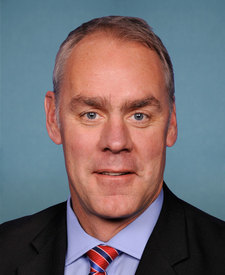
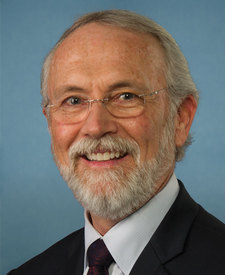
Mr. Zinke (for himself and Mr. Newhouse) introduced the following …
Referred to the Committee on Natural Resources, and in addition …
Introduced in House
Stakeholder Effects
cui bono?How this legislation distributes effects. Mention counts reflect frequency, not effect magnitude.
Bureau of Land Management planning offices, Fish and Wildlife Service consultation staff, Forest Service planning offices
Bill Structure & Actor Mappings
Who is "The Secretary" in each section?
We use a combination of our own taxonomy and classification in addition to large language models to assess meaning and potential beneficiaries. High confidence means strong textual evidence. Always verify with the original bill text.
Learn more about our methodology