To require the Secretary of Energy, acting through the Office of Electricity, to publish guidelines and best practices for integrated resource planning of the electricity system, provide technical assistance with respect to such guidelines and best practices, and develop a grant program for modernizing integrated resource planning, and for other purposes.
Analysis under review: This bill has generated analysis that may be too generic or incomplete. Clause-level evidence remains available below.
Summary
What This Bill Does
This bill requires the Department of Energy to create national guidelines for how electric utilities plan their future electricity systems, known as integrated resource planning. It also creates a grant program to help states adopt these planning practices, with technical assistance and periodic reporting requirements.
Who Benefits and How
Electric utilities (investor-owned, municipal, and cooperatives) benefit from clearer planning guidelines and potential grant funding to cover compliance costs. States benefit from federal grants to update their energy planning regulations and processes. Grid technology companies, energy storage firms, and distributed energy resource providers benefit from planning frameworks that explicitly consider their technologies alongside traditional generation.
Who Bears the Burden and How
The Department of Energy bears the administrative burden of developing guidelines, providing technical assistance, and managing the grants program. Traditional fossil fuel generators may face planning frameworks that give more weight to emerging technologies and alternatives. State utility commissions must update their regulatory processes to incorporate the new guidelines.
Key Provisions
- Secretary of Energy must publish integrated resource planning guidelines within 2 years, covering capacity modeling, resource adequacy, and probabilistic analysis
- Establishes the Integrated Resource Planning Modernization Grants Program for states to update their utility planning requirements
- Requires periodic congressional reports on grant effectiveness every 5 years
Evidence Chain:
This summary is generated from the full bill text using AI analysis. Expand "Detailed Analysis" below for identified beneficiaries/burden bearers.
At a Glance
What This Bill Does
Directs the Secretary of Energy to develop guidelines and best practices for electric utility integrated resource planning and establishes a grants program for states to modernize their electricity system planning.
Key Policy Areas
Energy, Electric Utilities, Grid Modernization
Primary Purpose
Directs the Secretary of Energy to develop guidelines and best practices for electric utility integrated resource planning and establishes a grants program for states to modernize their electricity system planning.
Policy Domains
Integrated Resource Planning Modernization Act
Identified Gains
Contextual inference, no direct clause citation- Electric utilities (investor-owned, municipal, cooperatives)
- Grid technology and energy storage companies
- State energy offices and utility commissions
- Distributed energy resource providers
Contextual inference, no direct clause citation
Identified Costs
Contextual inference, no direct clause citation- Department of Energy (Office of Electricity)
- Traditional fossil fuel generators
Contextual inference, no direct clause citation
Sponsors


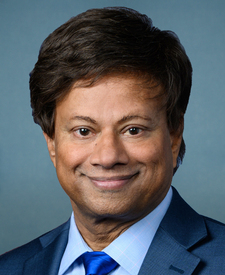
Legislative Progress
IntroducedMs. Leger Fernandez (for herself, Mr. Case, and Mr. Thanedar) …
Stakeholder Effects
cui bono?How this legislation distributes effects. Mention counts reflect frequency, not effect magnitude.
Balancing area authorities and Transmission Organizations, Electric utilities (investor-owned, municipal, cooperatives)
Electric utilities (investor-owned, municipal, cooperatives) faces effects in multiple directions
Energy consulting and modeling firms, Energy consulting firms and federally funded research centers
Grid-enhancing technology and energy storage companies
Distributed energy resource providers (rooftop solar, community wind)
Software and modeling companies for electricity planning
Bill Structure & Actor Mappings
Who is "The Secretary" in each section?
- "the_secretary"
- → Secretary of Energy, acting through the head of the Office of Electricity
Key Definitions
Terms defined in this bill
Has the meaning given in section 3 of the Public Utility Regulatory Policies Act of 1978 (16 U.S.C. 2602)
Secretary of Energy, acting through the head of the Office of Electricity of the Department of Energy
The ability of the electricity system to maintain sufficient generating, storage, and transmitting capacity to meet forecasted demand and reliability requirements under a range of conditions
A State in which the electricity system has been functionally separated with independent power producers, Transmission Organizations, and utilities retaining distribution
A technology designed to improve the reliability, efficiency, or flexibility of the electricity system, including smart grid technology, energy storage, and advanced grid management systems
A State in which the electricity system remains functionally aggregated such that a regulated utility owns and operates generating, transmitting, and distributing assets
We use a combination of our own taxonomy and classification in addition to large language models to assess meaning and potential beneficiaries. High confidence means strong textual evidence. Always verify with the original bill text.
Learn more about our methodology