Responsible Wildland Fire Recovery Act
Summary
What This Bill Does
The Responsible Wildland Fire Recovery Act is a cost-share waiver bill. Its purpose is to make parties affected by wildland fires caused by Department of Agriculture management activities on National Forest System land eligible for 100 percent federal funding for direct and indirect damage remediation under authorized recovery programs. The operative section defines a covered matching requirement as a cash match required under a Secretary of Agriculture wildland-fire recovery program for a State, Indian Tribe, locality, or individual. It defines a covered wildland fire as a wildland fire that the Secretary determines resulted from management activities conducted by the Secretary on National Forest System land. The bill then allows the Secretary to waive any covered matching requirement for a project responding to such a fire in the affected area. Wildland fire includes wildfire, prescribed fire, and direct or indirect damage that causes watershed impairment.
Who Benefits and How
States affected by qualifying USDA-caused wildland fires benefit because their cash match for recovery projects can be waived. Indian Tribes benefit because tribal recovery projects may receive 100 percent federal funding when the fire meets the covered-fire definition. Local governments and individual property owners benefit because they may avoid cash matching requirements for remediation after qualifying fires. Watersheds damaged by wildfires or prescribed fires benefit if projects move forward despite the affected party lacking matching funds.
Who Bears the Burden and How
The Secretary of Agriculture must determine whether a fire resulted from USDA management activities and decide whether to waive matching requirements. USDA wildland-fire recovery program staff must administer waiver decisions and finance a larger federal share of eligible projects. Federal taxpayers bear more recovery cost when cash matching requirements are waived. Applicants still must show that projects respond to a covered wildland fire in an affected area.
Key Provisions
- Defines covered matching requirements in Agriculture Department wildland-fire recovery programs.
- Defines covered wildland fires as fires resulting from USDA management activities on National Forest System land.
- Authorizes the Secretary of Agriculture to waive cash matching requirements for affected-area recovery projects.
- Allows 100 percent federal funding for eligible direct and indirect remediation costs.
Evidence Chain:
This summary is generated from the full bill text using AI analysis. Expand "Detailed Analysis" below for identified beneficiaries/burden bearers with clause-level evidence links.
At a Glance
What This Bill Does
Allows the Agriculture Secretary to waive cash matching requirements in federal wildland-fire recovery programs for States, Indian Tribes, localities, or individuals responding to fires that the Secretary determines resulted from Agriculture Department management activities on National Forest System land.
Key Policy Areas
Wildfire Recovery, Agriculture, Public Lands
Primary Purpose
Allows the Agriculture Secretary to waive cash matching requirements in federal wildland-fire recovery programs for States, Indian Tribes, localities, or individuals responding to fires that the Secretary determines resulted from Agriculture Department management activities on National Forest System land.
Policy Domains
Substantive provisions
Identified Gains
- States affected by qualifying wildland fires
- Indian Tribes affected by qualifying wildland fires
- Local governments affected by qualifying wildland fires
- Individual property owners
- Damaged watersheds
Identified Costs
- Secretary of Agriculture
- USDA wildland fire recovery staff
- Federal taxpayers
- Recovery project applicants
Legislative Progress
In CommitteeReferred to the Subcommittee on Forestry and Horticulture.
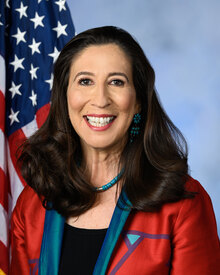
Ms. Leger Fernandez introduced the following bill; which was referred …
Referred to the Committee on Agriculture, and in addition to …
Introduced in House
Stakeholder Effects
cui bono?How this legislation distributes effects. Mention counts reflect frequency, not effect magnitude.
Indian Tribes affected by qualifying wildland fires, Secretary of Agriculture, USDA wildland fire recovery staff
Positive-direction: Indian Tribes affected by qualifying wildland fires
Negative-direction: Secretary of Agriculture, USDA wildland fire recovery staff
Local governments affected by qualifying wildland fires, States affected by qualifying wildland fires
Bill Structure & Actor Mappings
Who is "The Secretary" in each section?
We use a combination of our own taxonomy and classification in addition to large language models to assess meaning and potential beneficiaries. High confidence means strong textual evidence. Always verify with the original bill text.
Learn more about our methodology