DISRUPT Act
Summary
What This Bill Does
The DISRUPT Act focuses on cooperation among the People's Republic of China, the Russian Federation, the Islamic Republic of Iran, and the Democratic People's Republic of Korea. The findings characterize all four as foreign adversaries or countries of concern under multiple statutes and cite bilateral agreements and defense cooperation, including Iranian drones and ballistic missiles for Russia and North Korean artillery ammunition. The policy statement says the United States should disrupt or frustrate dangerous cooperation among those adversaries using sanctions, export controls, public exposure, and information sharing with allies and partners; constrain expansion of their footprint or capabilities; and prepare for simultaneous challenges or conflict in multiple theaters by strengthening deterrence. Within 60 days, the Secretaries of State, Defense, Treasury, and Commerce must each establish an adversary-alignment task force and designate a point of contact. Each task force must include subject-matter experts for the four adversaries, representatives of core functions, analysts, operators, and senior management; have needed clearances and compartmented access; and submit a 180-day report on operational impacts and organizational changes. Task force heads must meet at least quarterly. DNI must submit a classified report within 60 days on adversary cooperation, five-year trajectory, risks to U.S. and allied operations, technology transfer, alternative payment systems, sanctions and export control tools, intelligence collection, conflict-enabling support, vulnerabilities, and prospects for separating adversaries. Within 180 days, State and Defense, consulting Treasury, Commerce, and DNI, must submit a classified strategic approach for the next two years covering tools to disrupt defense-industrial cooperation, allied education and support, economic statecraft, sanctions and export control enforcement, munitions stockpiles for Israel, Taiwan, and Ukraine, co-production and sustainment with allies, foreign military financing for allied defense production, digitized war-planning tools within one year, and plans to close capability gaps if the United States faces multiple adversaries.
Who Benefits and How
U.S. national security planners benefit from dedicated task forces and classified reports on cooperation among China, Russia, Iran, and North Korea. Allies and partners benefit if the United States shares information, coordinates diplomacy, and helps address vulnerabilities and capability gaps. Sanctions and export control enforcement teams benefit because the bill forces an assessment of economic statecraft tools and resourcing needs. Israel, Taiwan, and Ukraine benefit from an explicit plan to bolster munitions stockpiles and deterrence in priority theaters. Defense war planners benefit from a requirement to digitize and update war-planning tools within one year after the strategic report.
Who Bears the Burden and How
State, Defense, Treasury, and Commerce must establish task forces, designate points of contact, staff them with cleared experts, and produce 180-day reports. DNI and intelligence agencies must prepare a classified 60-day report on adversary cooperation and risks. Task force heads must hold quarterly interagency meetings on findings, problems, and next steps. State and Defense must prepare a classified two-year strategy with Treasury, Commerce, and DNI input. China, Russia, Iran, and North Korea face increased U.S. efforts to disrupt cooperation through sanctions, export controls, exposure, allied diplomacy, and deterrence planning.
Key Provisions
- Finds that China, Russia, Iran, and North Korea are adversaries or countries of concern under multiple national security statutes and are deepening diplomatic, economic, and military cooperation.
- Establishes U.S. policy to disrupt, frustrate, constrain, expose, and prepare for adversary cooperation using sanctions, export controls, information sharing, and deterrence.
- Requires State, Defense, Treasury, and Commerce to establish adversary-alignment task forces and points of contact within 60 days.
- Requires each task force to include cleared subject-matter experts and submit a 180-day report on operational impacts and organizational changes.
- Requires DNI to submit a classified 60-day report on adversary cooperation, five-year trajectory, risks, technology transfer, payment systems, intelligence collection, and vulnerabilities.
- Requires a classified 180-day State-Defense strategic approach covering disruption tools, allied coordination, economic statecraft, munitions stockpiles, co-production, foreign military financing, war-planning tools, and capability gaps.
Evidence Chain:
This summary is generated from the full bill text using AI analysis. Expand "Detailed Analysis" below for identified beneficiaries/burden bearers with clause-level evidence links.
At a Glance
What This Bill Does
Directs State, Defense, Treasury, and Commerce to create adversary-alignment task forces and reports, requires DNI and interagency classified assessments of cooperation among China, Russia, Iran, and North Korea, and sets a U.S. policy to disrupt, frustrate, constrain, expose, and prepare for adversary cooperation through sanctions, export controls, diplomacy, deterrence, and allied coordination.
Key Policy Areas
Foreign Affairs, National Security, Sanctions, Export Controls
Primary Purpose
Directs State, Defense, Treasury, and Commerce to create adversary-alignment task forces and reports, requires DNI and interagency classified assessments of cooperation among China, Russia, Iran, and North Korea, and sets a U.S. policy to disrupt, frustrate, constrain, expose, and prepare for adversary cooperation through sanctions, export controls, diplomacy, deterrence, and allied coordination.
Policy Domains
Substantive provisions
Identified Gains
- U.S. national security planners
- Allied governments
- Sanctions enforcement teams
- Export control enforcement teams
- Israel
- Taiwan
- Ukraine
- Defense war planners
Identified Costs
- State Department task force staff
- Defense Department task force staff
- Treasury task force staff
- Commerce task force staff
- DNI intelligence analysts
- Chinese government
- Russian government
- Iranian government
- North Korean government
Sponsors

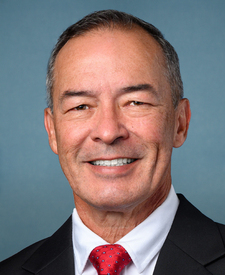
Legislative Progress
In CommitteeMr. Krishnamoorthi (for himself and Mr. Moylan) introduced the following …
Referred to the Committee on Foreign Affairs, and in addition …
Introduced in House
Stakeholder Effects
cui bono?How this legislation distributes effects. Mention counts reflect frequency, not effect magnitude.
Federal agencies and officials required to stand up task forces and produce the mandated reports
Bill Structure & Actor Mappings
Who is "The Secretary" in each section?
We use a combination of our own taxonomy and classification in addition to large language models to assess meaning and potential beneficiaries. High confidence means strong textual evidence. Always verify with the original bill text.
Learn more about our methodology