Withhold Member Pay During Shutdowns Act
Summary
What This Bill Does
This bill changes congressional compensation during government shutdowns. It defines a government shutdown as a lapse in appropriations for one or more federal agencies or departments. It defines Members of Congress by reference to the Legislative Reorganization Act and defines payroll administrators as the Secretary of the Senate or designated Senate staff, and the House Chief Administrative Officer or designated House staff.
After the regularly scheduled November 2026 federal election, if a shutdown is in effect on any day during a pay period, each chamber's payroll administrator must exclude from Member pay an amount equal to one day's pay multiplied by the number of 24-hour shutdown periods in that pay period. For shutdown days before that effective date, the payroll administrator must place the same amount in escrow and release it only after the shutdown ends, reflecting constitutional limits on changing sitting Members' compensation. The bill's practical point is to stop Members from receiving normal pay during funding lapses while federal agencies or departments lack appropriations.
Who Benefits and How
Federal taxpayers benefit because Member pay is withheld, reduced, or escrowed during shutdown periods rather than paid normally while agencies lack appropriations. Federal employees affected by shutdowns benefit symbolically because Members face a direct pay consequence tied to the funding lapse. House and Senate voters benefit from a clearer accountability mechanism for shutdowns. Congressional payroll administrators benefit from statutory definitions that specify who must administer the withholding and escrow rules.
Who Bears the Burden and How
Members of Congress must lose or defer one day of pay for each 24-hour shutdown period, depending on the effective-date rule. House Chief Administrative Officer payroll staff must calculate reductions, administer escrow for pre-effective-date shutdown days, and adjust Member compensation. Secretary of the Senate payroll staff must perform the same calculations and escrow administration for Senators. Congressional finance offices must track shutdown days across pay periods and reconcile release of escrowed amounts when the shutdown ends. Members' personal budgeting may be affected when pay is delayed or reduced during prolonged shutdowns.
Key Provisions
- Defines government shutdown as a lapse in appropriations for one or more federal agencies or departments.
- Defines the House and Senate payroll administrators responsible for withholding or escrow.
- Requires payroll administrators to exclude one day of Member pay for each 24-hour shutdown period after the November 2026 election.
- Requires payroll administrators to escrow equivalent pay for shutdown days before the pay reduction effective date.
- Provides that escrowed pay is released only after the government shutdown ends.
Evidence Chain:
This summary is generated from the full bill text using AI analysis. Expand "Detailed Analysis" below for identified beneficiaries/burden bearers with clause-level evidence links.
At a Glance
What This Bill Does
Withholds or reduces Member of Congress pay during government shutdowns by directing House and Senate payroll administrators to subtract one day of pay for each 24-hour shutdown period after the November 2026 election, hold pre-effective-date shutdown pay in escrow until the shutdown ends, and define covered shutdowns, Members, and payroll administrators.
Key Policy Areas
Congress, Appropriations, Federal Workforce
Primary Purpose
Withholds or reduces Member of Congress pay during government shutdowns by directing House and Senate payroll administrators to subtract one day of pay for each 24-hour shutdown period after the November 2026 election, hold pre-effective-date shutdown pay in escrow until the shutdown ends, and define covered shutdowns, Members, and payroll administrators.
Policy Domains
House resolution provisions
Identified Gains
- Federal taxpayers
- Federal employees affected by shutdowns
- House voters
- Senate voters
- Congressional payroll administrators
Identified Costs
- Members of Congress
- House Chief Administrative Officer payroll staff
- Secretary of the Senate payroll staff
- Congressional finance offices
- Members' personal budgets
Sponsors



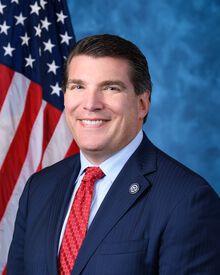

Legislative Progress
ReportedOrdered to be Reported in the Nature of a Substitute …
Committee Consideration and Mark-up Session Held
Mr. Steil introduced the following bill; which was referred to …
Referred to the Committee on House Administration, and in addition …
Introduced in House
Stakeholder Effects
cui bono?How this legislation distributes effects. Mention counts reflect frequency, not effect magnitude.
House payroll staff, Senate payroll staff
Bill Structure & Actor Mappings
Who is "The Secretary" in each section?
- "cao"
- → Chief Administrative Officer of the House of Representatives
- "secretary_senate"
- → Secretary of the Senate
We use a combination of our own taxonomy and classification in addition to large language models to assess meaning and potential beneficiaries. High confidence means strong textual evidence. Always verify with the original bill text.
Learn more about our methodology