No CDLs for Illegals Act
Summary
What This Bill Does
The No CDLs for Illegals Act rewrites commercial driver's license requirements in title 49 and adds a highway-funding enforcement mechanism in title 23. States would have to require CDL applicants to present valid documentation proving U.S. citizenship, lawful permanent resident status, or valid work authorization, and documentation showing domicile in the State issuing the CDL. For any non-citizen CDL applicant, States must use the SAVE system and deny the application if SAVE does not confirm lawful presence. States also may not issue a CDL to someone not domiciled in that State. The Secretary of Transportation must annually review each State's commercial driver licensing policies and practices, may request information from States, and must suspend a State's federal-aid highway apportionment under section 104(b) if the State issues CDLs contrary to the new non-citizen lawful-presence requirement. Suspended funds return only when the Secretary certifies that the State has taken all necessary compliance measures. The bill also requires DOT regulations setting fines for trucking companies that knowingly employ drivers without valid compliant CDLs.
Who Benefits and How
State CDL programs seeking stricter federal eligibility rules benefit from explicit documentation, domicile, and SAVE verification requirements. Lawful CDL applicants benefit indirectly if the licensing system more consistently verifies work authorization and State domicile. Motor carrier safety regulators benefit because the bill gives DOT a highway-funding enforcement hook and fine authority tied to CDL compliance. Trucking companies that already verify CDL validity benefit from a more uniform competitor compliance standard.
Who Bears the Burden and How
Non-citizen CDL applicants bear the direct burden because they must clear SAVE lawful-presence checks and provide valid work authorization or permanent-residence documentation. State motor vehicle and CDL licensing agencies must collect new documentation, verify domicile, run SAVE checks, respond to DOT information requests, and risk highway fund suspension for violations. State transportation departments may lose federal-aid highway apportionments if the State issues CDLs in violation of the new lawful-presence requirement. Trucking companies face DOT fines if they knowingly employ drivers who lack a valid CDL that complies with the new requirements. The Secretary of Transportation and DOT staff must conduct annual State reviews, issue regulations, suspend funds, and certify reinstatement.
Key Provisions
- Amends title 49 CDL requirements to require documentation of citizenship, lawful permanent residence, or valid work authorization.
- Requires CDL applicants to document domicile in the State issuing the license.
- Requires States to use SAVE for non-citizen CDL applicants and deny applications when SAVE does not confirm lawful presence.
- Prohibits States from issuing CDLs to individuals not domiciled in the issuing State.
- Authorizes suspension of federal-aid highway apportionments for States that issue CDLs in violation of the lawful-presence rule.
- Requires DOT regulations setting fines for trucking companies that knowingly employ drivers without valid compliant CDLs.
Evidence Chain:
This summary is generated from the full bill text using AI analysis. Expand "Detailed Analysis" below for identified beneficiaries/burden bearers with clause-level evidence links.
At a Glance
What This Bill Does
Tightens commercial driver's license eligibility by requiring citizenship, lawful permanent residence, or work authorization documentation, requiring State domicile documentation, mandating SAVE checks for non-citizen applicants, suspending federal highway funds for noncompliant State licensing, and directing fines for trucking companies that knowingly employ drivers without valid compliant CDLs.
Key Policy Areas
Transportation, Immigration, Highway Funding
Primary Purpose
Tightens commercial driver's license eligibility by requiring citizenship, lawful permanent residence, or work authorization documentation, requiring State domicile documentation, mandating SAVE checks for non-citizen applicants, suspending federal highway funds for noncompliant State licensing, and directing fines for trucking companies that knowingly employ drivers without valid compliant CDLs.
Policy Domains
Substantive provisions
Identified Gains
- State CDL compliance programs
- Lawful CDL applicants
- Motor carrier safety regulators
- Compliant trucking companies
Identified Costs
- Non-citizen CDL applicants
- State CDL licensing agencies
- State transportation departments
- Trucking companies employing noncompliant drivers
- DOT compliance staff
Legislative Progress
In CommitteeReferred to the Subcommittee on Highways and Transit.
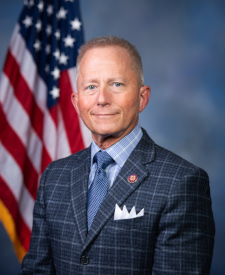
Mr. Van Drew introduced the following bill; which was referred …
Referred to the House Committee on Transportation and Infrastructure.
Introduced in House
Stakeholder Effects
cui bono?How this legislation distributes effects. Mention counts reflect frequency, not effect magnitude.
State CDL licensing agencies, State transportation departments
Federal-aid highway recipients, Lawful CDL applicants, Trucking companies employing CDL drivers
Positive-direction: Lawful CDL applicants
Negative-direction: Federal-aid highway recipients, Trucking companies employing CDL drivers
DOT commercial motor vehicle regulators, DOT compliance staff
Bill Structure & Actor Mappings
Who is "The Secretary" in each section?
We use a combination of our own taxonomy and classification in addition to large language models to assess meaning and potential beneficiaries. High confidence means strong textual evidence. Always verify with the original bill text.
Learn more about our methodology