REPO Implementation Act of 2025
Summary
What This Bill Does
The REPO Implementation Act changes how Russian aggressor-state sovereign assets can support Ukraine. It lets the President transfer Russian sovereign assets into the Ukraine Support Fund for placement in an interest-bearing account without first confiscating those funds. Treasury must invest any fund balance not needed for current withdrawals in U.S. obligations or obligations guaranteed by the United States, and the interest and proceeds become part of the account. The President must ensure the investment requirement is implemented within 45 days after enactment. While money remains in the Fund, the Secretary of State may obligate and spend at least $250 million every 90 days for assistance to Ukraine, or the remaining balance when less than $250 million remains. The bill also requires the President to report within 90 days on Russian sovereign assets located in covered countries, including Australia and G7 or EU members other than the United States, and within 270 days on assets in other foreign countries. Reports must describe amounts, locations, whether assets are frozen, blocked, or immobilized, and whether they accrue interest. State and Treasury are expected to begin a sustained diplomatic effort within 30 days to persuade covered countries to repurpose at least 5 percent of Russian sovereign assets each quarter for Ukraine.
Who Benefits and How
Ukraine benefits because the bill creates a more regular path for Ukraine Support Fund investment earnings and quarterly assistance obligations. Ukrainian reconstruction programs benefit if Russian sovereign assets and interest proceeds are moved or repurposed faster. State Department Ukraine assistance staff benefit from authority to obligate at least $250 million every 90 days while the Fund has enough money. Treasury investment staff benefit from clear instructions to invest idle fund balances in U.S.-backed obligations. Congressional foreign affairs committees benefit from detailed reports on foreign-held Russian sovereign assets.
Who Bears the Burden and How
Russian sovereign asset holders bear the direct burden because assets may be transferred, invested, and repurposed for Ukraine without confiscation. The President must track foreign-held Russian sovereign assets and ensure investment implementation within 45 days. Treasury sanctions and investment staff must invest idle balances and coordinate asset-location reporting. State Department diplomats must press covered countries to repurpose at least 5 percent of Russian assets quarterly. Covered country governments must respond to U.S. diplomatic pressure and asset-reporting scrutiny.
Key Provisions
- Authorizes transfer of Russian sovereign assets to the Ukraine Support Fund without confiscation for interest-bearing placement.
- Requires Treasury to invest idle Ukraine Support Fund balances in U.S. obligations or U.S.-guaranteed obligations.
- Authorizes State to obligate at least $250 million every 90 days for Ukraine while sufficient funds remain.
- Requires 90-day and 270-day reports on Russian sovereign assets in covered and noncovered foreign countries.
- Directs State and Treasury diplomacy to seek quarterly repurposing of at least 5 percent of covered-country Russian sovereign assets for Ukraine.
- Makes technical corrections to the REPO for Ukrainians Act.
Evidence Chain:
This summary is generated from the full bill text using AI analysis. Expand "Detailed Analysis" below for identified beneficiaries/burden bearers with clause-level evidence links.
At a Glance
What This Bill Does
Implements the REPO for Ukrainians framework by letting the President transfer Russian sovereign assets to the Ukraine Support Fund without confiscation for investment, requiring Treasury investment of idle fund balances, allowing at least $250 million in quarterly Ukraine assistance obligations, and requiring reports and diplomacy around foreign-held Russian sovereign assets.
Key Policy Areas
Ukraine, Sanctions, Foreign Affairs, Treasury
Primary Purpose
Implements the REPO for Ukrainians framework by letting the President transfer Russian sovereign assets to the Ukraine Support Fund without confiscation for investment, requiring Treasury investment of idle fund balances, allowing at least $250 million in quarterly Ukraine assistance obligations, and requiring reports and diplomacy around foreign-held Russian sovereign assets.
Policy Domains
Substantive provisions
Identified Gains
- Ukraine assistance programs
- Ukrainian reconstruction programs
- State Department Ukraine assistance staff
- Treasury investment staff
- Congressional foreign affairs committees
Identified Costs
- Russian sovereign asset holders
- President of the United States
- Treasury sanctions staff
- State Department diplomats
- Covered country governments
Sponsors
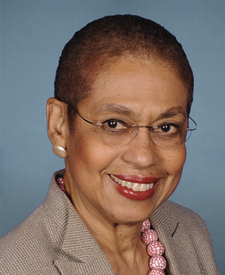
Legislative Progress
In CommitteeMr. Wilson of South Carolina (for himself, Ms. Kaptur, Mr. …
Referred to the House Committee on Foreign Affairs.
Introduced in House
Stakeholder Effects
cui bono?How this legislation distributes effects. Mention counts reflect frequency, not effect magnitude.
Covered countries (G7, EU, Australia) facing diplomatic pressure on Russian assets, G7 and EU nations holding Russian assets (diplomatic pressure to repurpose 5%), Russian Federation (sovereign assets transferred without confiscation)
Positive-direction: Ukraine (potential additional funding from allied asset repurposing), Ukraine (receives at least $250M quarterly in assistance), Ukraine (receives financial support from transferred Russian assets), Ukraine Support Fund (earns interest on invested assets)
Negative-direction: Covered countries (G7, EU, Australia) facing diplomatic pressure on Russian assets, G7 and EU nations holding Russian assets (diplomatic pressure to repurpose 5%), Russian Federation (sovereign assets transferred without confiscation)
President (must report on Russian assets globally), President and State Department (reporting and diplomatic requirements), State Department (obligation and expenditure management burden)
Defense and reconstruction contractors operating in Ukraine
U.S. government bond market (receives investment demand from fund)
Bill Structure & Actor Mappings
Who is "The Secretary" in each section?
We use a combination of our own taxonomy and classification in addition to large language models to assess meaning and potential beneficiaries. High confidence means strong textual evidence. Always verify with the original bill text.
Learn more about our methodology