To advance bipartisan, common sense solutions.
Summary
What This Bill Does
This bill is a large cross-domain package built around the MARKET CHOICE Act framework. Its first major title creates a federal greenhouse-gas tax beginning in 2027 at $35 per metric ton of carbon dioxide equivalent on fossil fuels produced in or imported into the United States, with annual increases equal to five percentage points plus CPI growth. It also taxes covered industrial-process emissions, covered product-use emissions, and biomass-related emissions above specified thresholds; requires EPA and Treasury emissions reporting; gives credits for State greenhouse-gas payments that phase down over five years; imposes triple-tax penalties for nonpayment; and defines the regulated fuels, products, gases, source categories, points of taxation, and sequestration refund rules. A companion border-adjustment title aims to prevent carbon leakage by charging imports of covered goods based on comparable domestic carbon-tax liability and rebating taxes on exported goods, while letting the President exempt sectors or products when applying the adjustment is not in the national, economic, or environmental interest. The bill then creates the RISE Trust Fund, transfers 75 percent of carbon-tax receipts into it, and allocates trust-fund resources from 2027 through 2036 to highways, weatherization, displaced energy workers, airports, underground storage cleanup, abandoned mine reclamation, coastal flooding mitigation, ARPA-E, carbon capture R&D, advanced vehicle technology, LIHEAP, essential air service, NCI cancer research, and State grants for low-income households participating in SNAP, FDPIR, Puerto Rico or American Samoa nutrition assistance, Medicare low-income subsidy, Medicare with low-income status, or SSI. It repeals federal motor vehicle and aviation fuel taxes after 2025 and modifies advanced coal project credits. It limits EPA Clean Air Act greenhouse-gas regulation once emissions are taxed, while preserving specific vehicle, fuel, nonroad, and aircraft authorities and ending the moratorium if 2027-2034 taxed emissions exceed a specified level. Other titles authorize flood mitigation and adaptation grants with up to a 90 percent federal share, a 10-year displaced energy-worker assistance program, a National Climate Commission, added NCI cancer research funding for 2026-2030, an HHS/FDA cancer drug shortage study, a National Bipartisan Fiscal Commission with expedited congressional procedures, House Member restrictions on owning or trading covered financial instruments, stronger anti-money-laundering work against human trafficking, school door security rulemaking and $100 million annual grant funding for ten years, unaffiliated-voter primary access, a noncitizen voting funding condition, Ukraine intelligence-sharing review, and VA survivor compensation changes for spouses of veterans who die from ALS.
Who Benefits and How
The Highway Trust Fund benefits because 70 percent of annual RISE Trust Fund resources from 2027 through 2036 flow to highway infrastructure. Low-income families benefit because State grants distribute 10 percent of trust-fund resources to eligible households tied to SNAP, FDPIR, nutrition assistance, Medicare low-income subsidy, Medicare low-income status, or SSI. Domestic manufacturers in covered sectors benefit from border carbon adjustments that tax competing imports and rebate carbon-tax costs on exports. Carbon capture operators benefit because sequestered emissions can qualify for refunds when Treasury and EPA rules are satisfied. Displaced energy workers benefit from retraining, relocation, early retirement, health benefits, community redevelopment block grants, and Mine Workers pension support. Coastal communities benefit from grants for chronic flooding mitigation, natural infrastructure, drainage, street, canal, and sewer adaptation projects. National Cancer Institute programs benefit from added appropriations equal to 25 percent of the fiscal year 2024 NCI appropriation for each fiscal year 2026 through 2030. Unaffiliated voters benefit because States must let them participate in one party's federal primary without party-data sharing. Surviving spouses of veterans who die from ALS benefit because the bill extends increased dependency and indemnity compensation treatment.
Who Bears the Burden and How
Fossil fuel producers and importers must pay the greenhouse-gas tax at the production or import point. Industrial facility owners in source categories such as steel, coal mining, refineries, cement, petrochemicals, ammonia, aluminum, glass, and semiconductor manufacturing must pay tax on covered emissions above thresholds. Importers of covered goods must comply with border-adjustment declaration, entry, rate, and anti-circumvention procedures. EPA Administrator staff must calculate taxable emissions, review source categories, coordinate reports, and adjust Clean Air Act greenhouse-gas authority around the tax. Treasury tax administrators must collect the carbon tax, administer credits, refunds, State payment offsets, trust-fund transfers, and low-income household grants. Customs and Border Protection Commissioner staff must administer import border-adjustment procedures. House Members must divest or avoid covered financial instruments and submit compliance pledges to the House Ethics Committee. Financial institutions must face enhanced examination, referral, and anti-money-laundering procedures for human-trafficking transactions. States that refuse unaffiliated-voter primary access or noncitizen voting certifications risk federal election-administration funds.
Key Provisions
- Establishes a federal greenhouse-gas tax starting at $35 per metric ton in 2027 and rising annually by five percentage points plus CPI growth.
- Requires industrial-process, product-use, biomass, emissions-calculation, State-payment credit, penalty, and sequestration-refund rules.
- Creates border carbon adjustments for covered imports and export rebates to reduce carbon leakage.
- Establishes the RISE Trust Fund and transfers 75 percent of carbon-tax receipts into infrastructure, energy, climate, health, and household-assistance uses.
- Provides annual State grants for eligible low-income households and repeals federal motor vehicle and aviation fuel taxes after 2025.
- Limits EPA Clean Air Act greenhouse-gas regulation for taxed emissions while preserving specified vehicle, fuel, nonroad, aircraft, monitoring, and reporting authorities.
- Authorizes flood mitigation grants, displaced energy-worker assistance, and a National Climate Commission.
- Provides additional NCI cancer research funding and requires an HHS/FDA report on cancer drug shortages.
- Establishes a National Bipartisan Fiscal Commission and expedited procedures for its recommendations.
- Restricts House Member ownership or trading of covered financial instruments and strengthens anti-trafficking financial controls.
- Authorizes school-door security rulemaking and grants, unaffiliated-voter primary access, noncitizen voting funding conditions, Ukraine intelligence review, and ALS survivor-benefit changes.
Evidence Chain:
This summary is generated from the full bill text using AI analysis. Expand "Detailed Analysis" below for identified beneficiaries/burden bearers with clause-level evidence links.
At a Glance
What This Bill Does
Creates a broad MARKET CHOICE Act package imposing a rising federal greenhouse-gas tax, border carbon adjustments, a RISE infrastructure and environment trust fund, low-income household grants, fuel-tax repeal, advanced coal credit changes, Clean Air Act greenhouse-gas regulatory limits, flooding grants, displaced energy-worker assistance, climate and fiscal commissions, House stock-trading restrictions, anti-trafficking finance rules, school-door security grants, election rules, Ukraine intelligence review, and veterans survivor-benefit changes.
Key Policy Areas
Tax, Climate, Infrastructure, Trade, Energy, Transportation, Health Care, Elections, Veterans
Primary Purpose
Creates a broad MARKET CHOICE Act package imposing a rising federal greenhouse-gas tax, border carbon adjustments, a RISE infrastructure and environment trust fund, low-income household grants, fuel-tax repeal, advanced coal credit changes, Clean Air Act greenhouse-gas regulatory limits, flooding grants, displaced energy-worker assistance, climate and fiscal commissions, House stock-trading restrictions, anti-trafficking finance rules, school-door security grants, election rules, Ukraine intelligence review, and veterans survivor-benefit changes.
Policy Domains
Substantive provisions
Identified Gains
- Highway Trust Fund programs
- Low-income families
- Domestic manufacturing exporters
- Carbon capture operators
- Displaced energy workers
- Coastal communities
- National Cancer Institute programs
- Unaffiliated voters
- Veterans surviving spouses
Identified Costs
- Fossil fuel producers
- Industrial facility owners
- Covered goods importers
- EPA Administrator staff
- Treasury tax administrators
- Customs and Border Protection Commissioner staff
- House Ethics Committee staff
- Financial institutions
- State election agencies
Legislative Progress
In CommitteeReferred to the Subcommittee on Cybersecurity and Infrastructure Protection.
Referred to the Subcommittee on Emergency Management and Technology.
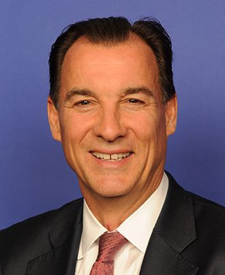
Mr. Suozzi introduced the following bill; which was referred to …
Referred to the Committee on Ways and Means, and in …
Introduced in House
Stakeholder Effects
cui bono?How this legislation distributes effects. Mention counts reflect frequency, not effect magnitude.
Cement manufacturers, Domestic manufacturers in trade-exposed sectors (steel, cement, chemicals), Industrial emitters subject to carbon tax
Positive-direction: Domestic manufacturers in trade-exposed sectors (steel, cement, chemicals), Industrial emitters subject to carbon tax, Reinforced door manufacturers, US exporters in eligible industrial sectors
Negative-direction: Cement manufacturers, Iron and steel producers, Petrochemical producers, Semiconductor manufacturers
CISA, Congress, Department of State
Positive-direction: Federal government (Treasury)
Negative-direction: CISA, Congress, Department of State, EPA Administrator, FDA and HHS, Federal banking regulators, Foreign governments, Members of the House of Representatives
Fossil fuel importers, Natural gas processors, Petroleum refineries
All parties subject to carbon tax, Biomass fuel producers, Emitters in states with carbon pricing (e.g., California, RGGI states)
Positive-direction: Emitters in states with carbon pricing (e.g., California, RGGI states)
Negative-direction: Biomass fuel producers, Fossil fuel and industrial emitters, Non-compliant fossil fuel producers and emitters
Carbon capture and sequestration companies, Carbon capture and storage industry, Carbon capture technology providers
Coal mining companies, Displaced fossil fuel workers
Positive-direction: Displaced fossil fuel workers
Negative-direction: Coal mining companies
State carbon pricing programs, State election administrators, State governments
Positive-direction: State governments
Negative-direction: State carbon pricing programs, State election administrators
Bill Structure & Actor Mappings
Who is "The Secretary" in each section?
We use a combination of our own taxonomy and classification in addition to large language models to assess meaning and potential beneficiaries. High confidence means strong textual evidence. Always verify with the original bill text.
Learn more about our methodology