District of Columbia Medicaid Fairness Act
Summary
What This Bill Does
The District of Columbia Medicaid Fairness Act changes the federal medical assistance percentage for D.C. Medicaid. Today the bill text focuses on the special District rule in section 1905 of the Social Security Act. For fiscal years before 2030, D.C. would receive the greater of the ordinary formula percentage or a specified transition percentage. That specified percentage is 70 percent before fiscal year 2027, 65 percent in fiscal year 2027, 60 percent in fiscal year 2028, and 55 percent in fiscal year 2029. Beginning in fiscal year 2030, D.C. returns to the ordinary FMAP formula. The practical effect is a temporary federal Medicaid match floor for the District, with a scheduled phase-down instead of an immediate return to formula treatment.
Who Benefits and How
District of Columbia Medicaid beneficiaries benefit if the higher federal match helps preserve coverage, provider payments, or program stability. The D.C. Medicaid agency benefits because a 70 percent federal match floor before fiscal year 2027 reduces local financing pressure. D.C. hospitals and Medicaid providers benefit if federal matching support helps sustain payment streams during the transition. D.C. budget officials benefit from a predictable phase-down schedule through fiscal year 2029.
Who Bears the Burden and How
CMS Medicaid financing staff must administer a D.C.-specific FMAP transition schedule. Federal taxpayers fund the higher federal share while the match remains above the ordinary formula. D.C. budget officials still face increasing local cost exposure as the match steps down to 65 percent, 60 percent, and 55 percent. Congressional health committees must oversee the temporary transition rather than a permanent 70 percent rate.
Key Provisions
- Amends Social Security Act section 1905 to create a D.C. Medicaid FMAP transition.
- Provides a 70 percent specified percentage before fiscal year 2027.
- Provides 65 percent in fiscal year 2027, 60 percent in fiscal year 2028, and 55 percent in fiscal year 2029.
- Requires D.C. to return to the ordinary FMAP formula in fiscal year 2030 and later.
Evidence Chain:
This summary is generated from the full bill text using AI analysis. Expand "Detailed Analysis" below for identified beneficiaries/burden bearers.
At a Glance
What This Bill Does
Temporarily keeps the District of Columbia's federal Medicaid matching rate at no less than 70 percent through fiscal year 2026, then phases it down to 65 percent in 2027, 60 percent in 2028, 55 percent in 2029, and the ordinary formula in 2030 and later.
Key Policy Areas
Medicaid, District of Columbia, Health Care
Primary Purpose
Temporarily keeps the District of Columbia's federal Medicaid matching rate at no less than 70 percent through fiscal year 2026, then phases it down to 65 percent in 2027, 60 percent in 2028, 55 percent in 2029, and the ordinary formula in 2030 and later.
Policy Domains
Resolution provisions
Identified Gains
Contextual inference, no direct clause citation- District of Columbia Medicaid beneficiaries
- D.C. Medicaid agency
- D.C. hospitals
- D.C. budget officials
Contextual inference, no direct clause citation
Identified Costs
Contextual inference, no direct clause citation- CMS Medicaid financing staff
- Federal taxpayers
- D.C. budget officials
- Congressional health committees
Contextual inference, no direct clause citation
Sponsors
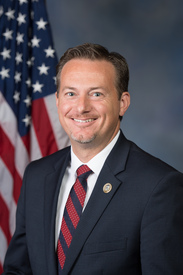

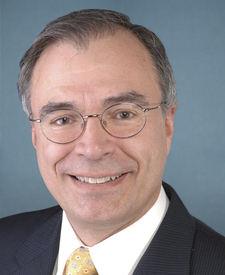
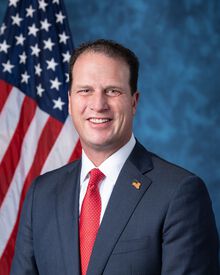

Legislative Progress
In CommitteeMr. Cloud (for himself, Mr. Arrington, Ms. Van Duyne, Mr. …
Referred to the House Committee on Energy and Commerce.
Introduced in House
Bill Structure & Actor Mappings
Who is "The Secretary" in each section?
We use a combination of our own taxonomy and classification in addition to large language models to assess meaning and potential beneficiaries. High confidence means strong textual evidence. Always verify with the original bill text.
Learn more about our methodology