BUILD Act
Summary
What This Bill Does
The BUILD Act creates a large Commerce grant pathway for colleges in distressed communities. The Secretary of Commerce, acting through the Assistant Secretary for Economic Development, must identify institutions of higher education located in ZIP Codes or counties where median family income is at least 25 percent below the relevant State or national median benchmark. Notified institutions that opt in become eligible for planning and implementation grants. Planning grants can run for up to two years at up to $100,000 per year, with possible additional funds after one year. After Commerce approves an implementation plan, the institution can receive a five-year implementation grant of at least $25 million and not more than $50 million for projects in its distressed community, including buildings, housing, cultural facilities, labs, libraries, seed funding for early-stage companies, apprenticeships, broadband, health clinics, health-workforce training, school-district partnerships, and research tied to community economic needs. The definition excludes 1862 land-grant institutions, very-high-research universities, and service academies.
Who Benefits and How
Distressed-community colleges benefit because they can receive planning grants and five-year implementation grants for local revitalization work. Economically distressed communities benefit because grant projects must be carried out in the community where the institution is located. Local small businesses benefit from eligible seed-money programs for early-stage company development. Local workers benefit from apprenticeships in local industries and training pathways for healthcare professions. Students and residents benefit from broadband, health clinics, housing, cultural facilities, libraries, laboratories, and school partnerships.
Who Bears the Burden and How
Commerce Economic Development Administration staff must identify eligible institutions, administer opt-in designations, review plans, and run grant formulas. Grant recipient colleges must complete implementation plans within two years and submit annual activity reports during implementation grants. Excluded 1862 land-grant universities, very-high-research institutions, and service academies cannot use this grant pathway. Federal taxpayers fund grants that may reach $25 million to $50 million per recipient over five years.
Key Provisions
- Establishes a Commerce grant program for institutions of higher education in economically distressed communities.
- Uses ZIP Code or county median-family-income tests at least 25 percent below State or national benchmarks.
- Provides planning grants up to $100,000 per year for up to two years, with possible additional funds.
- Provides five-year implementation grants between $25 million and $50 million after plan approval.
- Allows projects such as buildings, housing, cultural institutions, labs, libraries, seed funding, apprenticeships, broadband, health clinics, school partnerships, and community-relevant research.
- Excludes 1862 land-grant institutions, very-high-research universities, service academies, and designated military colleges.
Evidence Chain:
This summary is generated from the full bill text using AI analysis. Expand "Detailed Analysis" below for identified beneficiaries/burden bearers with clause-level evidence links.
At a Glance
What This Bill Does
Creates a Commerce Economic Development Administration grant program for qualifying distressed-community institutions of higher education, including planning grants up to $100,000 per year and five-year implementation grants of $25 million to $50 million for community economic development projects.
Key Policy Areas
Economic Development, Higher Education, Community Development
Primary Purpose
Creates a Commerce Economic Development Administration grant program for qualifying distressed-community institutions of higher education, including planning grants up to $100,000 per year and five-year implementation grants of $25 million to $50 million for community economic development projects.
Policy Domains
Resolution provisions
Identified Gains
- Distressed-community colleges
- Economically distressed communities
- Local small businesses
- Local workers
- Students and residents
Identified Costs
- Commerce Economic Development Administration staff
- Grant recipient colleges
- Excluded land-grant universities
- Very-high-research institutions
- Federal taxpayers
Sponsors


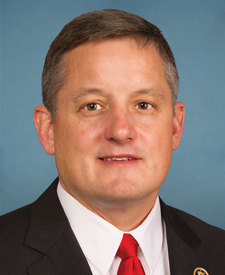
Legislative Progress
In CommitteeReferred to the Subcommittee on Economic Development, Public Buildings, and …
Mr. Costa (for himself and Mr. Westerman) introduced the following …
Referred to the Committee on Transportation and Infrastructure, and in …
Introduced in House
Stakeholder Effects
cui bono?How this legislation distributes effects. Mention counts reflect frequency, not effect magnitude.
Distressed-community colleges, Excluded land-grant universities, Grant recipient colleges
Positive-direction: Distressed-community colleges
Negative-direction: Excluded land-grant universities, Grant recipient colleges
Bill Structure & Actor Mappings
Who is "The Secretary" in each section?
We use a combination of our own taxonomy and classification in addition to large language models to assess meaning and potential beneficiaries. High confidence means strong textual evidence. Always verify with the original bill text.
Learn more about our methodology