State Actions For Employing Transportation Risk Assessments and Crossing Knowledge Strategies Act
Summary
What This Bill Does
The SAFE TRACKS Act amends the federal highway-rail grade crossing safety reporting statute. It adds a new reporting element requiring states to explain how they will work with stakeholders, including railroads operating in and across the state, to reduce pedestrian fatalities, including suicides, along railroad rights-of-way. States must consult mental health agencies, law enforcement agencies, and related entities as part of that work.
The bill also changes the timing of reports by requiring them to be submitted to the Federal Railroad Administration every five years thereafter. The bill does not directly fund grade-crossing construction or mental-health programs. It changes the planning and reporting requirements so pedestrian fatalities and suicides along railroad rights-of-way become part of state safety strategies.
Who Benefits and How
Communities near railroad corridors benefit if state plans focus more directly on preventing pedestrian deaths and suicides. Railroads benefit from a formal state planning process that includes their operational knowledge and right-of-way safety concerns. Mental health agencies benefit from a defined consultation role in suicide-prevention planning near rail corridors. Law enforcement agencies benefit from clearer coordination with transportation officials and railroads. The Federal Railroad Administration benefits from recurring five-year reports that include pedestrian-fatality strategies.
Who Bears the Burden and How
State transportation agencies must add pedestrian-fatality and suicide-reduction strategies to grade-crossing reports. Railroads operating in states must coordinate with state planners on right-of-way safety. Mental health agencies must participate in consultation on suicide-prevention strategies. Law enforcement agencies must provide input on safety and incident-prevention approaches. FRA staff must receive and review the recurring reports.
Key Provisions
- Requires state reports to address work with stakeholders to reduce pedestrian fatalities along railroad rights-of-way.
- Requires consultation with railroads operating in and across the state.
- Requires consultation with mental health agencies, law enforcement agencies, and related entities.
- Provides that pedestrian suicides are included in the fatality-reduction planning requirement.
- Requires reports to the Federal Railroad Administration every five years.
Evidence Chain:
This summary is generated from the full bill text using AI analysis. Expand "Detailed Analysis" below for identified beneficiaries/burden bearers with clause-level evidence links.
At a Glance
What This Bill Does
Requires state highway-rail grade crossing safety reports to explain how states will work with railroads, mental-health agencies, law-enforcement agencies, and other stakeholders to reduce pedestrian fatalities, including suicides, along railroad rights-of-way, and requires the reports every five years to the Federal Railroad Administration.
Key Policy Areas
Transportation Safety, Railroads, Mental Health
Primary Purpose
Requires state highway-rail grade crossing safety reports to explain how states will work with railroads, mental-health agencies, law-enforcement agencies, and other stakeholders to reduce pedestrian fatalities, including suicides, along railroad rights-of-way, and requires the reports every five years to the Federal Railroad Administration.
Policy Domains
House resolution provisions
Identified Gains
- Communities near railroad corridors
- Railroads
- Mental health agencies
- Law enforcement agencies
- Federal Railroad Administration
Identified Costs
- State transportation agencies
- Railroads operating in states
- Mental health agencies
- Law enforcement agencies
- FRA staff
Sponsors

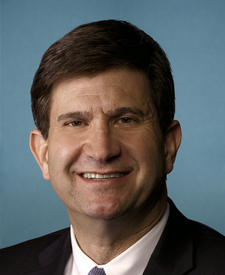


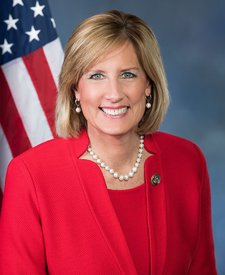
Legislative Progress
ReportedOrdered to be Reported by Voice Vote.
Committee Consideration and Mark-up Session Held
Subcommittee on Railroads, Pipelines, and Hazardous Materials Discharged
Referred to the Subcommittee on Railroads, Pipelines, and Hazardous Materials.
Ms. Pou (for herself and Mr. Bost) introduced the following …
Referred to the House Committee on Transportation and Infrastructure.
Introduced in House
Stakeholder Effects
cui bono?How this legislation distributes effects. Mention counts reflect frequency, not effect magnitude.
Communities near railroad corridors, Railroads operating in states, State transportation agencies
Positive-direction: Communities near railroad corridors
Negative-direction: Railroads operating in states, State transportation agencies
Bill Structure & Actor Mappings
Who is "The Secretary" in each section?
- "fra"
- → Federal Railroad Administration
We use a combination of our own taxonomy and classification in addition to large language models to assess meaning and potential beneficiaries. High confidence means strong textual evidence. Always verify with the original bill text.
Learn more about our methodology