To require large social media platform providers to create, maintain, and make available to third-party safety software providers a set of real-time application programming interfaces, through which a child or a parent or legal guardian of a child may delegate permission to a third-party safety software provider to manage the online interactions, content, and account settings of such child on the large social media platform on the same terms as such child, and for other purposes.
Analysis under review: This bill has generated analysis that may be too generic or incomplete. Clause-level evidence remains available below.
Summary
What This Bill Does
This bill, To require large social media platform providers to create, maintain, and make available to third-party safety software providers a set of real-time application programming interfaces, through which a child or a parent or legal guardian of a child may delegate permission to a third-party safety software provider to manage the online interactions, content, and account settings of such child on the large social media platform on the same terms as such child, and for other purposes., changes federal law or congressional policy affecting technology companies and users of digital services. The main policy domain is Technology, Criminal Justice, Healthcare.
Who Benefits and How
technology companies and users of digital services may benefit from new authority, funding, eligibility, regulatory clarity, or reduced risk created by the bill.
Who Bears the Burden and How
federal implementing agencies, technology companies and users of digital services may take on implementation duties, reporting obligations, compliance costs, or oversight responsibilities.
Key Provisions
- Section H056D1B09A3214BB69736B56BEC011CFE: 1. Short title This Act may be cited as the Sammy’s Law of 2023.
- Section H649ABF1CF3994323A18D8B45EC3D47F1: 2. Sense of Congress It is the sense of Congress that— parents and legal guardians should be empowered to use the services of third-party safety software...
- Section H4A9CC30AB94E42F6880A53DAE5A47B45: 3. Definitions In this Act: The term child means any individual under the age of 17 years who has registered an account with a large social media platform. The...
- Section H530C81E9EA1D4F5DAD57CC313E706EE7: 4. Providing access to third-party safety software Not later than 30 days after the effective date of this Act (in the case of a service that is a large social...
- Section H239F63B12DE4430CBC5B556E00810000: 5. Implementation and enforcement A violation of this Act shall be treated as a violation of a rule defining an unfair or deceptive act or practice prescribed...
Evidence Chain:
This summary is generated from the full bill text using AI analysis. Expand "Detailed Analysis" below for identified beneficiaries/burden bearers with clause-level evidence links.
At a Glance
What This Bill Does
This bill, To require large social media platform providers to create, maintain, and make available to third-party safety software providers a set of real-time application programming interfaces, through which a child or a parent or legal guardian of a child may delegate permission to a third-party safety software provider to manage the online interactions, content, and account settings of such child on the large social media platform on the same terms as such child, and for other purposes., changes federal law or congressional policy affecting technology companies and users of digital services.
Key Policy Areas
Technology, Criminal Justice, Healthcare
Primary Purpose
This bill, To require large social media platform providers to create, maintain, and make available to third-party safety software providers a set of real-time application programming interfaces, through which a child or a parent or legal guardian of a child may delegate permission to a third-party safety software provider to manage the online interactions, content, and account settings of such child on the large social media platform on the same terms as such child, and for other purposes., changes federal law or congressional policy affecting technology companies and users of digital services.
Policy Domains
Whole bill
Identified Gains
- technology companies and users of digital services
Identified Costs
- federal implementing agencies
- technology companies and users of digital services
Sponsors
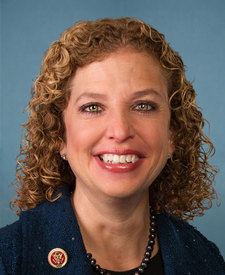
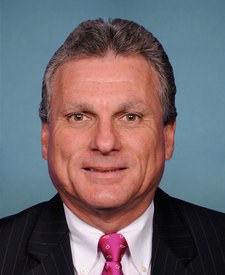


Legislative Progress
IntroducedMs. Wasserman Schultz (for herself, Mr. Carter of Georgia, Ms. …
Impact analysis is available but no clear stakeholder effects identified. View clause-level analysis →
Bill Structure & Actor Mappings
Who is "The Secretary" in each section?
- "the_secretary"
- → The Secretary identified in the operative section
- "the_commission"
- → The commission identified in the operative section
Key Definitions
Terms defined in this bill
the Federal Trade Commission. The term large social media platform— means a service— provided through an internet website or a mobile application (or both)
We use a combination of our own taxonomy and classification in addition to large language models to assess meaning and potential beneficiaries. High confidence means strong textual evidence. Always verify with the original bill text.
Learn more about our methodology